
High speed machining services use very high spindle speeds, fast feeds, and light, constant-depth cuts to remove metal efficiently while keeping temperatures and cutting forces low. The approach is especially powerful on aluminum, titanium, and other alloys where conventional heavy cuts generate heat and chatter. By taking many small bites at high feed, the machine stays accurate, the finish stays clean, and cycle time often drops. For complex parts, pairing HSM with 5-axis CNC machining lets a single setup cut surfaces that would otherwise need multiple fixtures.
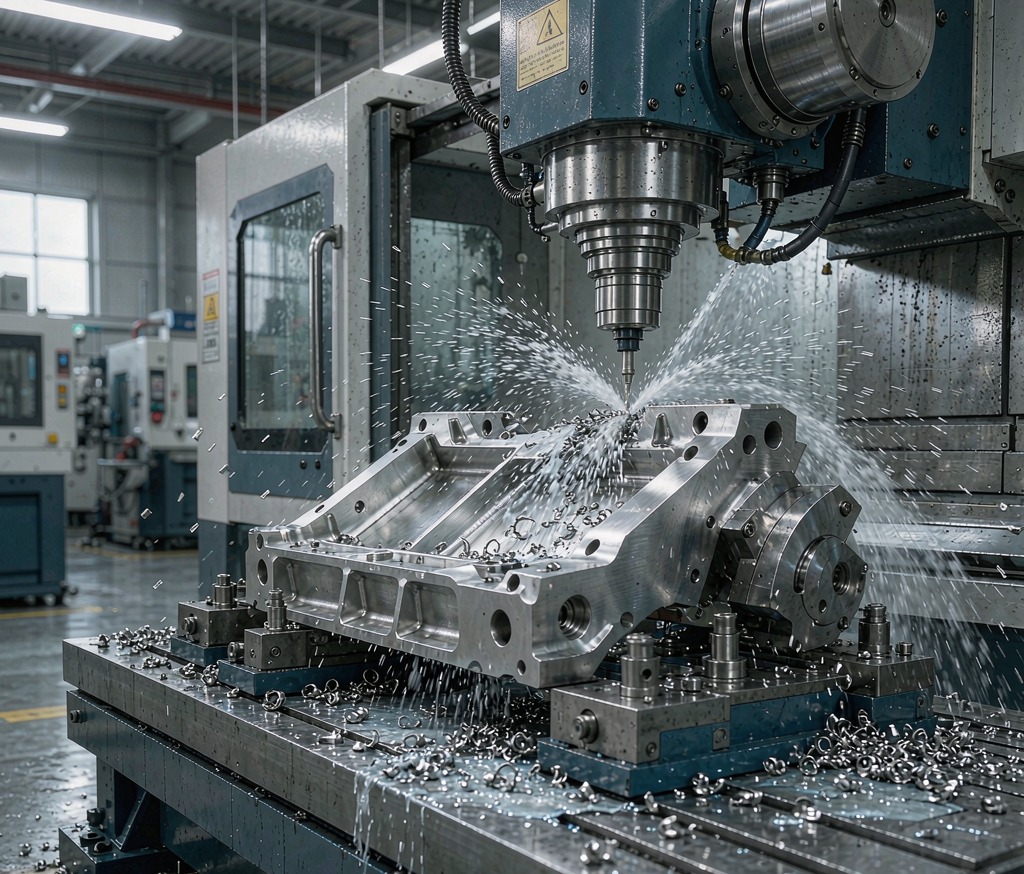
What Is High Speed Machining
High speed machining is less a single machine and more a strategy: spindle speeds in the tens of thousands of rpm, high feed rates, and shallow radial and axial engagement so the tool slices rather than ploughs. The goal is to keep the average chip load and cutting temperature steady, which extends tool life and protects the part. With the right toolholder and balance, the whole system runs smoothly at speeds where a conventional setup would vibrate itself apart. It is most associated with aluminum aerospace structures but applies broadly to any part where finish and cycle time matter.
Spindle Speed, Feed, and Light Cuts
The signature of HSM is the trochoidal or constant-engagement toolpath. Instead of a wide slotting pass, the cutter sweeps in a gentle spiral, keeping its engagement angle constant so the heat goes into the chip and not the part. This lets feeds climb even as material removal rate rises. On aluminum, CNC milling at high speed can outpace slower, heavier cuts because the tool spends less time fighting deflection and heat. The same logic helps on CNC turning of long, slender parts where chatter is the enemy.
HSM vs. Conventional Machining
Conventional machining favors deeper cuts at lower rpm, which is robust on rigid machines and tough materials in low volume. HSM favors many light cuts at high rpm, which shines on large, thin-walled, or finish-critical parts. The crossover is material and geometry: steel at volume may still be best roughed conventionally, while a thin aluminum bracket with tight flatness is a natural HSM job. Our aerospace machining overview shows how the two are combined on real airframe parts.
Best Materials for HSM
Aluminum is the headline material: it cuts cleanly at high speed with long tool life and excellent finish. Magnesium and some copper alloys behave similarly. Titanium and hardened steels are machinable at high speed but need careful tooling and coolant because they hold heat; here HSM reduces the dwell time that causes work hardening. For programming guidance, our CNC machining tolerances guide explains how cut strategy affects achievable limits.
Tooling and Cooling
HSM lives or dies on tooling balance and holder rigidity. Tools must be balanced for the target rpm, and shrink-fit or hydraulic holders keep runout tiny so the edge stays sharp. Coolant strategy matters: high-pressure through-spindle flood, mist, or cryogenic delivery carries heat out of the cut. Because the chip is the heat sink, getting it out fast is the point. On metal CNC machining programs, the shop tunes tool, holder, and coolant together rather than treating them separately.
Design Tips for Fast Cutting
Designs that help HSM start with uniform wall thickness and generous radii at the base of walls, which let the toolpath flow without sudden engagement changes. Avoid deep, narrow slots that force long slender tools, and prefer open geometries that the cutter can sweep. Tight tolerances should be called out only where needed so the shop can rough everything fast and finish just the critical features. Swiss turning and 4-axis CNC machining complement HSM when the part is long and slender or needs indexed features.
Typical Applications
Aerospace brackets, ribs, and skins are the classic HSM work, alongside aluminum mold inserts, electronics housings, and medical device frames. Anywhere a thin-walled aluminum part must hold flatness and a cosmetic finish, HSM earns its place. For aluminum-specific strategy, our aluminum CNC machining guide covers alloy choice and cut parameters. HSM also shortens prototyping because the same fast toolpaths cut a one-off just as cleanly as a production run, so design iterations do not wait on a special setup. The consistent finish often removes a separate deburring step, saving time before anodizing or assembly and tightening the whole lead time.
Frequently Asked Questions
What does high speed machining mean?
It means high spindle rpm with light, constant-engagement cuts and fast feeds, so heat leaves in the chip and the part stays accurate.
Which materials benefit most?
Aluminum leads, with magnesium and some coppers close behind; titanium and hardened steel need careful tooling and cooling but also gain.
Is HSM faster than conventional machining?
Often yes on thin-walled or finish-critical parts, because light cuts avoid chatter and heat, even though each pass removes less.
Do I need a special machine?
You need a rigid, well-balanced spindle and holder setup, plus CAM that can generate constant-engagement toolpaths; the strategy matters as much as the hardware.
Does HSM improve surface finish?
Yes. Lower cutting forces and steady temperatures give cleaner finishes and tighter flatness on thin features.
Can HSM be combined with 5-axis?
It is a natural pairing; 5-axis lets a single setup cut complex surfaces while HSM keeps the cut stable and fast.
High speed machining is one strategy in a broader precision toolkit. Our 5-axis CNC machining guide shows how multi-axis access reduces setups on the same parts HSM excels at.
Ready to Start Your Project?
Get a build-ready quote on your custom metal parts within 24 hours. Share your drawing and our engineers will respond with process, lead time, and pricing.

