
Custom metal molds and dies are the reusable tools that turn a drawing into thousands of identical parts. A mold shapes material by filling a cavity, as in die casting or injection, while a die cuts, bends, or forms sheet or strip, as in stamping. Both are precision metal components in their own right, built to tight tolerances, hardened for life, and qualified against the part they make. Getting tooling right is the difference between a smooth production run and a line that fights scrap every shift, which is why serious programs start tool design alongside the part design. When the part is aluminum, the mold conversation usually begins with die casting process selection.
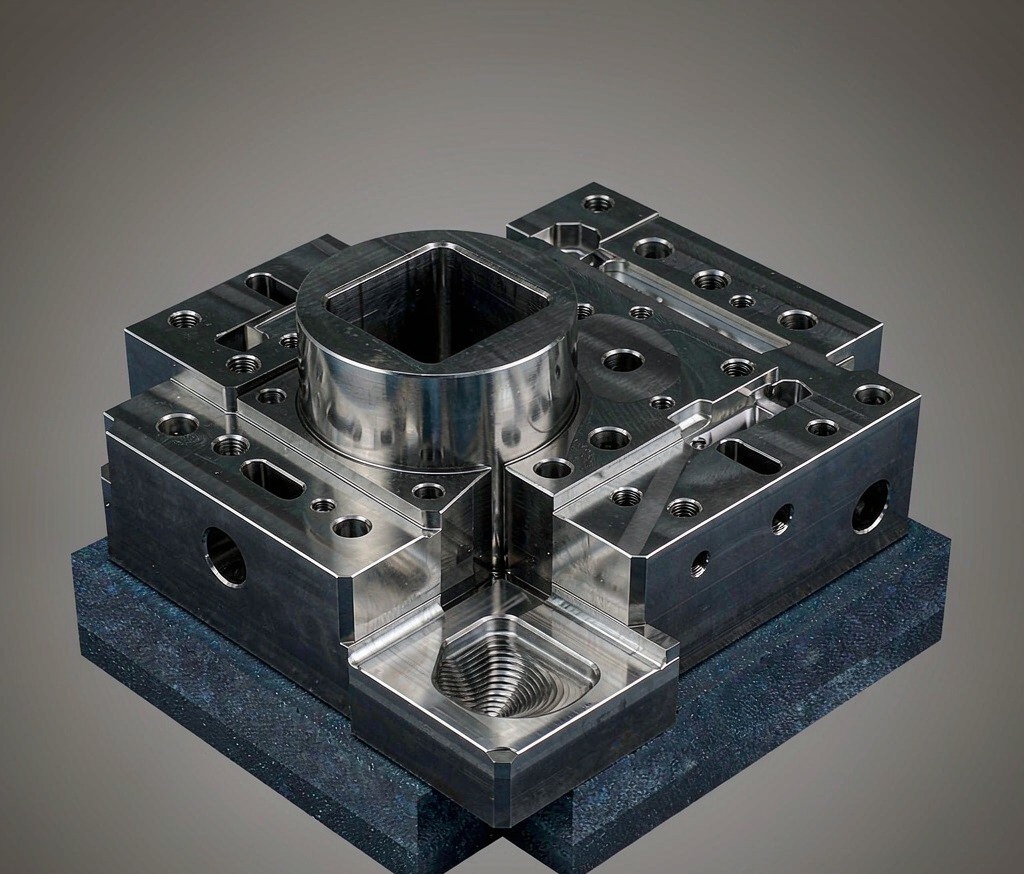
What Molds and Dies Are
A mold is a hollow form into which molten or soft material is introduced and solidified, producing a part in the cavity’s shape; think die-casting molds, injection molds, and compression tooling. A die is a tool that shears, bends, or forms stock, typically sheet metal, through operations like blanking, piercing, forming, and drawing. Both are made from machined, often hardened steel, and both must hold dimension through heat, pressure, and repetition. They are products of customized metal part manufacturing, just applied to making other parts.
Mold vs. Die: Key Differences
The simplest distinction is additive shape versus subtractive or formed shape. A mold defines the outside and internal voids of a solidified part; a die defines cut or bent geometry from flat stock. Molds usually see higher temperature and pressure from molten metal or polymer; dies see high tonnage and cyclic shock from the press. The design languages differ: mold design worries about fill, cooling, and venting, while die design worries about strip layout, shed angle, and springback. Our die casting vs. injection molding guide compares two mold-driven processes directly.
How a Tool Is Built
Tool building starts with the part print and a process plan: cavitation, parting line, ejection, and cooling for molds; strip progression and station sequence for dies. The steel is rough machined, heat treated to the target hardness, then finished to final form. Cavities and electrodes are cut, and details like guides, bushings, and sensors are fitted. Throughout, CNC milling roughs and semi-finishes the blocks before the precision operations that set the working surfaces.
EDM and Precision Finishing
The hardest part of tool building is the geometry milling cannot reach: deep ribs, sharp internal corners, and textured cavities. That is where EDM machining burns the shape with a shaped electrode, and wire EDM cuts the precise punches, dies, and inserts that must fit within microns. EDM leaves a recast layer that is polished or smoothed before the tool runs, and it lets the builder use very hard steel because the electrode, not a cutter, does the cutting. This is why mold and die quality is inseparable from EDM capability.
Materials for Long Tool Life
Tool steels such as P20, H13, and various pre-hardened grades are common, chosen for hardenability, toughness, and polishability. Dies that cut abrasive stock may use powdered-metal or carbide inserts at the wear points. The steel is heat treated after roughing to avoid distorting finished surfaces, then finished and often coated at sliding or forming faces to reduce galling. Early DFM support helps pick steel and geometry that will actually survive the planned volume.
Qualification and Maintenance
A new tool is qualified by running sample parts and measuring them against the print, adjusting the tool until the process window is centered. Production then runs with scheduled maintenance: cleaning, lubrication, touch-up of worn edges, and periodic dimensional checks. A well-documented tool life plan prevents unexpected failure on a long run. For high-mix programs, progressive tooling such as progressive die stamping consolidates many operations into one robust die.
Typical Applications
Die-casting molds make aluminum and zinc housings; injection molds make polymer components; stamping dies make brackets, terminals, and clips by the million. Tooling is the quiet enabler behind nearly every repeated metal and plastic part, and its cost is amortized across the run, which is why tooling strategy is a purchasing decision, not just an engineering one. Our rapid tooling guide covers faster, lower-volume routes when lead time beats lifetime.
Frequently Asked Questions
What is the difference between a mold and a die?
A mold forms a part by filling a cavity with molten or soft material; a die cuts, bends, or forms sheet or strip stock.
How long does tool building take?
From weeks for simple dies to months for complex multi-cavity molds, depending on complexity, steel, and qualification needs.
Why is EDM used in tool making?
EDM reaches shapes and internal corners milling cannot, and cuts very hard steel using a shaped electrode or wire.
Which steel is used for molds and dies?
Tool steels like P20 and H13 are common, selected for hardness, toughness, and polishability; carbide may line wear points.
How is a tool qualified?
By running samples, measuring them against the print, and adjusting the tool until parts center in the process window.
Can tooling be repaired or modified?
Yes. Welding, EDM, and insert changes extend tool life or adapt a tool to a revised part, often far cheaper than building new.
Tooling is the foundation of repeatable production. Our custom metal parts guide explains how the parts and their tooling are planned together for lowest total cost.
Ready to Start Your Project?
Get a build-ready quote on your custom metal parts within 24 hours. Share your drawing and our engineers will respond with process, lead time, and pricing.

