
When engineers and procurement teams search for custom metal parts, they are rarely looking for a catalog item. They need a made-to-drawing component that fits, functions, and arrives on time. Whether the part is a single bracket or ten thousand housings, the path from CAD to a finished, inspected component follows the same logic: pick the right process, specify the right material, control the tolerance, and choose a partner who can scale. This guide walks through each decision so you can brief a supplier confidently and compare quotes on equal footing, avoiding the costly surprises that come from vague specifications.

What “Custom Metal Parts” Actually Covers
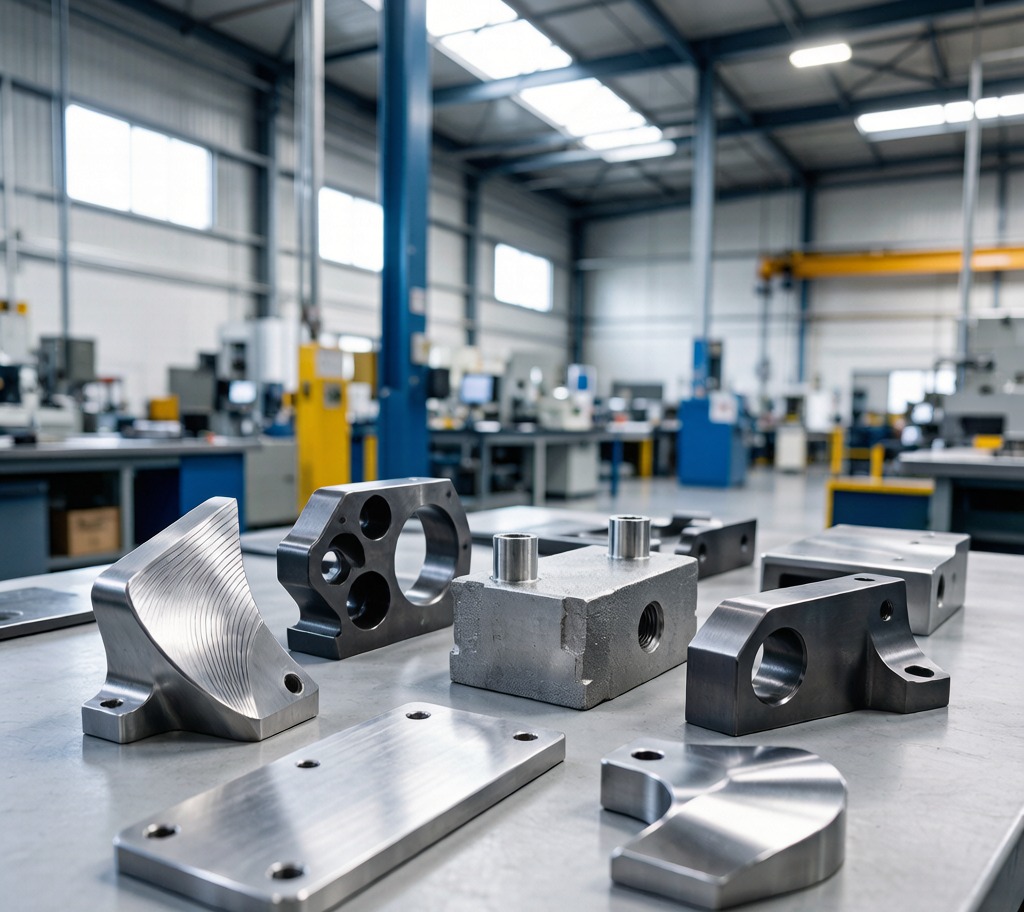
The term spans almost every production method in a metal shop. A CNC milled bracket, a die cast enclosure, a investment cast valve body, and a laser-cut sheet-metal panel are all custom metal parts, but they are made by completely different routes. The first question is never “who can make it” but “which process suits this geometry, volume, and budget.” A good supplier will tell you when a cheaper process would work just as well — that honesty is a quality signal in itself.
Because the methods differ so widely, the same part can be quoted at five very different prices depending on which process the shop defaults to. That is why sending a complete drawing and asking for a process recommendation is smarter than dictating a method you may not need. The goal is the functional part, not a specific manufacturing route.
Choosing the Right Process
For low-to-mid volume with tight tolerances, CNC turning and milling are the default because there is no tooling cost and lead times are short. For high volume, die casting or investment casting win on per-unit cost despite upfront tooling. For enclosures and structural frames, sheet-metal bending and welding beat machining from solid stock. The decision matrix is geometry-first: complex 3D shapes favor casting or 5-axis machining, flat profiles favor sheet metal, and round symmetric parts favor turning.
Hybrid routes are common and often optimal. A casting may be the blank, then CNC machining finishes the critical faces — a combination that captures casting’s material efficiency and machining’s accuracy. A fabricator might laser-cut, bend, weld, then machine locator holes. Understanding these combinations helps you evaluate whether a supplier is steering you to the best method or simply to the one they happen to own.
Materials That Work for Your Application
Material drives cost, weight, corrosion resistance, and machinability. Aluminum is light and easy to machine; stainless resists corrosion but costs more to cut; carbon steel is strong and affordable; titanium and specialty alloys serve aerospace and medical. Our metal material selection guide breaks down the trade-offs by application so you can specify an alloy grade with confidence rather than guessing, and avoid over-specifying an expensive alloy where a standard one would do.
Material choice also interacts with finishing. Some alloys plate cleanly, others need passivation, and a few are essentially unplateable without special prep. Deciding material and surface treatment together — rather than treating finish as an afterthought — prevents rework and disappointments at the anodizing or plating tank. Bring both into the initial RFQ conversation.
Tolerances, Drawings, and GD&T
Send a complete technical package: a STEP or IGES model, a drawing with GD&T callouts, and flagged critical dimensions. Tightening every tolerance unnecessarily drives up cycle time and scrap. Define tolerances at the feature level and flag only the two or three dimensions that truly matter for fit and function. Clear drawings are the cheapest insurance against wrong parts, and they let shops quote accurately the first time.
Always prepare two versions of the drawing: a full GD&T version for the manufacturer and a simplified one for internal cost discussion. It keeps conversations focused and prevents scope confusion during quoting. Include surface-finish requirements (Ra values) for functional and sealing faces separately, and note any post-processing such as heat treatment or passivation so nothing is assumed.
Finishing and Assembly
Most custom parts need more than cutting. Forming, welding, and secondary operations plus surface finishing such as anodizing, plating, or powder coating turn a raw component into a finished one. Choosing a partner who handles fabrication and finishing under one roof eliminates handoff delays and quality gaps between vendors. For production, ask about assembly, kitting, and inspection so the delivered unit is ready to install rather than a pile of loose pieces.
End-to-end capability also simplifies your supply chain and your quality paperwork. When one supplier owns cutting, finishing, and assembly, a single first-article report covers the whole part, and accountability is unambiguous. When five vendors touch a component, each handoff is a chance for misalignment, freight cost, and finger-pointing if something is wrong.
How to Write an RFQ That Gets Accurate Quotes
A strong RFQ lists material, quantity breaks (prototype and production), tolerance class, finish requirements, and a hard delivery date. Include both the full GD&T drawing and a simplified version for cost discussion. Suppliers who quote in 4–24 hours usually run lean operations; those who take weeks to quote will likely take weeks to deliver. Treat quote speed as a proxy for overall responsiveness when comparing shops, but also weigh the quality of their technical questions.
Request quantity breaks so you can see the true cost curve from prototype to production — a ten-piece quote and a thousand-piece quote tell very different stories about unit economics. State your inspection and certification needs explicitly, ask for lead-time confirmation in calendar days from PO, and clarify how design changes mid-production are handled and priced. These details separate a partner from a mere order-taker.
Common Mistakes to Avoid
The most expensive errors are preventable. Vague drawings produce vague quotes; missing material certs stall production; unspecified finishes get defaulted to whatever is cheapest; and surprise volumes force a painful process switch mid-program. Define the part completely, confirm the process, and keep the same supplier as you scale so the learning curve is an asset, not a recurring cost.
Frequently Asked Questions
What is the minimum order quantity for custom metal parts?
It depends on the process. CNC machining and fabrication often have no real MOQ — you can order a single prototype. Casting and die casting need tooling, so they only make economic sense above a few hundred to a few thousand units. Tell your supplier your volume so they recommend the right route.
Which process is cheapest for my part?
For under ~500 pieces with tight tolerances, CNC machining is usually cheapest because there is no tooling. Above that, casting or stamping overtake machining on per-unit cost. The break-even point depends on geometry complexity and material.
How fast can I get custom metal parts?
Prototypes from CNC machining commonly ship in 3–10 days; cast or stamped production runs take longer due to tooling. A responsive shop will return a quote within one business day and confirm lead time in calendar days from purchase order.
Do you provide material certificates and inspection?
Yes. Reputable suppliers provide material certificates, in-process checks, and first-article inspection reports. For aerospace or automotive work, ask about AS9102 FAI and PPAP documentation upfront.
Can one supplier handle machining, finishing, and assembly?
The best partners do. Consolidating machining, bending, welding, finishing, and assembly under one quality system reduces freight, lead time, and the risk of miscommunication between vendors.
How should I protect my design when sourcing overseas?
Use a signed NDA, require material traceability, and keep communication documented. Our guide to sourcing metal parts from China covers vetting, IP protection, and logistics in detail.
Ready to Start Your Project?
Get a build-ready quote on your custom metal parts within 24 hours. Share your drawing and our engineers will respond with process, lead time, and pricing.

