
Inconel 625 is the nickel-chromium superalloy buyers specify when a part must hold strength, resist oxidation and shrug off seawater, acids and exhaust heat all at once. It is a staple of aerospace ducts and manifolds, marine hardware, chemical-process components and oil-and-gas downhole parts — anywhere a weaker stainless would creep, corrode or simply melt. The cost of that performance is that 625 is one of the most demanding metals on earth to cut accurately.
This guide explains what Inconel 625 machining actually requires: the alloy behaviour that defeats ordinary tooling, the heat and work-hardening controls that keep a part in tolerance, realistic achievable tolerances, and where EDM earns its place. If you are quoting a turbine ring, a marine fitting or a corrosive-service flange, the points below decide whether the job is profitable or a tool-breaking exercise.
Why Inconel 625 Is Specified
625 is a solid-solution-strengthened nickel alloy: roughly 58 percent nickel, 20 to 23 percent chromium, 8 to 10 percent molybdenum and about 3.15 to 4.15 percent niobium plus tantalum. The molybdenum and niobium give it outstanding resistance to pitting and crevice corrosion in seawater and process fluids, while the nickel-chromium matrix stays strong from cryogenic temperatures up to around 980 °C. That combination is rare — most corrosion-resistant alloys weaken badly when hot, and most heat-resistant alloys corrode badly when wet.
Buyers often choose 625 over 718 when they need corrosion resistance more than ultra-high strength, or when welding without post-weld heat treatment is required, since 625 does not age-harden the way 718 does. Our broader Inconel machining services page covers the wider family, and Inconel 718 machining covers the precipitation-hardened sibling when strength dominates.
Alloy Properties and Corrosion Resistance
The alloy’s resistance comes from a stable, self-healing chromium oxide film reinforced by molybdenum. In practice that means 625 survives brackish and seawater, sour gas, flue-gas desulfurisation, and a wide range of acids that destroy 316 overnight. It is also non-magnetic in the annealed condition and resists chloride stress-corrosion cracking — the failure mode that ends many stainless parts.
For buyers, the practical implication is that 625 is often selected for safety- or mission-critical service where failure is not an option. That raises the documentation and traceability bar, which we cover in the inspection section below.
Machining Heat and Work Hardening
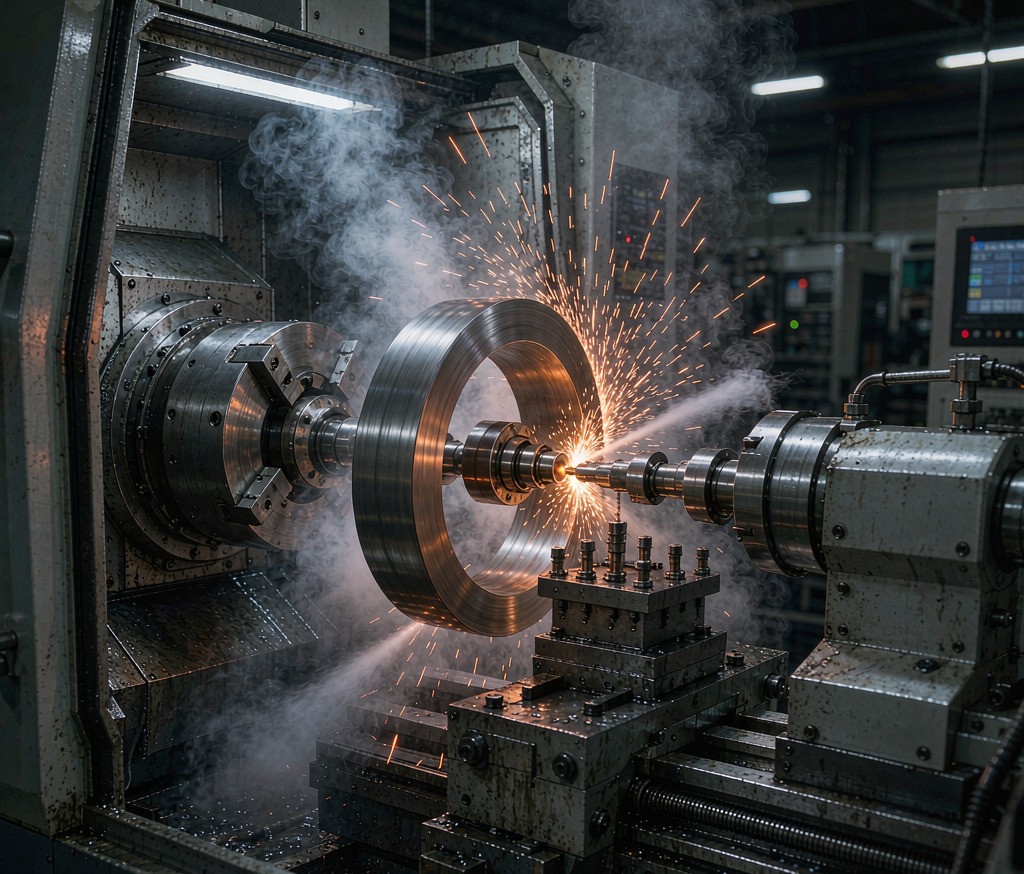
The core challenge with 625 is that it is both strong and gummy. It tends to weld itself to the cutting edge, generates intense heat at the tool tip, and work hardens if the tool rubs instead of cuts. Let the edge go dull or let the chip load drop, and the surface ahead of the cutter hardens, tool life collapses and tolerances drift. The countermeasures are unglamorous but decisive: rigid setups, sharp positive-rake carbide, constant aggressive chip load and feeds that never permit rubbing.
Small, high-precision turned parts route to Swiss turning, where guide-bushing support prevents the deflection that would otherwise chatter on long thin features. Larger bodies are cut on 5-axis CNC machining centres so complex features are finished in minimal setups, and critical bores are sequenced as the final operation on a CNC turning or CNC milling pass.
Tooling and High-Pressure Coolant
Tool life on 625 is driven almost entirely by heat evacuation. We use coated carbide with a sharp edge, moderate cutting speeds well below what stainless would tolerate, and high-pressure coolant directed at the shear zone to flush chips and pull heat out of the edge. Flood or through-tool coolant is not optional on this alloy; it is the difference between a tool lasting minutes and one lasting hours.
Tooling geometry also matters: a robust positive rake that shears the chip cleanly beats an aggressively angled tool that merely smears the material. Where a feature is deep or interrupted, we slow the feed and shorten the engagement rather than force a long, vibrating reach.
Achievable Tolerances
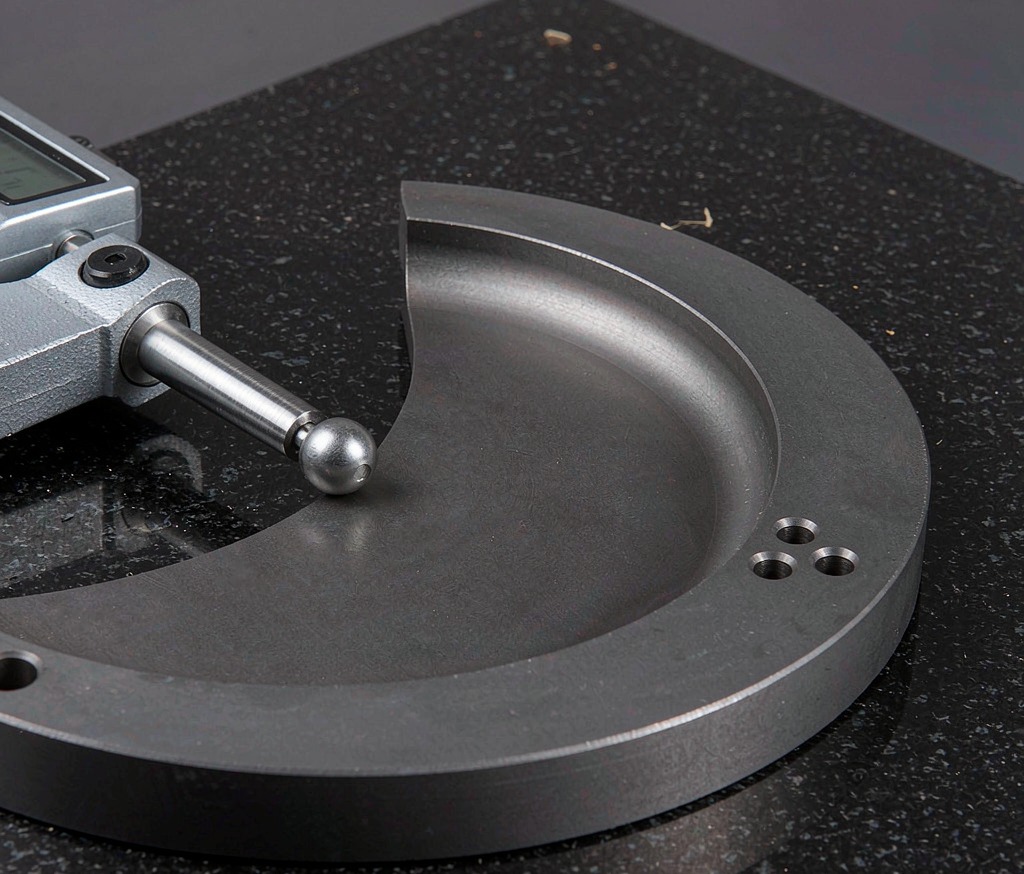
On 625 we hold roughly ±0.05 mm on general features and ±0.02 mm on critical bores, seal seats and locating diameters. Because the alloy springs back subtly under cutting forces, we rough, relieve stress where needed, and finish in a separate pass so the final cut sees a stable, settled part rather than a stressed one.
EDM for Slots and Features Conventional Cutting Cannot Reach
Some 625 features — deep narrow slots, internal splines, sharp internal corners and holes in already-hardened stock — are better made by electrical discharge machining than by cutting. EDM machining removes material by spark erosion with no cutting force, so there is no deflection, no work hardening and no tool-pressure distortion. Wire EDM handles through-features and profiles with exceptional accuracy when the geometry suits a travelling wire.
Heat Treatment Considerations
Annealed 625 is the usual supply condition and the easiest to machine. Unlike 718 it is not precipitation-hardened, so there is no age cycle to protect — but stress-relief between roughing and finishing is worthwhile on thin or asymmetric parts to prevent movement. Our heat treatment capabilities support stress relief and specialised cycles when a program calls for them.
Cost and DFM
625 is priced by both material cost and the long cycle times its machining demands, often many times the cost of an equivalent stainless part. The biggest savings come from eliminating deep pockets with tiny corner radii, consolidating hole sizes, and avoiding features that force long tool reaches. Starting from a near-net forged blank instead of solid bar also cuts spindle time substantially on production volumes.
Inspection and Traceability
Aerospace and oil-and-gas 625 parts require full traceability. We supply mill test certificates to heat number, dimensional first-article and final reports, and positive material identification by XRF on the finished part. Our Hastelloy machining services and nickel alloy machining services pages describe the same documentation discipline across the corrosion-resistant superalloy family.
Frequently Asked Questions
Is 625 harder to machine than 316?
Substantially. It is far stronger, gummier and hotter-cutting, so expect much lower speeds, heavy coolant and shorter tool life than any stainless grade.
Do I need special tooling?
Yes — sharp coated carbide with positive rake and high-pressure through-tool coolant is the practical minimum for acceptable tool life and tolerance control.
When should I use EDM instead of cutting?
For deep slots, sharp internal corners, features in already-hardened stock, or any geometry where cutting force would distort the part. EDM removes material with no mechanical force.
Can 625 be welded without heat treatment?
Generally yes — 625 is solid-solution strengthened and does not require post-weld heat treatment, which is a key reason it is chosen over age-hardened alloys in welded assemblies.
How much more does 625 cost than stainless?
Typically several times the cost of an equivalent 316 part, driven mostly by material price and the long machining cycle times the alloy demands.
Ready to Start Your Project?
Get a build-ready quote on your custom metal parts within 24 hours. Share your drawing and our engineers will respond with process, lead time, and pricing.

