
Aluminum casting services turn molten metal into net-shape components that would be slow or costly to machine from solid stock. Whether you need a handful of prototype housings or millions of thin-wall brackets, the right casting route protects your margin and your tolerance budget. At Huaxiao we run die, sand, permanent-mold, and investment processes under one roof, then finish parts with in-house CNC so the casting you receive is ready to assemble. This guide compares the main aluminum casting methods, the alloys buyers specify most, and how to choose a process that matches your volume and geometry. We also cover the quality controls that separate a production-ready casting from a rough foundry blank.
What Aluminum Casting Services Include
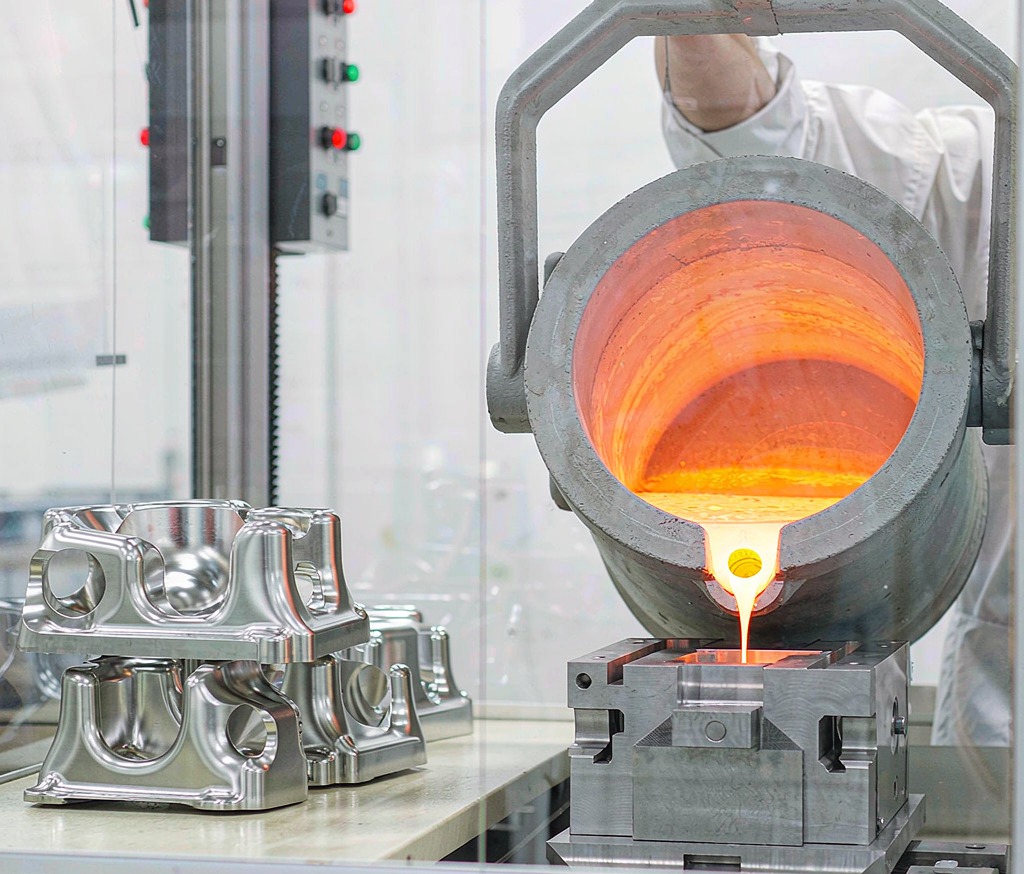
Professional aluminum die casting and its sand and permanent-mold cousins cover the full chain from tooling and melting through trimming, heat treatment, and inspection. A complete service should also offer secondary operations so you are not juggling multiple vendors. We routinely pair casting with CNC machining of castings to hit sealing faces and bearing bores that the mold cannot hold.
Buyers should expect DFM feedback before tooling, alloy certification, and dimensional reports at first article. Whether the part is a gearbox housing or a heat-sink fin, the goal of aluminum casting services is to deliver a dimensionally stable, porosity-controlled component at the lowest landed cost per piece.
Good suppliers also manage gating and risering so shrinkage is directed away from functional surfaces, then verify with X-ray or dye-penetrant testing when the application is safety related. That process discipline is what lets a casting replace a fabricated weldment without sacrificing reliability.
Die Casting vs Sand Casting vs Permanent Mold
Die casting forces molten aluminum into a steel die at high pressure, producing tight tolerances and excellent surface finish at very high volumes. Sand casting uses a reusable sand mold, making it ideal for low volumes, large parts, and complex internal passages without expensive tooling. Permanent mold sits between the two: a reusable metal mold filled by gravity or low pressure, giving denser structure than sand at moderate volumes.
For corrosion-resistant or thin-section work you may also consider investment casting, which delivers fine detail and minimal draft. The choice comes down to annual quantity, wall thickness, and how much machining you can tolerate after casting.
As a rule of thumb, die casting pays back its tooling above roughly five thousand parts a year, permanent mold fits the few-hundred to low-thousands range, and sand casting is unbeatable for one-offs and very large sections. Matching the process to volume is the single biggest cost lever in any casting program.
Common Aluminum Alloys (A356, A380, 6061)
A380 is the workhorse die-casting alloy: fluid, pressure-tight, and easy to plate. A356 (and its heat-treatable variant A357) is favored for structural and automotive parts because it responds to T5/T6 heat treatment with strong mechanical properties. 6061 is more common in sand and permanent-mold casting where weldability and corrosion resistance matter.
Each alloy changes shrinkage, feed requirements, and machinability, so the alloy decision should be made with your caster, not after tooling. We help customers balance strength, finish, and cost before the first pour.
Silicon content is the hidden variable: higher silicon improves castability and wear resistance but dulls cutting tools, so the alloy choice quietly sets your machining parameters downstream. We publish recommended speeds and feeds per alloy so the finishing cell is ready the day the first castings land.
Tolerances, Wall Thickness & Tooling Cost
Die casting holds the tightest as-cast tolerances (often +/- 0.1 mm on small features) and the thinnest walls (around 1.5 mm), but tooling runs into five figures. Sand casting tolerates thick sections and huge parts but needs generous draft and heavier walls. Permanent mold balances both for mid-volume runs.
If your design has sealing surfaces or bearing seats, plan to CNC mill those features after casting. Tooling cost is amortized over volume, so die casting wins only above roughly 5,000 pieces per year.
Draft angle is another quiet cost driver: every degree of draft you design in reduces ejection force and tool wear, which lengthens die life. We return a DFM sheet that flags thin sections, sharp corners, and insufficient draft before any steel is cut, because fixing these after tooling is exponentially more expensive.
Machining and Finishing After Casting
Most castings need at least some finishing. We integrate CNC boring for bores, surface grinding for seats, and deburring for cosmetic edges. Cosmetic or corrosion needs can be met with related aluminum extrusion trim or anodize and powder coat.
Because we control casting and machining in one building, the datum scheme is consistent from mold to final inspection, which shrinks variation across a production lot.
Finishing also closes the loop on appearance: a cast surface that is perfectly functional may still need bead blasting or polishing to meet a consumer spec. Keeping blasting, anodize, and paint under the same roof means the part is handled fewer times and the color match is controlled against the exact alloy and finish you approved.
When to Choose Aluminum Casting
Choose casting when the part is hollow, has varying wall thickness, or would waste most of a billet to chips. Casting also beats machining for thin ribs and complex curves. Our deeper comparison in forging vs casting helps when the component sees high load.
For buyers weighing process trade-offs, our die casting services guide and the aluminum die casting overview cover cost and alloy detail.
If weight is the priority, aluminum casting is hard to beat: it delivers stiffness where you need it and trims metal where you do not, often at a fraction of the mass of a steel fabrication. That is why it dominates automotive, drone, and enclosure programs where every gram is counted against range and handling.
Frequently Asked Questions
What is the minimum order for aluminum casting?
Sand casting can start at a single prototype; die casting usually needs 1,000+ pieces to justify tooling. Permanent mold fits the middle ground at a few hundred parts.
Which alloy is best for structural parts?
A356-T6 offers the best strength-to-weight after heat treatment and is common in automotive and robotics structural castings.
Can you machine castings in-house?
Yes. We finish bores, faces, and threads with CNC so the delivered part meets print without a second supplier.
How thin can a die-cast wall be?
Around 1.5 mm for small zinc-free aluminum parts, though 2 mm is safer for long flows and large areas.
Is aluminum casting corrosion resistant?
Naturally corrosion resistant, and further protected by anodizing or powder coat for outdoor and marine use.
Do you provide first-article inspection?
Yes, including material certs, CMM reports, and X-ray or dye-penetrant testing on request.
Ready to Start Your Project?
Get a build-ready quote on your custom metal parts within 24 hours. Share your drawing and our engineers will respond with process, lead time, and pricing.

