
When your components must survive corrosive environments without sacrificing strength, stainless steel casting services are often the most cost-effective route to a near-net-shape part. Casting lets you consolidate complex geometries — internal passages, bosses, and thin walls — that would be expensive or impossible to machine from bar stock. Whether you need a handful of prototypes or high-volume production of pump, valve, and food-grade components, the right casting process and grade choice determine both your per-part cost and your field reliability.
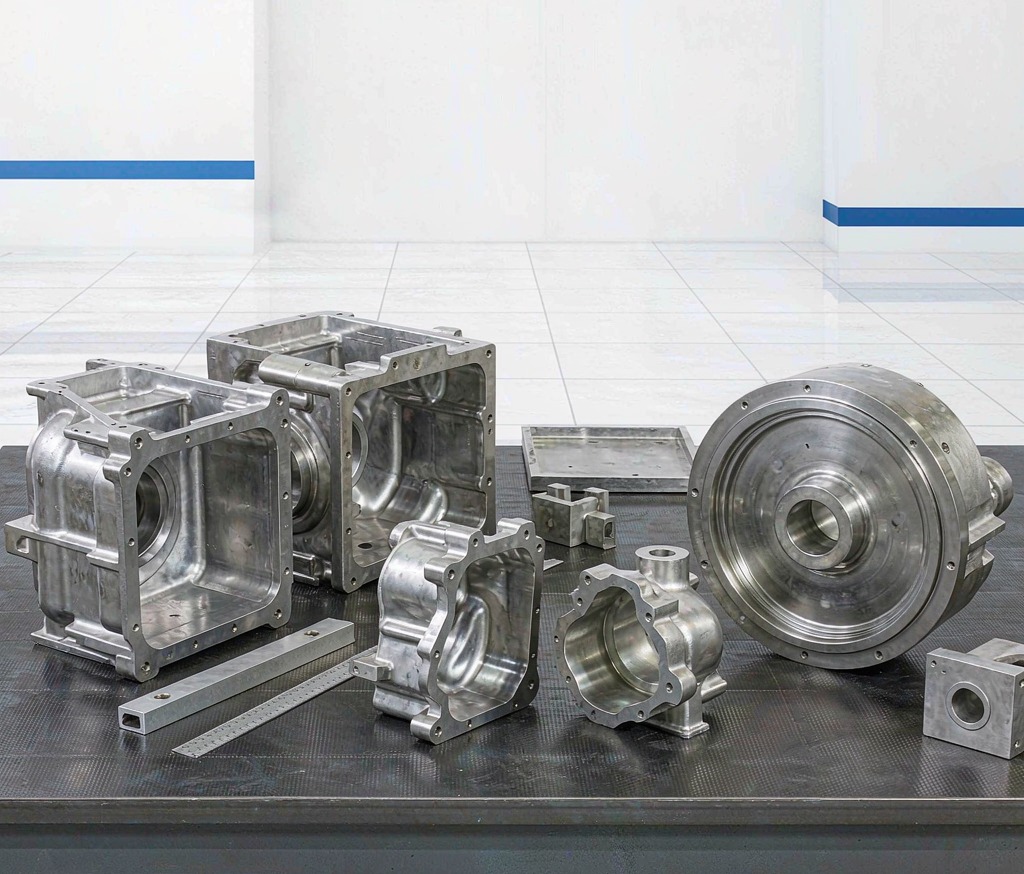
Why Choose Stainless Steel Casting
Stainless casting combines corrosion resistance with design freedom. Unlike fabrication, which welds multiple stamped or machined pieces together, a single investment casting or sand casting pour delivers a monolithic part with no weak joints. That matters for pressure-containing parts such as valve bodies and pump housings, where a weld seam is a potential leak path. Casting also minimizes material waste: you shape the metal close to its final form instead of machining away most of a solid billet.
From a commercial standpoint, casting shines when the geometry is complex or the volume is modest. Machining the same part from a solid block means hours of spindle time and piles of chips; casting gets you 80–95% of the way there in one pour. For buyers, that translates directly into lower unit cost and shorter lead time, especially when several features can be cast in rather than machined in.
Investment vs Sand Casting for Stainless Steel
Investment casting (lost-wax) produces the tightest tolerances and the best surface finish, ideal for small-to-medium stainless parts with intricate detail. Sand casting is the more economical choice for larger components and lower volumes, where slightly rougher surfaces are acceptable and post-machining cleans up critical faces. Our casting plus machining workflow pairs either method with CNC finishing so you receive a ready-to-assemble component. Many buyers start with sand casting for validation parts, then move to investment casting for production once the geometry is locked.
The decision is rarely purely about tolerance. Lead time, tooling cost, and inspection all factor in. Investment casting needs a wax pattern and ceramic shell, so it carries more front-end setup; sand casting reuses tooling more flexibly between short runs. We help you weigh these trade-offs against your volume and quality targets so the process you choose stays economical as the program scales.
Common Stainless Grades: 304, 316, 17-4PH
Grade selection drives both cost and performance. 304 is the general-purpose austenitic workhorse for mildly corrosive settings. 316 adds molybdenum for superior resistance to chlorides and marine exposure. 17-4PH is a precipitation-hardening grade that combines stainless corrosion resistance with high strength after heat treatment — perfect for structural brackets and hubs. Choosing the grade is a joint engineering decision; our material consulting and stainless steel machining teams help you balance weldability, hardness, and budget.
Beyond these three, duplex and specialty grades handle the most aggressive media. The key is to avoid over-specifying: specifying 316 where 304 would do adds cost with no field benefit, while under-specifying invites premature failure. We routinely review grade choices during quoting and suggest the leanest grade that still meets your service conditions.
Secondary Machining and Finishing
Most castings need at least some machining on datums, threads, and sealing faces. We finish cast parts on CNC milling centers and apply passivation to maximize the chromium oxide layer that gives stainless its corrosion resistance. When dimensional stability matters, a controlled heat treatment cycle relieves residual stress before final cutting. The result is a part that meets drawing spec on every critical dimension.
Finishing is also where appearance and compliance are settled. Food- and pharma-grade parts often require a specific roughness and a certified passivation; architectural fittings may call for polishing or brushing. Because we control casting, machining, and finishing under one roof, there is no finger-pointing between suppliers if a surface does not meet spec — one team owns the whole result.
Industries and Applications
Stainless castings show up everywhere cleanliness and durability count: food and beverage processing, pharmaceutical equipment, marine hardware, chemical pumps, and architectural fittings. Our precision casting services support buyers who need repeatable quality across batches, while our broader metal surface treatment options let you specify anything from a raw cast look to a polished sanitary finish.
Because stainless is non-magnetic in the 300 series and easy to clean, it is also the default for analytical and semiconductor tooling where contamination control is strict. If your application spans several of these worlds, standardizing on a single casting partner simplifies auditing and documentation.
Cast vs Machined: When to Choose Casting
As a rule of thumb, choose casting when the part is complex, low-to-mid volume, or benefits from consolidating multiple features into one piece. Choose machining when you need very high dimensional precision on a simple shape, or when volume is so low that any tooling cost is hard to justify. Often the best answer is a hybrid: cast the body, then machine only the faces that matter, which is exactly what our combined process delivers.
How to Request a Stainless Steel Casting Quote
Send us your 3D model or 2D drawing, target grade, annual volume, and any certification needs (material certs, pressure testing, RoHS). We return a build-ready quote covering pattern or tooling, casting method, machining, finishing, inspection, and lead time. Early design feedback through our investment casting guide often trims cost before the first pour.
Frequently Asked Questions
What is the minimum wall thickness for stainless casting?
Investment casting typically holds walls from 1.5 mm upward depending on size and grade; sand casting usually needs thicker sections. We review your drawing and recommend the thinnest reliable section.
Which grade should I pick for seawater exposure?
316 or a duplex grade is the safe default for chlorides and marine service. 304 is fine for indoor or mildly corrosive duty but will pit in seawater.
Do you machine castings in-house?
Yes. We pair casting with CNC milling and turning so critical faces, threads, and bores meet your tolerance without a second supplier.
Can you passivate and certify the parts?
We offer passivation per ASTM A967 and provide material and process certificates on request for regulated industries.
How does casting compare to machining from bar stock?
Casting gets you closer to net shape, so you machine far less material away. For low volumes and complex forms this is usually cheaper and faster than hogging a solid billet.
Ready to Start Your Project?
Get a build-ready quote on your custom metal parts within 24 hours. Share your drawing and our engineers will respond with process, lead time, and pricing.

