
Two processes dominate precision metal part production, and they sit at opposite ends of the make-vs-machine spectrum. Investment casting grows a near-net-shape part from a wax pattern and molten metal; CNC machining removes material from a solid block to reach the final form. Both can hit tight tolerances, but the right choice depends on geometry, volume, lead time and material. This guide gives buyers a clear decision framework.
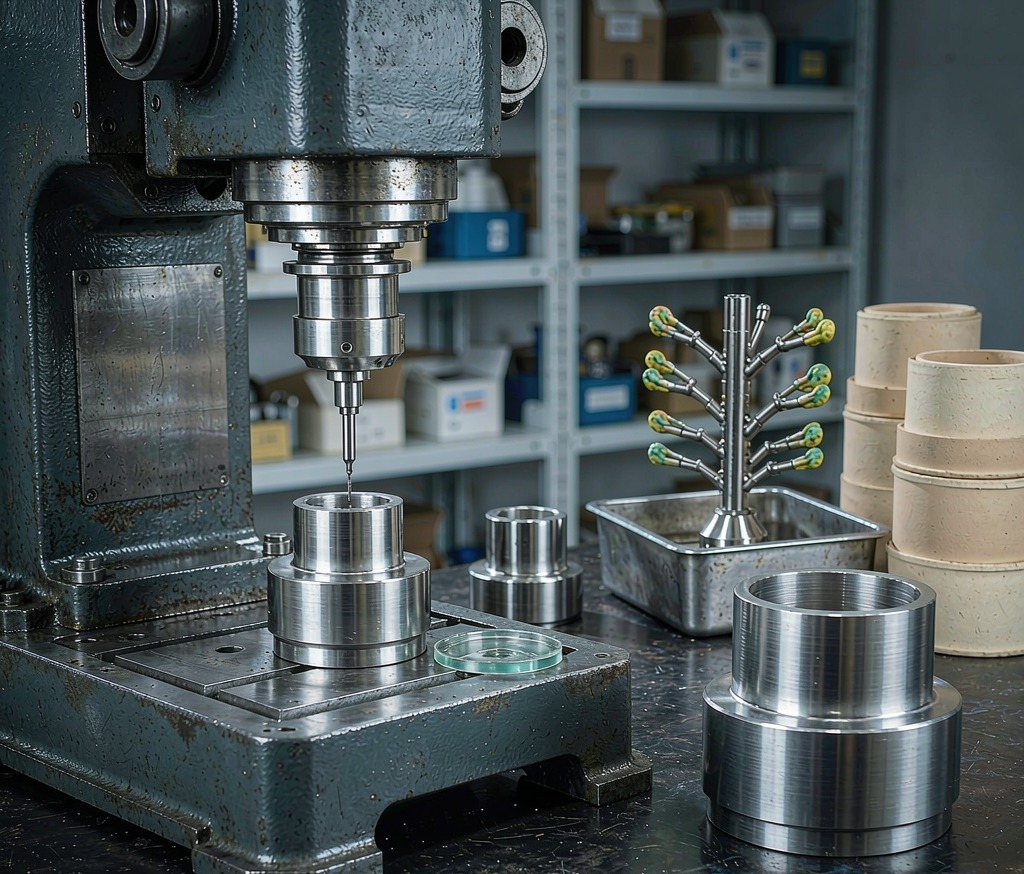
How Each Process Builds the Part
Investment casting coats a wax pattern in ceramic, melts the wax out, and pours metal into the hollow shell. It excels at complex, consolidated shapes — internal passages, undercuts and organic forms that would need multiple machined pieces. CNC milling and CNC turning start from bar or plate and cut to shape, giving unmatched dimensional control and material integrity. Our CNC machining services are the default when geometry is open and tolerances are tight.
Geometry and Complexity
If the part has thin walls, internal channels or many features in one piece, investment casting consolidates them and cuts assembly. If it is mostly prismatic or round with accessible features, machining is faster to set up and easier to hold. We often combine the two: cast the complex blank, then machine only the critical datums — a hybrid our metal casting team uses for valve and hardware bodies.
Dimensional Tolerance
CNC machining wins on as-produced accuracy and repeatability, routinely holding ±0.01–0.05 mm without special effort. Investment casting typically holds ±0.3–0.5 mm as-cast, with machining reserved for seal faces and bores. When the whole part must be precise, machining leads; when only a few faces matter, casting plus local machining is cheaper.
Cost at Different Volumes
Investment casting needs a tool and a tree, so it carries setup cost that pays back across hundreds of parts. CNC machining has near-zero setup but a higher per-part cycle cost. Below a few hundred parts, machining is often cheaper; above that, casting pulls ahead for complex shapes. The same volume logic appears in our process selection advice for other methods.
Lead Time and Materials
CNC machining turns a drawing into parts in days. Investment casting adds pattern, shell and pour lead time, but it reaches alloys and geometries machining struggles with. For a one-off or bridge run, machine it; for a recurring complex part, cast it. Teams also compare casting against forming in our forging vs casting guide.
Frequently Asked Questions
Which is more accurate? CNC machining, by a clear margin, especially across the whole part.
When does casting beat machining on cost? For complex shapes at volume (hundreds+ per year), because per-part cycle cost drops.
Can the two be combined? Yes — cast a near-net blank, then machine only the critical features. This is common and cost-effective.
Which is faster to first article? Machining, typically in days versus weeks for a cast tool and tree.
Ready to Start Your Project?
Get a build-ready quote on your custom metal parts within 24 hours. Share your drawing and our engineers will respond with process, lead time, and pricing.

