
303 stainless steel is the free-machining workhorse of the stainless family, and 303 stainless steel machining is one of the most requested services for buyers who need genuine corrosion resistance without the slow cycle times and tool wear that plague other austenitic grades. If your project calls for screws, fittings, spacers, or turned components that must ship in volume, 303 delivers predictable speeds and an excellent surface finish. In this guide we break down what makes 303 different, the CNC processes that suit it best, and the design choices that keep your per-part cost down. For a broader comparison, see our stainless steel machining services overview and our metal material selection guide.
What Is 303 Stainless Steel
303 is an austenitic stainless steel with controlled sulfur additions (0.15–0.35%) that act as built-in chip breakers. Those tiny sulfide inclusions are exactly what give 303 its famous machinability—roughly 75% better than 304 under the same tooling. The trade-off is slightly reduced corrosion resistance and poor weldability, but for parts that are machined and then passivated, the difference is rarely noticeable in real service. The composition stays close to 18% chromium and 8–10% nickel, so it still carries the familiar stainless shine and resists oxidation in most indoor and lightly corrosive environments. It is the grade engineers reach for when a part is essentially “machined from bar” rather than formed or welded.
Why 303 Machines So Cleanly
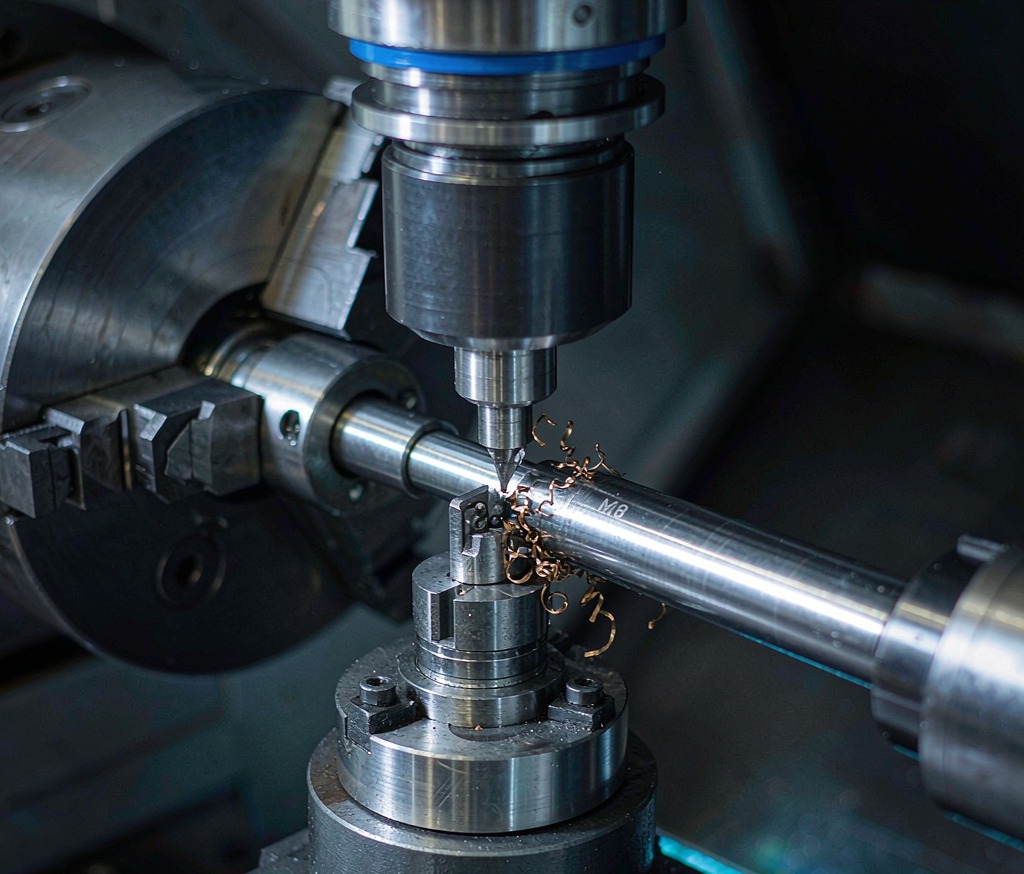
The sulfur inclusions shorten chips and reduce built-up edge on the cutting tool. That means CNC turning and CNC milling can run at higher feed rates with less heat. Tool life stretches out, and secondary deburring drops because edges come off the machine cleaner. For high-volume screw-machine work, Swiss turning is especially effective on 303 because the sliding headstock and guide bushing keep slender diameters stable while the free-machining chips evacuate quickly. The net effect is lower cost per part at production scale, which is why 303 dominates fastener and fitting categories.
Best CNC Processes for 303
Most 303 parts start on a lathe. CNC turning handles hex nuts, standoffs, and shaft sections, while Swiss turning covers long, thin pins and fittings. For flats, slots, and cross holes, CNC milling complements the lathe work. Complex geometries with compound angles benefit from 5-axis CNC machining, which reduces setups and holds tighter positional tolerance across multiple faces. When a part mixes turned and milled features, combining these processes in one cell avoids extra handling and keeps lead times short.
Tolerances and Thread Quality
303 holds standard commercial tolerances easily and can reach ±0.01 mm on turned diameters with the right tooling. Threads roll or cut cleanly; rolled threads are preferred for strength because 303 work-hardens slightly at the surface during forming. A surface finish of Ra 0.8 µm is routine, and finer finishes are achievable with a light finishing pass. If your part is a screw or fitting, specify rolled threads to maximize fatigue life, and keep critical sealing diameters on the turned feature rather than a milled one.
Passivation and Surface Care
Because machining exposes fresh, sulfur-rich surfaces, a passivation treatment is recommended to restore the chromium-rich passive layer. Citric or nitric passivation removes free iron and improves corrosion performance without changing dimensions. Welding 303 should be avoided where possible; if joining is required, plan for post-weld cleanup and consider 304 or 316 instead. A passivated 303 part will match the corrosion behavior buyers expect from stainless in most atmospheric and mild-chemical conditions.
Design Tips to Cut Cost
Specify stock diameters close to final size to minimize turning, group features to reduce tool changes, and favor radii over sharp internal corners. Use standard thread sizes and avoid overly tight tolerances on non-critical features. These small choices compound across thousands of parts and can cut your unit price noticeably. Our 304 stainless steel machining guide is a good next read if your part also needs welding or forming.
303 vs 304 and 316
304 welds and forms better; 316 adds molybdenum for chloride resistance in marine and chemical service. But neither machines as fast as 303. If your part is machined from bar and not heavily welded, 303 is usually the lowest-cost corrosion-resistant choice. Our 304 guide and the material selection guide help you pick the right grade for the environment. When corrosion service is severe, step up to 316; when cost and machinability rule, 303 wins.
Common 303 Part Examples
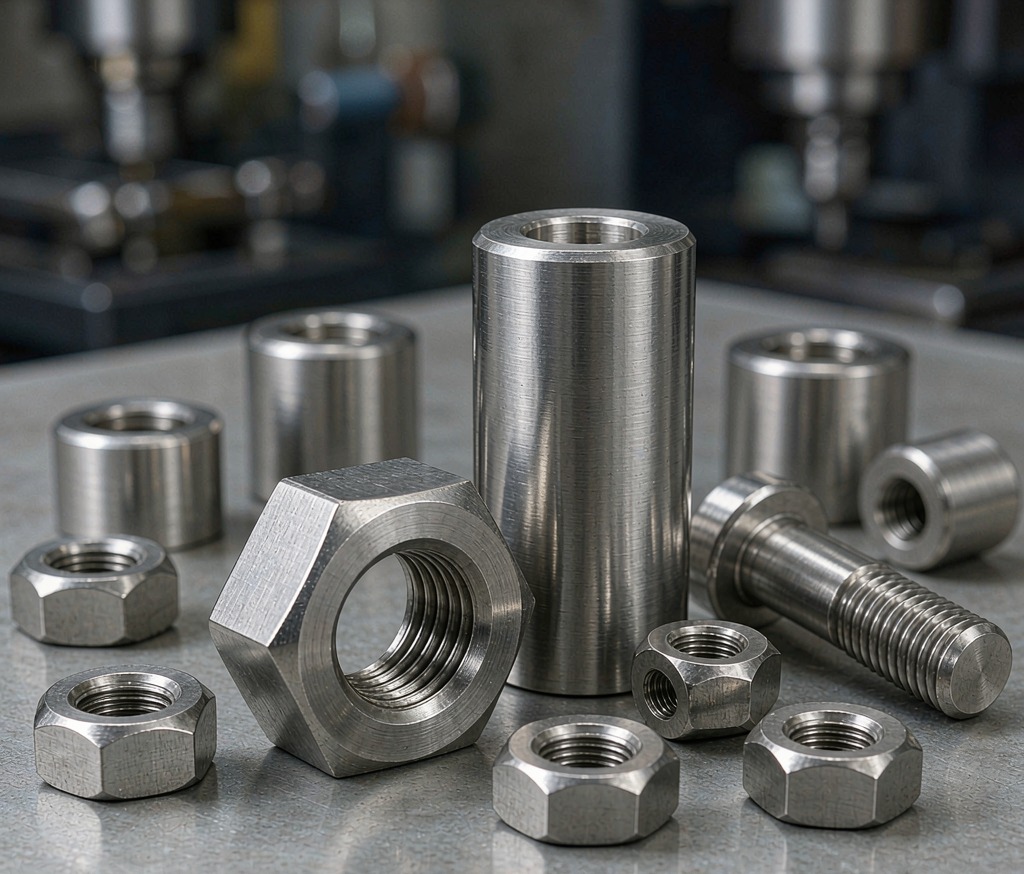
303 is everywhere in high-volume hardware: hex nuts and standoffs, hose fittings, instrument bodies, and countless turned spacers and bushings. Any component that is machined from bar, sees little welding, and must resist rust is a candidate. Buyers frequently pair 303 with a passivated finish for indoor and mild-outdoor duty. If you are consolidating a bill of materials, 303 is the grade that keeps machining hours—and therefore cost—lowest across a family of small turned parts, which is why it remains the default for stainless screw products worldwide.
How to Prepare a 303 RFQ
A clear request for quote saves both sides time and money. Send a PDF or STEP drawing with all critical dimensions toleranced, the required quantity and annual forecast, and the finish you expect—passivated, electropolished, or as-machined. Tell us whether threads are rolled or cut and whether any features must be deburred to a specific edge break. If the part mates with another component, share that fit requirement so we can hold the right tolerance where it matters and relax it where it does not. For high-volume screw products, note the packing and labeling you need at the line. A complete RFQ lets us return a build-ready quote with process, lead time, and pricing within 24 hours instead of a list of follow-up questions.
Frequently Asked Questions
Can 303 stainless steel be welded?
It can be welded, but the sulfur content promotes hot cracking, so welding is generally avoided. For welded assemblies, 304 or 316 are better choices, and passivation restores corrosion resistance afterward.
Is 303 food-safe?
303 is not recommended for food contact because of its sulfur content. For food and pharmaceutical parts, choose 304 or 316 and review our surface treatment options.
What finishes work best on 303?
Passivation is the standard. Electropolishing adds a brighter, smoother surface, and light bead blasting prepares parts for painting or bonding.
303 stainless steel remains the smartest choice when you need corrosion resistance and volume production at the lowest machining cost. Send us your drawing and we will recommend the fastest, most cost-effective process path for your 303 components.
Ready to Start Your Project?
Get a build-ready quote on your custom metal parts within 24 hours. Share your drawing and our engineers will respond with process, lead time, and pricing.

