
Compressors turn speed and pressure into performance, and compressor metal parts are where that performance is won or lost. Impellers, diffusers, rotors, valve plates, and housings must hold micron tolerances at high speed and temperature. This guide covers the components, the alloys, and the 5-axis machining that makes them reliable. Our CNC machining services support compressor programs from prototype to production.
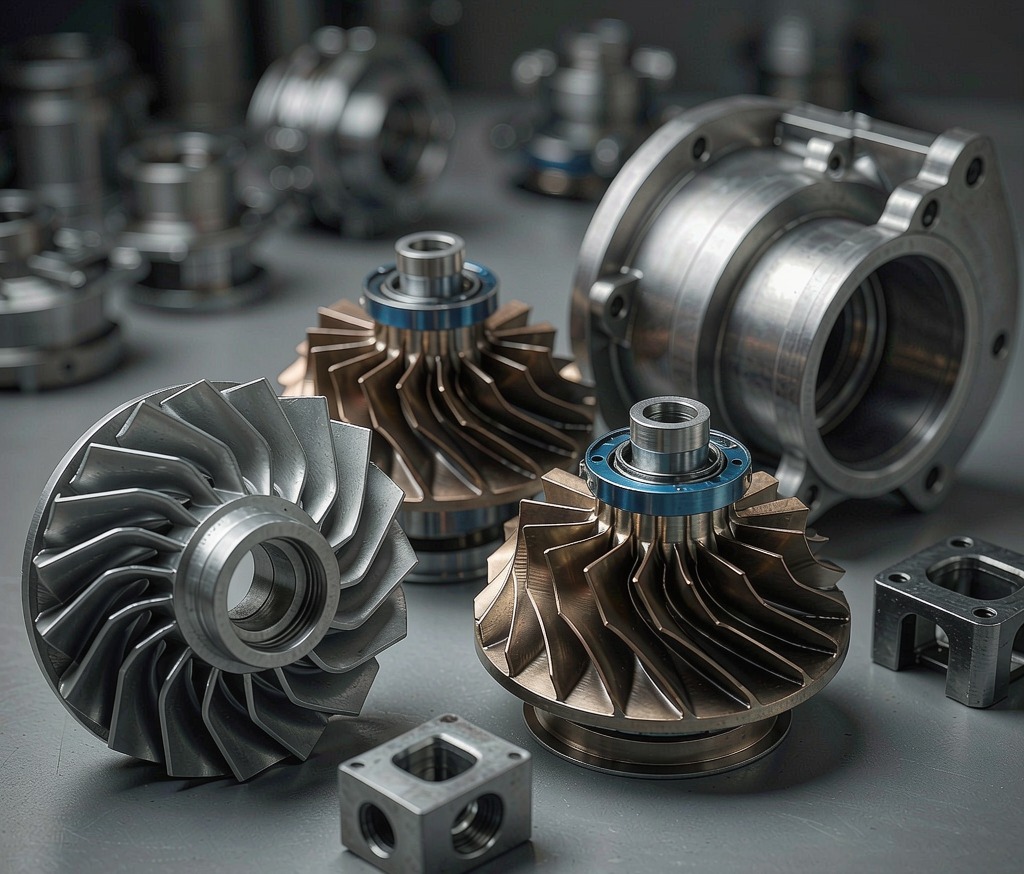
Types of Compressor Metal Parts
Centrifugal and turbo compressors use impeller wheels, diffusers, nozzle rings, and shaft assemblies. Reciprocating compressors use cylinders, pistons, rods, and valve plates. Each part carries load, gas path, or sealing duty. CNC milling cuts the complex blade and vane profiles, while CNC turning produces shafts, rings, and rotational bodies to tight runout. A single compressor can contain a dozen precision parts that must all agree dimensionally for the unit to reach its rated efficiency and pass its test stand.
Materials for Compressor Components
Aluminum 6061 and 7075 are common for impellers and light rotors. Stainless 316L and duplex steels handle corrosive gas. Titanium and Inconel are used where temperature and strength rule. Stainless steel machining is routine for valve plates and housings in refrigerant and process compressors. Material choice follows the gas, pressure, and temperature of the duty, and the wrong alloy fails quickly in sour or high-pressure service, sometimes with safety consequences.
5-Axis Machining of Impellers
Impeller blades are compound curved airfoils that ordinary 3-axis machines cannot cut in one setup. 5-axis CNC machining reaches the full blade profile, hub, and splitter in a single clamping, improving accuracy and surface finish while cutting setup cost. Tight control of blade angle and wall thickness directly raises compressor efficiency and lowers turbulence loss. We verify blade geometry against the model so the gas path matches the design intent and the part performs as simulated.
Tolerances, Balance, and Inspection
Critical features are held to micron levels; rotors need controlled runout and are often dynamically balanced. Surface grinding refines sealing faces. We verify dimensions, material certs, and hardness, and can supply inspection records for aerospace and oil-and-gas programs. Where the part is flight- or pressure-critical, documentation matches your quality system. First-article inspection on contour and thickness prevents a bad batch from reaching the line and forcing a costly teardown later.
Heat Treatment and Finishing
Shafts and rotors are frequently hardened for wear and fatigue. Heat treatment sets strength after rough machining, followed by finish grinding. Coatings such as nickel-PTFE or hard anodize reduce friction and corrosion on sealing and sliding surfaces. Our 5-axis machining page details the capability for complex compressor geometry. The right post-treatment extends service life in abrasive or corrosive gas streams and reduces unplanned downtime.
Prototyping and Volume Production
Compressor parts move from single-piece prototype to repeat production under one quality plan. We machine evaluation impellers and rotors from stock, confirm balance and gas-path geometry, then scale with the same fixturing and inspection records. Because the alloys are often exotic, early material sourcing avoids a lead-time surprise at full volume. Our stainless steel machining page details how we handle corrosion-resistant compressor housings and valve plates from prototype onward.
Drawing Tips for Compressor Parts
Provide the full 3D model with material grade, heat-treatment spec, and balance requirement. Flag the sealing and bearing interfaces, blade tolerance, and any surface-finish limit on gas-path features. Note the gas and temperature so we select the right alloy and coating. A complete drawing lets us machine to print and supply the records your audit expects. Indicate the mating shaft and housing so fits are confirmed before shipment and the assembly is correct on arrival.
Common Compressor Parts We Make
Typical work includes centrifugal impellers, inducer wheels, diffuser rings, backplates, valve plates, and shaft sleeves. Each carries a different duty: the impeller sets efficiency, the valve plate sets sealing, and the shaft sets runout. 5-axis CNC machining cuts the impeller and diffuser in one clamping for accuracy, while CNC turning produces the rotational shafts and rings to tight concentricity. Because these parts often run at speed, we treat balance and surface finish as design features, not afterthoughts, and verify them against the model before the part leaves the shop so the assembly performs as simulated.
Quality Documentation for Critical Parts
For aerospace, oil-and-gas, and semiconductor compressor programs, we supply material certs, heat-treatment records, and first-article inspection matched to your quality system. Stainless steel machining for corrosive-duty housings includes passivation and verification records. Our stainless steel machining page details the documentation we provide. Complete records protect you during audits and let a failed part be traced back to its melt and process, which is exactly what a safety-critical compressor program requires when a unit runs under pressure and temperature for years.
Frequently Asked Questions
What materials are used for compressor impellers?
Aluminum 6061/7075 for light rotors, stainless 316L and duplex for corrosive gas, and titanium or Inconel for high-temperature, high-strength duty.
Can you machine complex impeller blades?
Yes. 5-axis simultaneous machining cuts full blade profiles, hubs, and splitters in one setup for accuracy and efficiency.
Do compressor parts need balancing?
Rotating parts such as impellers and shafts are typically dynamically balanced, with runout and concentricity controlled to spec.
Compressor metal parts demand micron accuracy and the right alloy for the duty. Send us your drawing and we will machine and document them to your standard.
Ready to Start Your Project?
Get a build-ready quote on your custom metal parts within 24 hours. Share your drawing and our engineers will respond with process, lead time, and pricing.

