
For cutting plate and sheet, the waterjet vs plasma cutting decision affects edge quality, material limits, and cost. Waterjet slices with a high-pressure abrasive stream; plasma melts with an ionized gas arc. Both are fast, but they suit different jobs. This guide helps you pick. See our waterjet cutting services and plasma cutting services for the capabilities.
How Each Process Cuts
Waterjet forces water mixed with garnet abrasive through a jewel orifice at extreme pressure, eroding the material with no heat. Plasma strikes an electric arc through gas to melt and blow away the cut. Plasma cutting is fast on conductive plate; waterjet is near-universal, cutting metal, stone, glass, and composites. The absence of heat in waterjet is the single biggest differentiator when the part must keep its metallurgy intact for a later weld or heat treatment.
Edge Quality and Heat-Affected Zone
Waterjet leaves a clean, cold edge with no heat-affected zone, so the part can be welded or machined immediately with no hardening. Plasma leaves a beveled edge and a heat-affected zone that can harden the cut line. For parts that need a finished edge or tight tolerance, waterjet wins; for rough structural cuts, plasma is fine. If the next operation is a weld, waterjet saves a grinding step that plasma would force on you and removes a potential crack-initiation site.
Materials and Thickness
Plasma is limited to conductive metals and is best on steel and stainless up to moderate thickness. Waterjet cuts anything and handles very thick plate. Fiber laser cutting is the speed king on thin-to-mid sheet; sheet metal laser cutting covers fine-profile work. Waterjet remains the most material-flexible of the three, making it the safe default when the job mixes metal with non-metal layers or when the alloy is unknown.
Speed and Cost
Plasma is usually the cheapest and fastest for straight, thick steel cuts where edge finish is not critical. Waterjet is slower and uses abrasive, but avoids secondary finishing and works on any material. CNC punching can be cheaper still for high-volume perforated sheet. Choose by edge requirement first, then volume. A part that needs a clean edge either way may still be cheaper on plasma if you can tolerate the bevel and a light grind at the edge.
When to Choose Which
Choose waterjet when the material is non-conductive, very thick, or when you need a clean cold edge with no HAZ. Choose plasma for fast, low-cost cuts on steel plate where a beveled edge is acceptable. After cutting, CNC bending and shearing finish the form. Our laser cutting services page compares the laser option for thin sheet. The right cutter is the one that matches the edge spec without adding a second operation you did not budget for.
Secondary Operations and Workflow
Cut parts rarely ship as-is. After cutting, CNC bending forms brackets and CNC punching adds holes or tabs in volume. Waterjet-cut blanks are ready to weld immediately thanks to the cold edge, while plasma-cut edges may need a light grind first. Fiber laser cutting is the preferred partner for thin-sheet fine profiles. Telling the shop the next operation lets it pick the cutter that delivers a ready-to-use edge without a surprise second process that erodes margin.
Parts Cut by Each Process
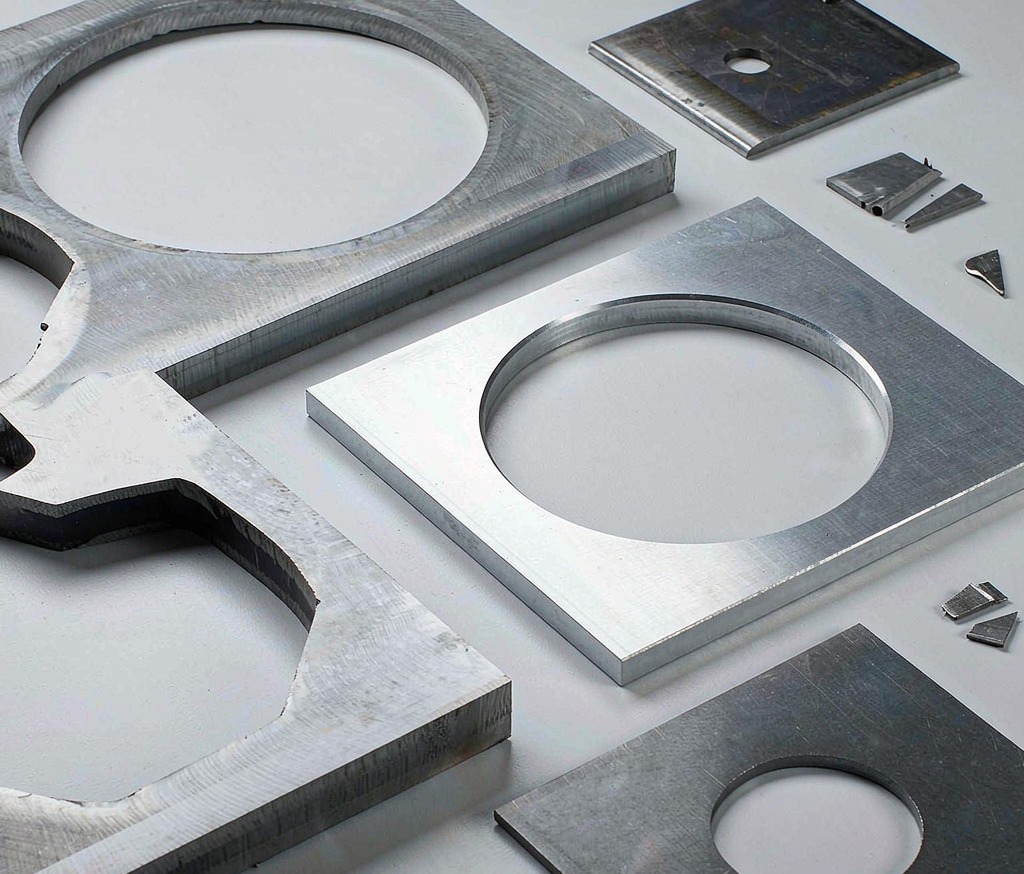
Plasma is the workhorse for straight steel cuts: base plates, structural clips, and brackets where a beveled edge is fine and speed matters. Waterjet owns the jobs plasma cannot: thick plate, titanium, tool steel, and any non-metal such as gasket material, stone, or composite facing. Plasma cutting for fast steel and fiber laser cutting for thin sheet cover most metal work, while waterjet fills the gaps. If the cut edge must be welded or machined next, waterjet’s cold edge removes a grinding step and a potential crack source, which pays back on precision assemblies that see load.
Design Tips for Clean Cuts
For plasma, allow for the bevel and a small kerf, and keep holes above the minimum size the arc can pierce cleanly. For waterjet, avoid tiny internal slots that slow the abrasive stream, and tab small parts so they do not drop through. Sheet metal laser cutting is the faster choice for fine thin-sheet profiles. Our laser cutting services page compares the thin-sheet option. Giving the shop the next operation tells it which cutter delivers a ready edge without a second process eating your margin on a part that should have shipped finished.
Tolerance and Edge Squareness
Waterjet holds tight profiles on most plate, though the stream has a small taper that grows with thickness; we compensate for it in the cut path so the edge stays square. Tolerances depend on material and thickness, and very thick plate is quoted case by case. CNC punching is the alternative when the part is thin and perforated. For parts that weld or bolt together, the cold, square edge means holes and miters line up first time with no edge prep. Our laser cutting services page explains where thin-sheet laser beats both on speed and edge detail for high-volume work.
Frequently Asked Questions
Does waterjet have a heat-affected zone?
No. Waterjet is a cold process, so the edge needs no post-treatment before welding or machining.
Which is cheaper, waterjet or plasma?
Plasma is usually cheaper and faster for thick steel cuts where edge finish is not critical; waterjet costs more but cuts any material cleanly.
Can waterjet cut non-metal?
Yes. Waterjet cuts stone, glass, composites, and rubber that plasma cannot touch.
Waterjet vs plasma cutting is an edge-quality and material decision. Send us your part and we will cut it on the process that fits best.
Ready to Start Your Project?
Get a build-ready quote on your custom metal parts within 24 hours. Share your drawing and our engineers will respond with process, lead time, and pricing.

