
CNC turned parts are the round, concentric components that keep machines moving — shafts, bushings, pins, spacers, connectors, and threaded bodies. Turning on a lathe delivers excellent surface finish and roundness at speed, often faster and cheaper than milling the same geometry. This guide covers tolerances, materials, and exactly when turning beats milling so your round parts are quoted right the first time.
Why Turning Beats Milling for Round Parts
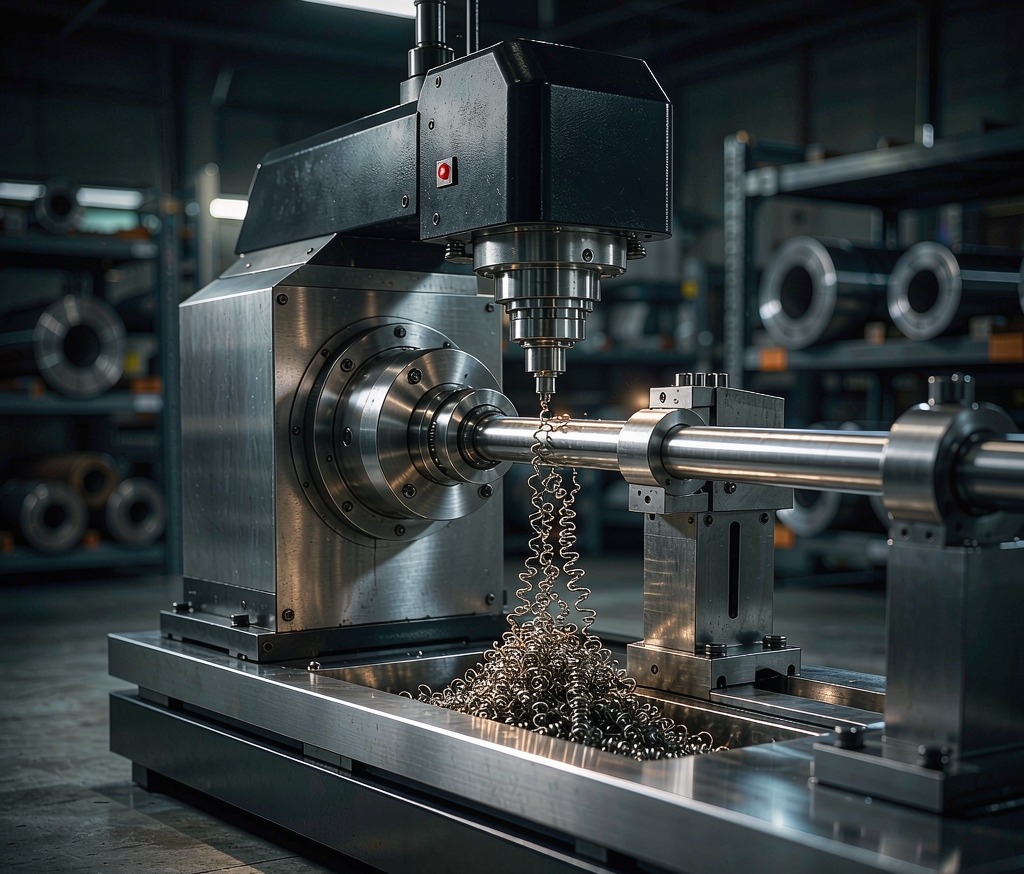
A lathe spins the stock and feeds a stationary tool along the axis, so round features are cut in one continuous motion. That gives superior roundness, concentricity, and surface finish versus milling, where the cutter approaches from the side. For shafts, sleeves, and any part dominated by diameters, CNC turning is both faster and cheaper. Complex off-axis features are then added by CNC milling in a second operation, or by a mill-turn center in one setup.
Tolerances and Surface Finish
Standard turning holds diameters to about ±0.025 mm, with tighter achievable through grinding or single-point finishing. Roundness and concentricity are where turning shines — often within a few microns on a well-maintained spindle. After turning, surface grinding refines critical seats, and passivation protects stainless parts. Our CNC turning services post details typical tolerances and inspection routines.
Materials: Steel, Aluminum, Brass, Titanium
Turning handles most metals. Free-machining brass and 12L14 steel run fast with great finish; aluminum turns cleanly and anodizes well; 303 and 416 stainless are free-machining grades for volume; titanium and hardened alloys need rigid setups and sharp tooling. Swiss turning extends this to very small, very tight-tolerance parts (covered below).
Swiss Turning for Small, Tight Parts
Swiss-type lathes support the stock right at the cut, enabling micron-level tolerances on long, slender, or tiny parts such as surgical pins, connectors, and sensor shafts. For high-volume precision turned components, Swiss turning services and our precision turned parts guide explain when the Swiss format beats a standard lathe on both cost and capability.
Frequently Asked Questions
What tolerance can CNC turning hold?
Standard diameters around ±0.025 mm, with tighter on critical features via grinding or finishing. Roundness is typically within a few microns.
Turning or milling for my part?
If the part is dominated by diameters and round features, turning is faster and cheaper. Add milling only for off-axis holes, flats, or keyways.
Can you turn and mill in one setup?
Yes. Mill-turn centers complete complex parts in a single chucking, improving concentricity and reducing handling.
What about very small parts?
Swiss turning handles long, slender, and micro parts at volume with micron tolerances.
Inspection, Lead Time, and Volume
Turned parts live or die on consistency across the batch, not just the first piece. We lock proven CNC programs and fixture setups so the 10,000th part matches the first-article inspection. Standard inspection covers diameter, length, roundness, and surface finish, with CMM verification on critical features and full material test reports on request. Lead time is typically 3–7 days for prototypes and 2–4 weeks for production, scaling with complexity and volume. For high-mix or low-volume work, CNC turning alone is economical; for very small, tight-tolerance parts, Swiss turning is the better route. When a part needs both round and off-axis features, a mill-turn center completes it in one chucking, improving concentricity and cutting handling. Tell us your annual volume and we will pick turning, Swiss, or mill-turn to minimize total cost, and we will flag where a small design change — a relaxed tolerance or a combined feature — would drop the piece price without hurting function.
Get a Turning Quote
Upload your drawing with material, quantity, and critical dimensions. We will pick turning, Swiss turning, or mill-turn, and return a quote with lead time and DFM notes within 24 hours.
Ready to Start Your Project?
Get a build-ready quote on your custom metal parts within 24 hours. Share your drawing and our engineers will respond with process, lead time, and pricing.

