
A box of loose components is not a product; a tested, ready-to-install module is. Metal assembly services turn machined, formed, and cast pieces into subassemblies that bolt into your line without surprises. Buyers searching metal assembly services want dimensional control across the whole module and accountability under one roof. Whether the joint is welded, riveted, bolted, or bonded, the discipline is the same: locate every part, control every dimension, and verify before it ships. This guide covers how to choose a join method and what good assembly control looks like in practice.
Choosing the Join Method
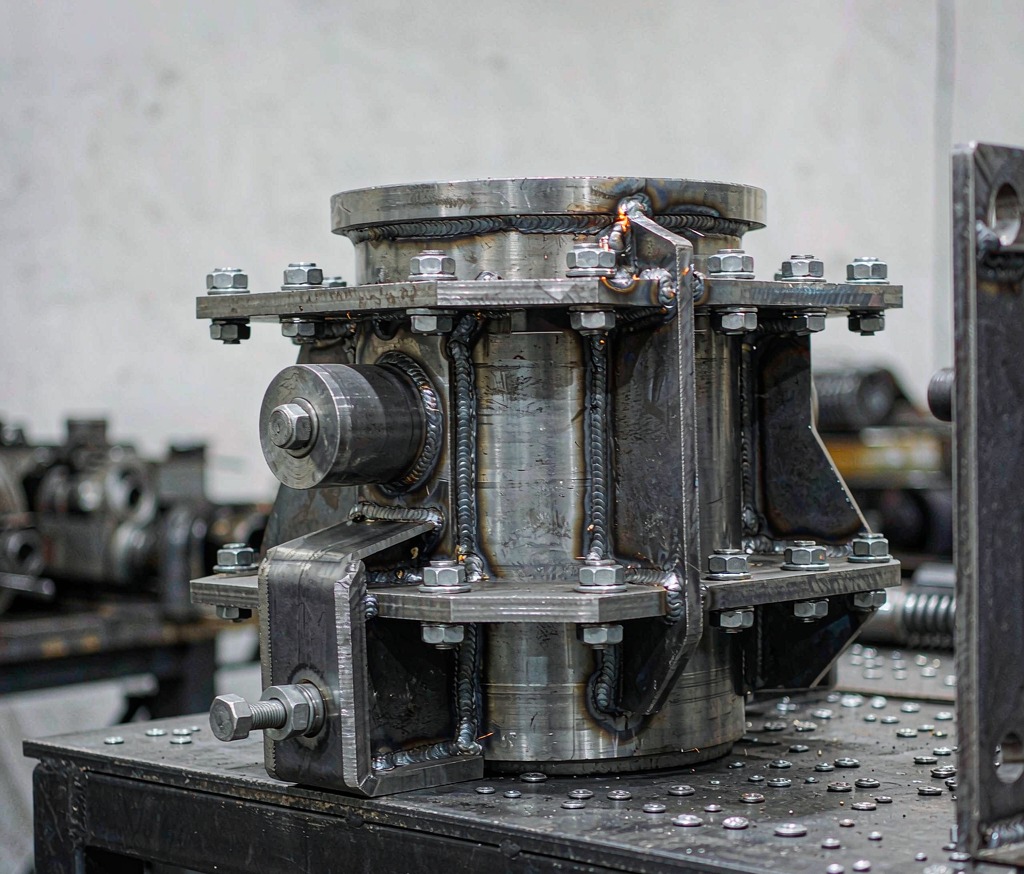
The joint follows the requirement. Welded assemblies are permanent and strong for structural loads; riveted assemblies suit sheet-metal and aircraft structures where disassembly is not needed; bolted assemblies allow service and adjustment; and adhesive-bonded assemblies spread load without stress concentrations or heat distortion. Hybrid assemblies mix methods, for example weld plus bolt, to get both rigidity and serviceability. The right mix comes from load, environment, and whether the part must come apart for maintenance during its service life.
Cost follows the method too. Welding and bonding need equipment and skilled labor; bolting and riveting need predictable hardware and torque control. Choosing the join method is therefore a design decision with supply-chain consequences, not a detail to settle on the floor.
Dimensional Control of Assemblies
An assembly is only as accurate as its stack-up. We control locating datums, fastener torque, and weld shrinkage so the finished module holds the critical envelope. TIG welding minimizes distortion on thin and precise joints, and we fixture to hold geometry through the heat. CMM and gauge checks confirm the assembled dimensions, not just the individual pieces, because the customer cares about the module, not the parts in a bin scattered across two suppliers.
From Components We Make
Because we also machine, fabricate, and finish, the components feeding the assembly are made to the same drawings and tolerances we control. That removes the classic failure where two vendors’ parts do not quite meet. metal fabrication services and sheet-metal enclosure fabrication feed directly into assembly, so the locators, holes, and bends are designed to go together from the start rather than being reconciled after the fact when it is expensive to fix.
Single-source assembly also sharpens cost visibility. Instead of three quotes and three freight charges, you get one bill of process that shows exactly where the money goes, from raw stock to the packed module. That transparency makes it easy to target the next cost-out without sacrificing the joint quality your product depends on, and it lets engineering and purchasing argue from the same number rather than dueling vendor summaries. When a design change lands, one partner absorbs it across machining and joining instead of three suppliers renegotiating their slices.
Inspection, Cleaning and Packaging
A finished subassembly is cleaned, deburred, and checked for freedom of movement, torque, and fit. We document the build with an inspection report and pack for safe transit so it arrives install-ready. Welded assemblies get the same care as the rest: dye-penetrant or other NDT where the joint is critical, then protective packaging. The goal is a module that drops into your line and passes first time, not a crate of parts needing a bench before installation.
When to Outsource Assembly
Outsource when assembly is labor-intensive, needs special joining equipment, or benefits from single-source accountability. Keeping machining, joining, and finishing under one roof cuts freight, lead time, and the finger-pointing that follows a multi-vendor build. For low-volume or prototype modules, the same capability proves the design before you commit to volume tooling for the process, giving you a validated module rather than a concept.
Frequently Asked Questions
Which joining method should I choose?
It follows the requirement: welding for permanent strength, rivets for sheet and aircraft structures, bolts for serviceability, adhesive for load spread without distortion. Hybrid assemblies combine methods when both rigidity and access matter, and we help you pick.
How do you control assembled dimensions?
We control datums, torque, and weld shrinkage, fixture to hold geometry through heat, and verify the finished module with CMM and gauges rather than just the loose parts, so the delivered envelope is what your line expects.
Can you make the parts and assemble them?
Yes. We machine, fabricate, and finish the components, then join them, so the locators and holes are designed to go together. That removes the two-vendor mismatch risk that causes line stoppages.
Do you inspect and document assemblies?
Yes. Cleaning, deburring, fit and torque checks, and an inspection report ship with every module, plus NDT on critical welds. The build is documented for your QA file and for traceability.
How is the assembly packaged?
Installed-ready, cleaned, and packed to survive transit without movement or corrosion, so it drops into your line and passes first time without a rework bench.
What lead time?
Assembly lead time depends on kit complexity and quantity; a quote returns within one business day with calendar-day lead time from PO so you can schedule the line.
Ready to Start Your Project?
Get a build-ready quote on your custom metal parts within 24 hours. Share your drawing and our engineers will respond with process, lead time, and pricing.

