
A sheet metal enclosure is far more than six panels screwed together. It is a functional structure that must protect electronics, align with mating parts, seal against dust or water, survive shipping, and still look professional when the customer opens the door. Getting sheet metal enclosure fabrication right means treating the enclosure as a system from the first drawing—not as a box to be cut and bent.
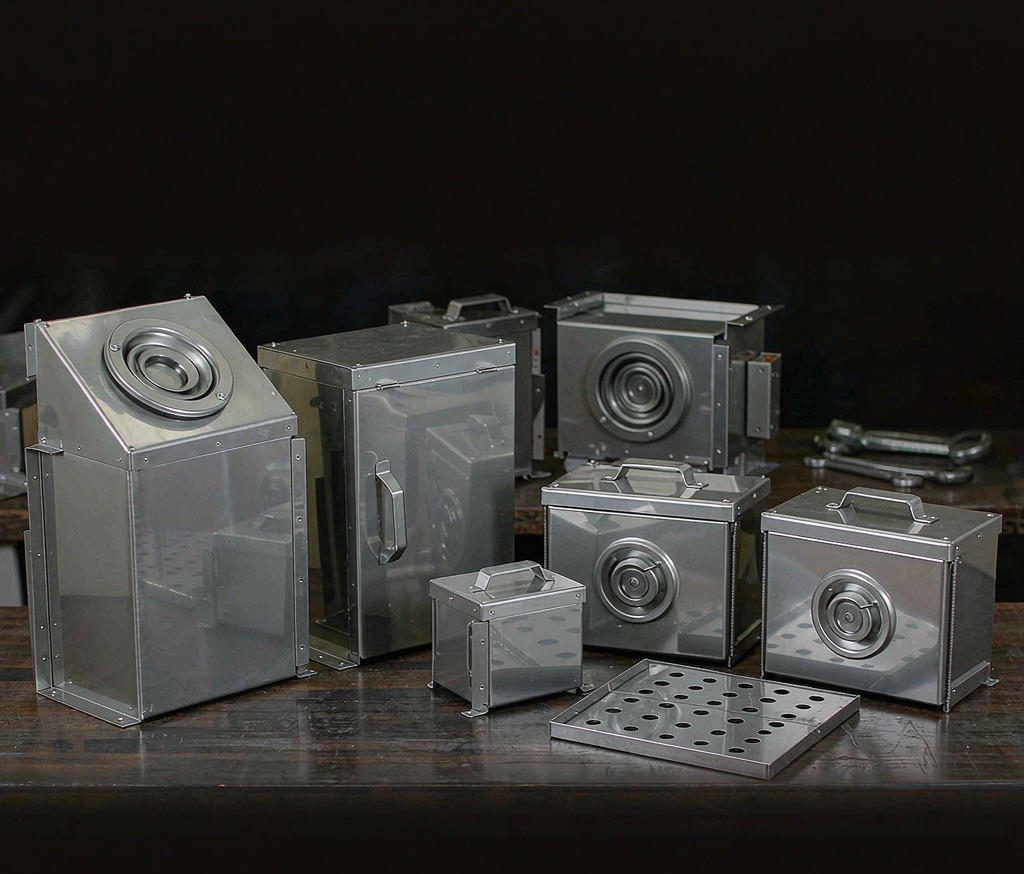
What Enclosure Fabrication Involves
A custom enclosure moves through cutting, bending, welding, hardware insertion, finishing, and inspection. The strongest suppliers run all of these under one roof so nothing falls through the gaps between vendors. Our Fiber Laser Cutting prepares precise cutouts for displays, buttons, and cable entries; CNC bending forms the body and door so they actually close after coating.
Thinking of the enclosure as a system changes how you write the spec. Door alignment, gasket compression, mounting-plate flatness, and cable-entry location are not separate details—they interact. A door that fits before coating can bind after a 60-micron powder layer if the clearance was not planned. A gasket land that looks fine on the drawing can be buried by weld spatter if the weld sequence was wrong. Designing the whole enclosure together, not feature by feature, prevents these failures.
Cutting and Bending the Shell
Laser cutting sets hole position and edge quality—a 1 mm error in a button hole is invisible on the drawing and obvious when the button will not fit. Bending defines the cabinet shape. Good CNC bending control accounts for bend radius, springback, and hole-to-bend clearance so panels land where they should. The enclosure lives or dies on these basics.
Welding and Joining
Frames, bases, and stiffeners are joined by welding. Tig Welding gives clean control on thin, visible seams; Mig Welding is faster on heavier structural joints. Distortion is the enemy—heat moves metal, so a poorly planned weld can leave a cabinet that looks square in CAD and crooked in real life. Riveting and fasteners handle removable or non-load joints and avoid heat entirely.
Weld planning starts on the drawing. Clamping points, weld sequence, and fixture design decide whether a frame stays square. A good fabricator grinds and polishes welds that will be seen and leaves structural welds as-is where they are hidden, balancing appearance against cost. For sealed or IP-rated enclosures, the weld is also the seal—so weld quality and continuity are checked, not assumed. Specifying the IP or NEMA rating up front tells the shop exactly how much seam integrity and gasket prep the design demands.
Surface Finishing
Finish is not just looks. Powder Coating adds corrosion resistance and a durable color, but its thickness can bury threads and shift fits if not planned. Mask threaded bosses and plan coating allowance into tolerances. For the enclosure to assemble after finishing, the supplier must control masking and measure post-coat fit—not just “paint any color.”
DFM Tips to Avoid Rework
The cheapest enclosure is the one designed right the first time. Move holes away from bend lines, radius internal corners, match bend radii to tooling, and place gasket lands where coating will not interfere. A supplier who only says “yes, we can make it” without DFM feedback is a risk; one who flags problems before cutting saves you from expensive first articles. Plan Assembly and hardware insertion early so the enclosure arrives ready to populate. PEM nuts, standoffs, and inserts pressed before finishing stay put and avoid post-coat threading problems. Build these into the drawing and the DFM review, and the populated enclosure goes together the first time instead of after a round of rework.
See how this fits broader work in our Custom Metal Enclosures and Sheet Metal Fabrication guides, the Steel Fabrication Services overview, and the bending detail in CNC bending services.
How to Request a Quote
Send a STEP file, a dimensioned PDF, material and thickness, finish, quantity, and which dimensions are critical. Ask for a DFM report before tooling. A technically complete RFQ gets a comparable quote; a screenshot gets a gamble.
Also state the environment and any rating. An indoor office enclosure, an outdoor NEMA-rated cabinet, and a shielded EMI enclosure are three different builds with three different costs. Tell the supplier where the enclosure lives and what it protects, and they can choose the right seam geometry, gasket land, and finish instead of guessing. The best quotes read like a short engineering conversation, not a price list—because that is what an enclosure actually is.
Frequently Asked Questions
What files does a supplier need?
A 3D STEP, a dimensioned 2D PDF, material, finish, quantity, and tolerance callouts. More detail means a better quote.
Why does DFM matter for enclosures?
Small drawing errors become doors that will not close or holes that miss. DFM catches them before metal is cut.
Which welding method is best?
TIG for thin, visible seams; MIG for heavier structural joints. The choice depends on material and appearance.
How does powder coating affect fit?
It adds thickness that can bury threads. Mask bosses and plan coating allowance into tolerances.
Can one shop do everything?
The best do—cut, bend, weld, finish, and inspect in-house so nothing falls between vendors.
What certifications should I look for?
At minimum ISO 9001; AS9100 or ITAR for aerospace and defense programs.
Ready to Start Your Project?
Send us your drawings and requirements. Our engineering team will review manufacturability and return a competitive quote with realistic lead time—usually within 1–2 business days.

