
3003 aluminum is the most widely used non-heat-treatable alloy, and 3003 aluminum machining is a daily task for HVAC, cookware, and spun or formed components. With about 1.2% manganese, it offers better strength than pure aluminum and superb formability at a friendly price. In this guide we explain why 3003 forms so well, how to machine and spin it, and where it beats 6061. Begin with our aluminum CNC machining services page for the broader picture.
What Is 3003 Aluminum
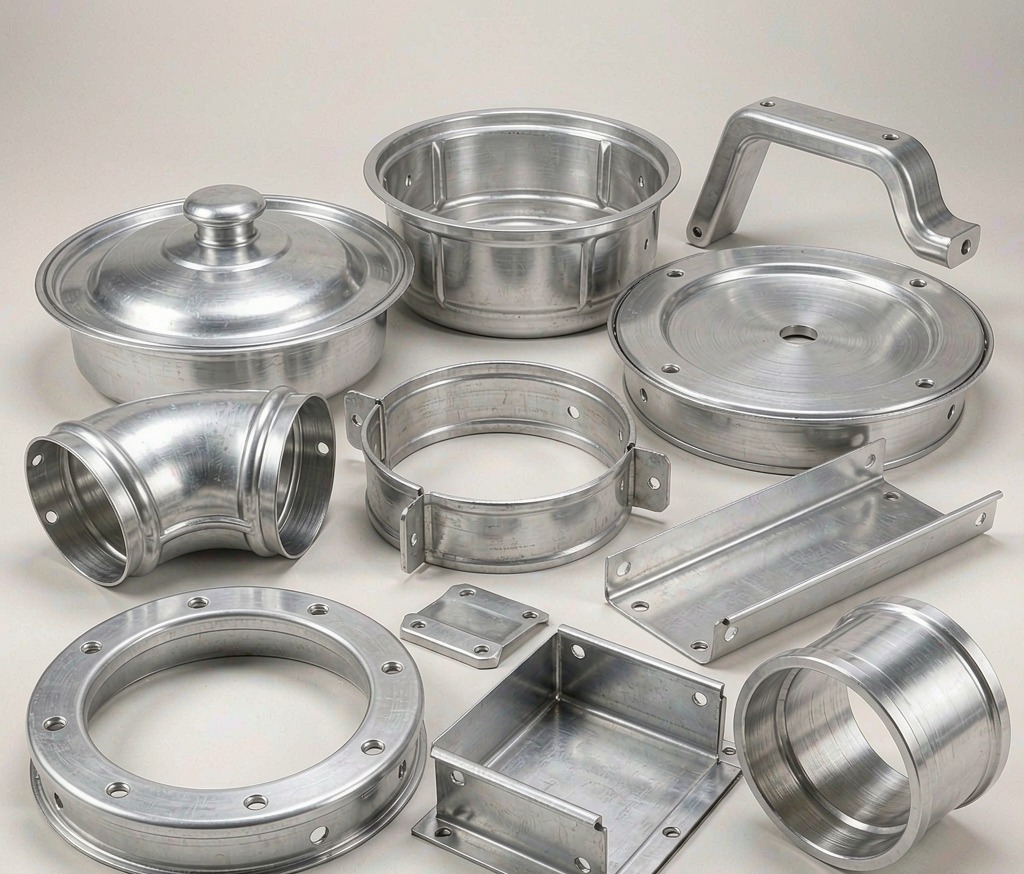
3003 is a manganese alloyed, non-heat-treatable aluminum with moderate strength and excellent workability. It cannot be age-hardened, but it work-hardens during forming, so stamped and spun parts gain strength in use. Its corrosion resistance is good and it takes paint and coatings readily, which is why it dominates HVAC and cookware. When the part is formed more than machined, 3003 is usually the first choice.
Why 3003 Forms So Well
The alloy’s ductility and strain-hardening behavior make it ideal for deep drawing, spinning, and bending. CNC milling cleans up edges and features after forming, while CNC turning handles round ducts and fittings. It is the grade behind countless stamped enclosures, heat-exchanger fins, and kitchenware because it forms without cracking.
Machining and Spinning 3003
3003 machines at high speed with sharp tooling and minimal effort; built-up edge is rarely an issue. CNC punching and laser cutting produce sheet blanks quickly, and metal spinning forms seamless round shells that would be costly to weld. Our aluminum fabrication services page covers the combined process chains we run.
Surface Finish and Anodizing
3003 takes paint and lacquer beautifully and can be anodized for a decorative layer, though it is not as crisp as 6061. Anodizing adds corrosion resistance and color, common on architectural and consumer parts. Laser cutting leaves a clean edge that needs little secondary work.
HVAC and Cookware Uses
3003 is the default for air-conditioner fins, ductwork, and heat-exchanger tanks, as well as pots, pans, and storage containers. Its formability and corrosion resistance fit these roles perfectly. When a part must be drawn, spun, or bent at volume, 3003 is hard to beat on cost and consistency.
3003 vs 5052 and 6061
5052 is stronger and more corrosion resistant for marine use; 6061 is heat-treatable and stronger for structural roles. But neither forms as easily as 3003. Our 5052 machining guide is the right next read when the environment gets wet or salty.
Design Tips
Favor formed features over machined ones to leverage 3003’s strength, keep bend radii within the alloy’s limits, and specify the finish on the drawing. For drawn parts, design symmetric tooling to control springback.
Quality and Inspection
Formed 3003 parts are checked for wall thinning at the tightest radius, edge burr after laser or punch, and surface cleanliness before painting or anodizing. First-article inspection confirms springback and fit, and the tooling is adjusted before the full run. Because 3003 is often painted, a clean, degreased surface is verified before finish application so the coating adheres uniformly and does not blister in service.
Lead Times and Volume
3003 sheet and coil are commodity items, so lead times are short and pricing stable. Prototypes from laser-cut blanks ship quickly, while deep-drawn or spun parts need tooling lead time. Volume pricing improves with batch size, and forecasting annual usage helps us hold coil stock and finishing capacity for your program so you are never waiting on material.
When to Choose 3003
Choose 3003 when a part is formed, drawn, or spun more than machined, and when corrosion resistance and cost matter more than peak strength. For marine or wet environments, step up to 5052; for structural load, choose 6061. For HVAC, cookware, and general fabricated aluminum, 3003 is the economical default that keeps unit cost low at scale.
RFQ Checklist for 3003 Parts
3003 projects are usually high-volume and form-driven, so the RFQ should lead with the process: stamping, spinning, or laser-cut-and-form. Send the formed geometry as a 3D model where possible, plus the flat pattern if you have one, and mark the critical radii and tolerances. State the temper you need—the work-hardened state after forming or a specified H14/H16—and the finish, whether paint, lacquer, or bare. Tell us the annual volume and any packaging so we can quote the right tooling. If the part is welded, note the alloy filler and post-clean. A thorough 3003 RFQ turns a vague inquiry into a firm, build-ready quote with realistic lead time instead of a round of clarifying emails.
Spinning vs Stamping 3003
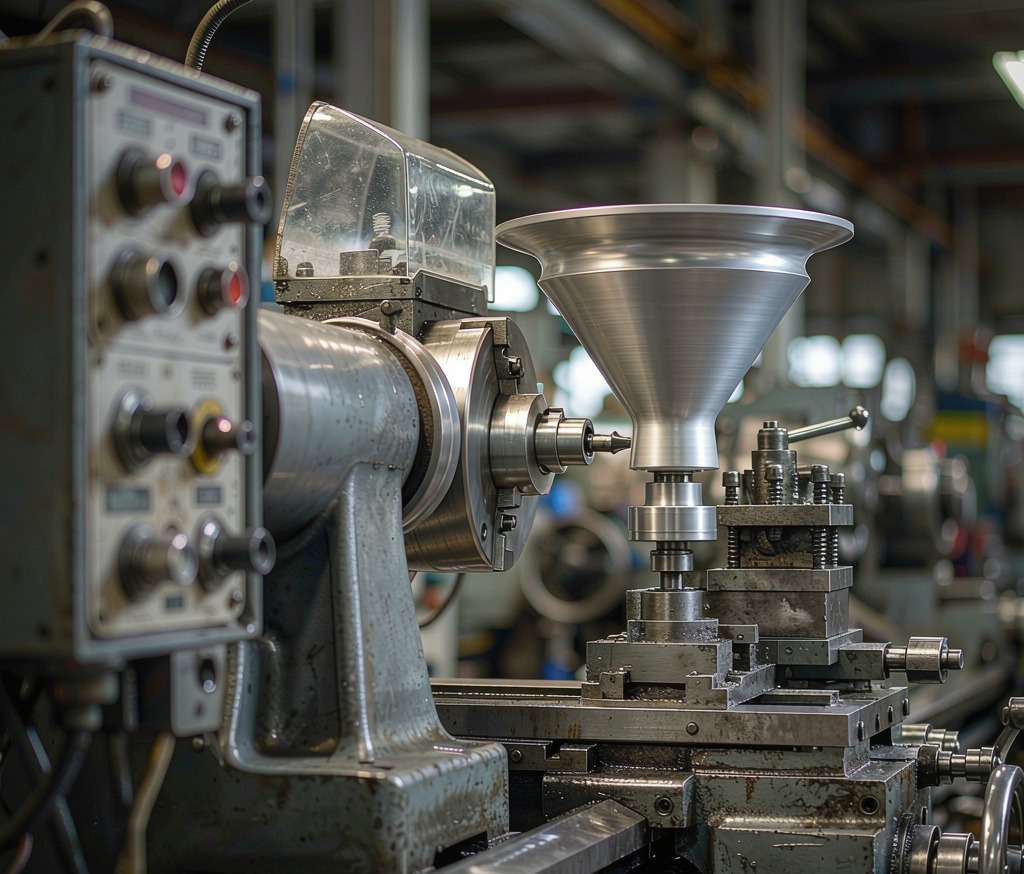
Two processes dominate 3003 forming, and the right pick depends on volume and shape. Metal spinning suits low-to-medium volumes and seamless round shells—tanks, cones, and domes—where a spinning lathe forms the part without expensive tooling. Stamping and deep drawing win at high volume for flat or shallow parts like fins, panels, and cookware, where a die amortizes across thousands of pieces. 3003’s ductility supports both, but spinning avoids die cost while stamping drives unit cost down. For a new program, start with spinning to validate the form, then move to stamping once the annual quantity justifies tooling. Our aluminum fabrication services cover both routes under one roof.
Frequently Asked Questions
Is 3003 aluminum strong?
It is moderate in strength but work-hardens during forming, so spun and stamped parts are stronger in service than the raw sheet.
Can 3003 be anodized?
Yes, though the coating is less uniform than on 6061. It is more commonly painted or lacquered for decorative and protective finishes.
Is 3003 good for welding?
3003 welds well with standard methods and is often chosen for welded HVAC and tank assemblies.
3003 aluminum is the formability champion for HVAC, cookware, and spun parts, delivering consistent results at low cost. Share your drawing and we will quote the fastest machining, forming, and finishing route.
Ready to Start Your Project?
Get a build-ready quote on your custom metal parts within 24 hours. Share your drawing and our engineers will respond with process, lead time, and pricing.

