
Aluminum is the default choice for lightweight, corrosion-resistant, and thermally efficient parts—but only if the fabrication route matches the design. Aluminum fabrication services span cutting, bending, joining, extruding, and finishing, and the right combination decides both cost and performance. This guide explains how to sequence those steps for prototypes and production alike, and where aluminum beats steel or plastic for real-world duty.
Why Aluminum Needs a Different Playbook
Aluminum work-hardens, conducts heat fast, and forms a hard oxide that welds through poorly if not prepared. That means cutting speeds, tooling, and weld procedures differ sharply from steel. A shop tuned for steel will burr, warp, or crack aluminum unless it adjusts feeds, uses sharp polished cutters, and controls heat. Our aluminum extrusion and forming lines are set up specifically for the alloy’s behavior, so we avoid the distortion that general shops fight every day on this material.
Cutting & Bending: From Flat Sheet to Shape
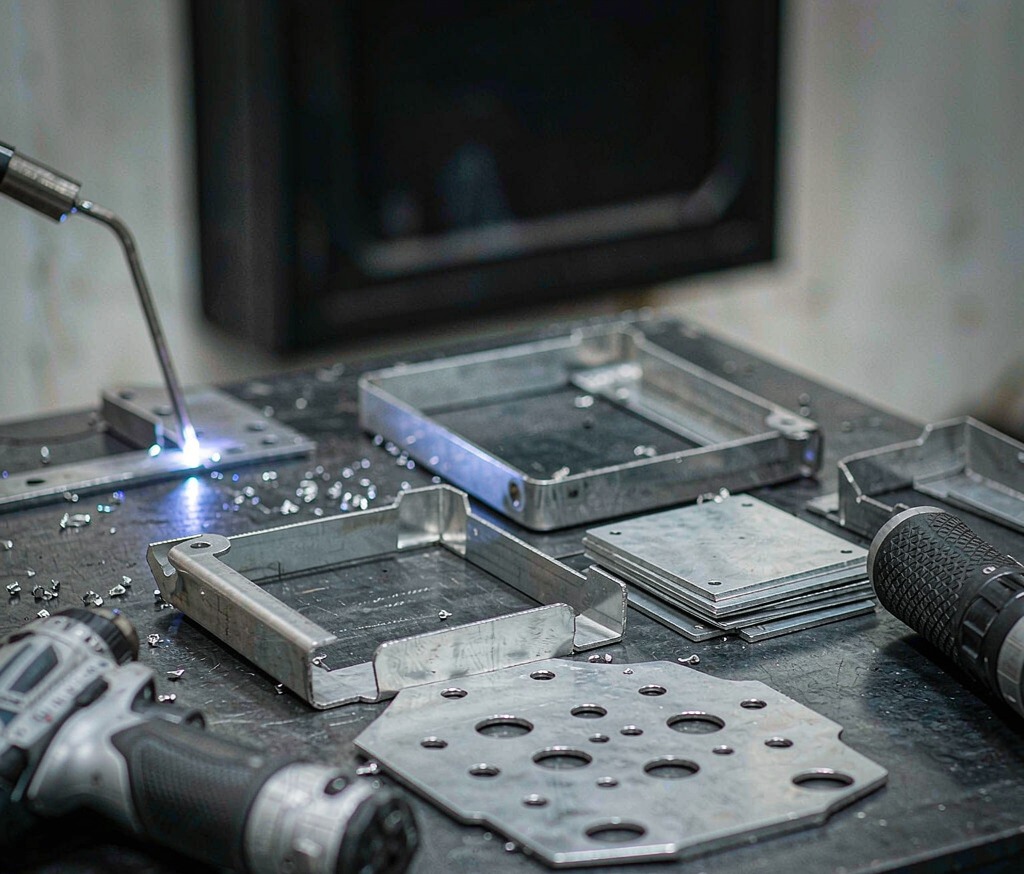
Most aluminum fabrication starts as sheet, plate, or extruded profile. Fiber laser cutting delivers clean, burr-light edges on thin-to-medium gauge stock, while CNC press-brake bending forms brackets, enclosures, and frames to tight angles. Because aluminum springs back more than steel, we model and compensate the bend radius up front to hit the print first time instead of iterating on scrap. For high mix volumes, fiber laser cutting also pierces mounting holes in the same setup, collapsing two operations into one.
For higher volumes, MIG welding of formed assemblies is fast and economical, though it needs careful heat control to avoid distortion. We often fixture parts on rigid jigs so the weld shrinkage pulls the assembly into tolerance rather than out of it, which is the difference between a reliable production run and constant rework.
Joining Aluminum: TIG, MIG & Beyond
Welding aluminum is about cleanliness and pulse control. TIG welding gives the control needed for thin-wall and cosmetic joints, while MIG wins on speed for structural frames. Our TIG welding aluminum guide and aluminum welding guide cover joint design, filler selection, and distortion control in detail, because these decisions are made on the drawing, not at the weld bench.
Where welding is undesirable, riveting, bonding, or extrusion-to-fabrication hybrids keep the grain continuous and the weight down. Riveting remains a favorite for serviceable structures, while structural adhesive works where stiffness-to-weight matters more than peel strength.
Finishing the Part: Anodize for Looks and Life
Aluminum’s best finish is usually anodizing, which is integral to the metal and far more durable than paint. Class II anodize gives corrosion resistance; Class III (hardcoat) adds wear resistance for sliding parts. For colored or consumer-facing components, dye-anodize plus seal is the standard. Our aluminum extrusion services and anodizing services pages explain how profile design and finish combine to cut total cost across the program lifecycle.
Design Tips to Lower Cost
Design for the process: keep bend radii generous, avoid welding across heat-treated sections, and specify fillets that let laser and brake tools run cleanly. Using standard extrusions instead of machined billets can drop material cost by 60–80% on long parts. Our aluminum CNC machining team can also advise where machining beats fabrication, and where a hybrid of the two is the leanest path from drawing to delivery.
Common Applications
Aluminum fabrication shows up in electronic enclosures, heatsinks, frames, brackets, and housings across automotive, robotics, and consumer products. Its strength-to-weight and EMI shielding make it the default for enclosures, while its thermal conductivity makes it the natural choice for cooling hardware. Choosing the right alloy—6061 for general use, 5052 for forming, 7075 for strength—is the first design decision, because the alloy you pick drives both formability and the finish you can apply later.
Prototyping to Production: One Supplier, Less Risk
A frequent failure mode is splitting prototyping and production across two shops. The prototype shop optimizes for speed, the production shop for cost, and the part that worked in aluminum on one floor fails on another because the process changed. We run prototype and production on the same equipment and the same quality system, so the bent bracket that passed your fit check is the same part that ships at volume. That continuity is especially valuable for enclosures and structural frames where a small bend-radius change can break an assembly.
When volumes justify it, we migrate laser-cut-and-bent parts toward extrusion to cut per-part cost, and we document the transition so your print and inspection plan stay consistent. The goal is a single accountable source from first article to full rate, not a hand-off that loses the lessons learned along the way.
Cost Drivers in Aluminum Fabrication
The biggest cost levers are material utilization, setup time, and finishing. Nesting laser-cut parts tightly on a sheet, choosing bend-friendly geometry that needs no special tooling, and picking a single anodize class all reduce unit price. Volume is the next lever: once a brake or weld fixture exists, per-part cost falls sharply, which is why we encourage customers to lock the design early and ride the learning curve rather than re-tooling mid-program. For a deeper look at the machining side of the same parts, our aluminum CNC machining page covers how design choices affect machine time and scrap.
Frequently Asked Questions
Is extrusion or fabrication cheaper for brackets?
For simple cross-sections in volume, extrusion plus cut-and-form wins. For low volumes or complex shapes, laser-cut-and-bend fabrication is faster to set up.
Can aluminum be welded without cracking?
Yes, with proper filler (often 4043 or 5356), clean oxide removal, and pulse parameters. We qualify the procedure before production.
Which anodize should I specify?
Type II for general corrosion and color; Type III hardcoat for wear. Tell us the environment and we will recommend the class and thickness.
Do you handle complete enclosures?
Yes. We build custom metal enclosures from cut, bent, welded, and anodized aluminum, including heatsink integration.
What tolerances can bending hold?
Typically ±0.5° on angle and ±0.2 mm on feature position for production tooling; we confirm on your print.
Ready to Start Your Project?
Get a build-ready quote on your custom metal parts within 24 hours. Share your drawing and our engineers will respond with process, lead time, and pricing.

