
Aluminum Welding: Filler Selection, Porosity Control & Best Practices
Aluminum welding spans TIG, MIG, and laser processes, but the failure modes are shared: oxide inclusion, porosity, and hot cracking. Whether you weld 1 mm sheet or 25 mm plate, the fundamentals below apply. Our aluminum welding capability covers both TIG and MIG routes; this guide consolidates the practices that keep a weld sound. Pair it with our aluminum CNC machining services when the part needs machining before or after welding.

Aluminum Series and Weldability
1xxx (pure) and 3xxx are easy; 5xxx (Mg) and 6xxx (Mg-Si) are common structural alloys; 2xxx and 7xxx are high-strength but hot-crack prone and usually limited to aerospace procedures. Pick the alloy with our metal material guide before you design the joint.
Filler Metal Selection
| Filler | Best for | Notes |
|---|---|---|
| ER4043 | 6xxx, general | Easy flow, gray after anodize |
| ER5356 | 5xxx, marine | Stronger, anodizes well |
| ER4047 | Crack-prone 2xxx/7xxx | High Si, low crack |
Match strength and post-finish: choose aluminum extrusion fillers that anodize consistently with the parent metal.
Controlling Porosity
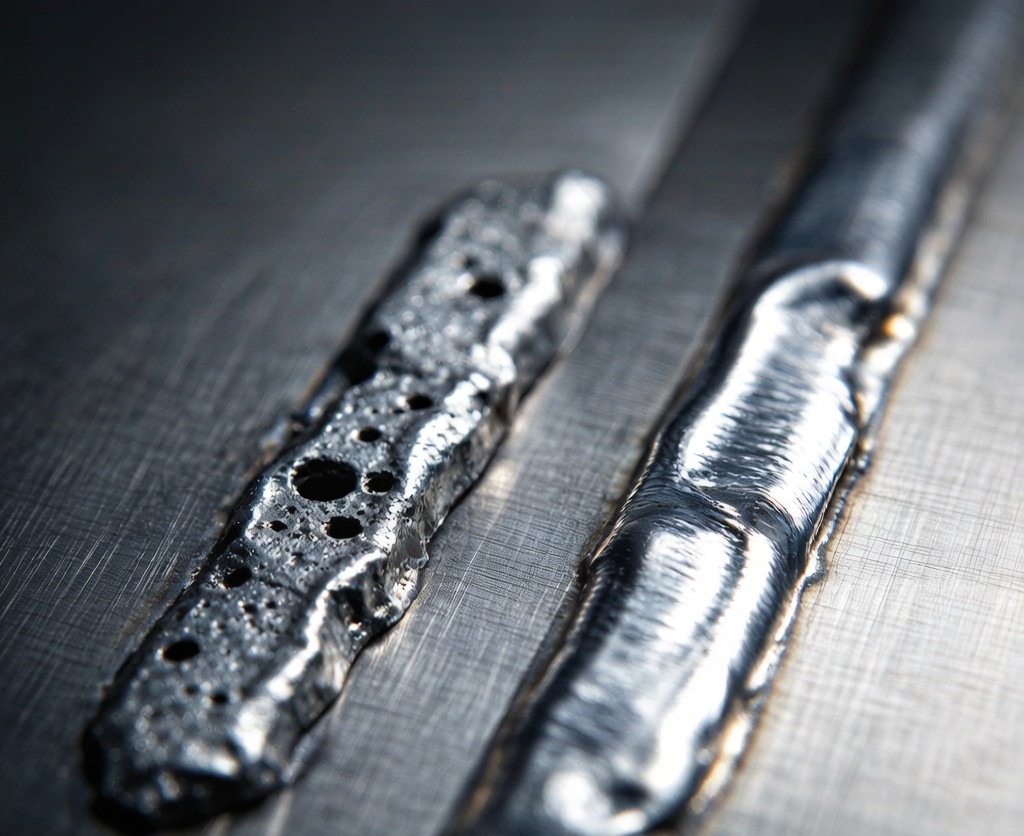
Porosity comes from hydrogen (water, oil, hydrated oxide) and broken gas shielding. Controls: degrease and brush oxide immediately before welding, use dry shielding gas, verify flow and hoses for leaks, and avoid drafts. Pre-weld surface prep from metal surface treatment reduces contamination.
Preventing Hot Cracking
Cracking rises with restraint and silicon/magnesium content. Use a crack-resistant filler (ER4043 or ER4047), limit joint restraint, and control cooling. For structural welds, qualify to AWS D1.2 and keep records through our contract manufacturing program.
Post-Weld Considerations
Some alloys benefit from stress relief; most need cleaning and possibly surface treatment or anodizing for corrosion resistance. Dimensional check against the drawing matters – our welded assemblies include inspection and straightening.
TIG or MIG for Your Aluminum Part
Thin, cosmetic, or prototype aluminum leans TIG (see our TIG aluminum guide); thicker production leans MIG or robotic welding. The process decision is detailed in our MIG vs TIG guide.
Frequently Asked Questions
What is the most common aluminum welding defect?
Porosity, almost always from moisture or oil in the joint or a broken gas shield. Rigorous cleaning and gas control prevent most of it.
Can you weld different aluminum alloys together?
Sometimes – 5xxx to 6xxx is common with ER5356, but 2xxx/7xxx need care. We qualify the combination on a sample before production.
Do aluminum welds need post-treatment?
For corrosion service, yes – cleaning plus anodizing or coating through our surface-treatment line keeps the joint protected.
Ready to Start Your Project?
Get a build-ready quote on your custom metal parts within 24 hours. Share your drawing and our engineers will respond with process, lead time, and pricing.

