
MIG vs TIG Welding: Which Is Right for Your Metal Part?
Buyers ask us constantly: should this part be MIG or TIG welded? There is no universal winner – only the right process for the alloy, thickness, volume, and appearance your part demands. Both use a shielding gas and a consumable (MIG) or non-consumable tungsten (TIG) arc, but they diverge sharply on speed and finesse. Our MIG welding services and TIG welding services often run side by side on the same program. Here is the decision framework we use on the floor.

How Each Process Works
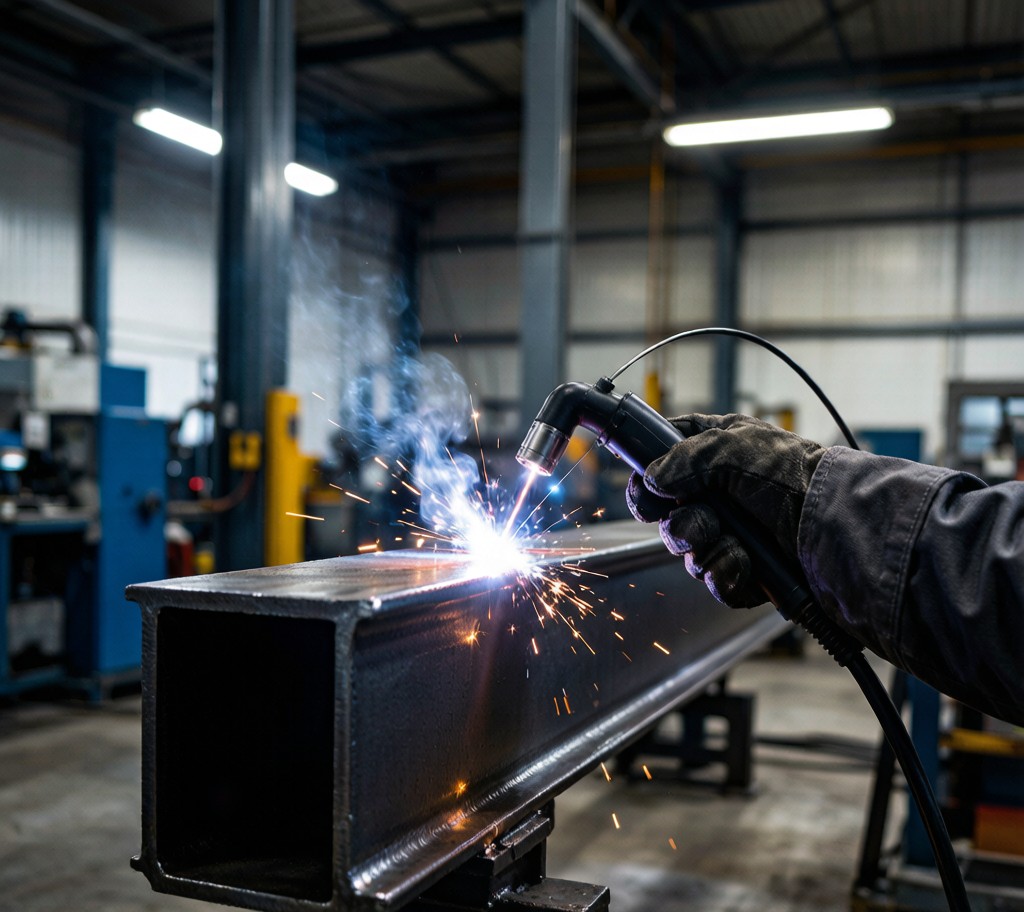
MIG (GMAW) feeds a continuous wire electrode through the torch; the wire is both the electrode and the filler. TIG (GTAW) uses a fixed tungsten electrode and a separate hand-fed filler rod, with the torch controlled by one hand and the rod by the other. That extra control is why TIG is slower but far more precise. For aluminum specifically, see our TIG welding aluminum guide.
Speed and Deposition Rate
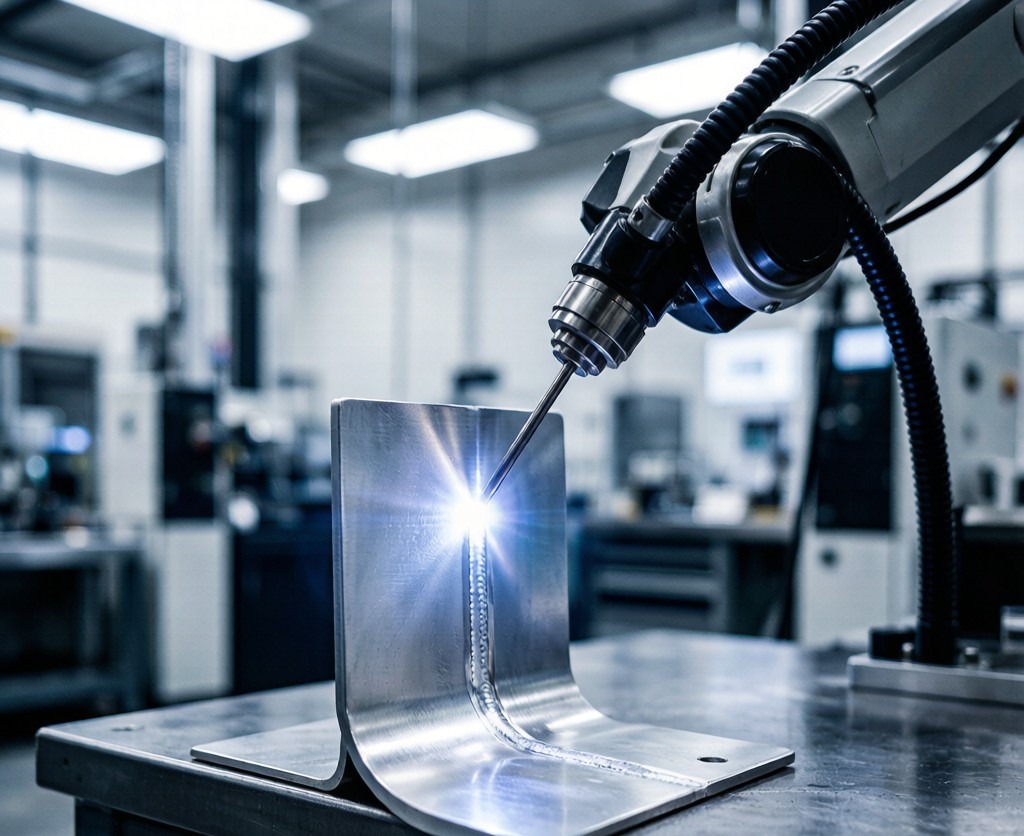
MIG deposits metal several times faster than TIG, which is why it dominates production runs of thick steel, stainless, and structural aluminum. If you need hundreds of identical brackets, MIG or our robotic welding cell is the economic choice. TIG shines on short runs, thin gauge, and where rework cost is high.
Quality, Appearance, and Thickness
| Factor | MIG | TIG |
|---|---|---|
| Thin sheet (<1.5 mm) | Harder to control | Excellent |
| Thick section | Fast, strong | Slower, still clean |
| Cosmetic bead | Good with skill | Best (no spatter) |
| Spatter | Some | None |
| Operator skill | Moderate | High |
For thin-wall stainless and aluminum, TIG avoids burn-through; for heavy frames, MIG wins. Both feed into our welded assemblies line with full inspection.
Cost and Production Volume
MIG’s higher deposition and easier automation lower cost per foot of weld, especially above ~50 parts. TIG’s hand control makes it costlier per part but reduces finishing. When volume is uncertain, start with low-volume manufacturing and scale into robotic welding as demand grows.
Material Suitability
MIG handles steel, stainless, and aluminum (with spray or pulse transfer) efficiently. TIG is the go-to for aluminum, magnesium, and reactive metals where cleanliness is critical – often paired with precision machined parts that cannot tolerate spatter.
Which Should You Choose?
Rule of thumb: choose MIG for thicker material, high volume, and cost pressure; choose TIG for thin gauge, appearance-critical joints, and exotic alloys. Not sure? Send the drawing and our engineers will specify the process in the quote. Our metal contract manufacturing team can even split a program – TIG on critical welds, MIG on structural fill.
Frequently Asked Questions
Is TIG stronger than MIG?
Weld strength depends more on procedure, filler, and joint design than on process. A qualified MIG weld can be as strong as TIG; TIG’s advantage is consistency and cleanliness on delicate parts.
Which is better for aluminum?
TIG is generally better for thin aluminum and appearance; MIG (pulse) is better for thicker aluminum in production. See our aluminum welding guide for filler and setting details.
Can one shop do both?
Yes. We run MIG, TIG, spot, and robotic welding, so process choice is based on the part – not on what equipment happens to be free.
Ready to Start Your Project?
Get a build-ready quote on your custom metal parts within 24 hours. Share your drawing and our engineers will respond with process, lead time, and pricing.

