
Aluminium is light, corrosion-resistant and wonderfully machinable, which is why it dominates enclosures, heat sinks, brackets and drone or EV structural parts. Our aluminum machining services cover CNC milling and turning of 6061, 7075 and specialty alloys, finished with deburring and anodizing so parts arrive ready to assemble. Here is how we get the most from the metal.
Why Machine Aluminum
Aluminium cuts fast, holds a good finish and weighs about a third of steel. It is also easy to anodize for colour and protection. We run it on the same CNC turning and CNC milling cells used for other metals, with tooling tuned for aluminium’s sticky chips. Our aluminium CNC machining guide goes deeper on parameters.
Common Alloys: 6061, 7075 and More
6061 is the general-purpose choice for frames and enclosures; 7075 is the high-strength option for stressed parts. We also machine 2024, 5083 and cast alloys. The 7075 aluminium machining page covers the harder grade’s quirks, and our machined aluminium parts gallery shows typical outputs.
CNC Milling and Turning
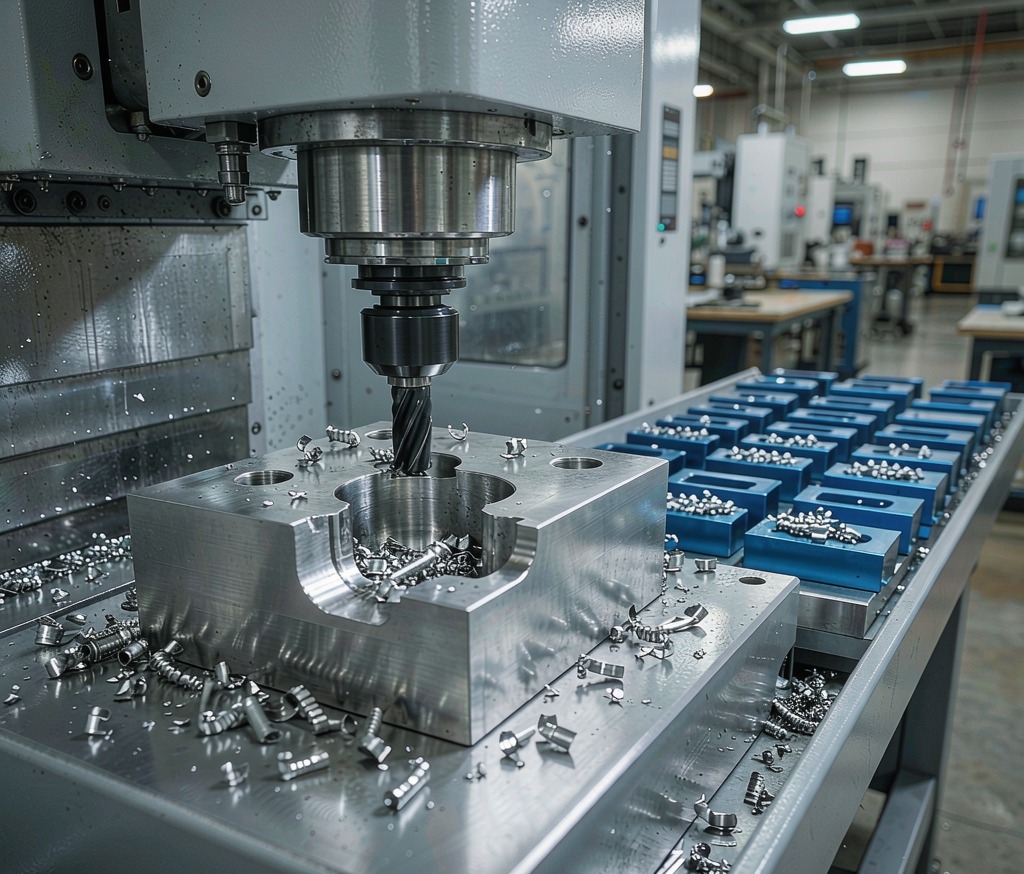
Plates, brackets and housings are milled, often on 5-axis machines for complex angles in one setup. Round parts are turned, with mill-turn used where features cross axes. Because aluminium is soft, we watch for burrs at every edge.
Deburring and Edge Prep
Sharp edges on aluminium are both a handling hazard and a coating defect waiting to happen. We deburr every part, by hand or tumbling, so edges are safe and consistent. This step is non-negotiable before anodizing.
Anodizing and Surface Finish
Anodizing is aluminium’s signature finish — hard, colourful and corrosion-proof. We offer anodizing from clear to black to custom colours, and we design features (like masked threads) so coating does not interfere with fit. For joined aluminium structures, our aluminium welding guide explains joining before machining.
Applications by Industry
Aluminium machined parts ship to electronics, automotive, aerospace, robotics and consumer products. If weight, heat dissipation or appearance matter, aluminium machining is usually the answer.
Machining vs Extruding Aluminum
For long, constant-cross-section parts, extrusion is cheaper than machining a solid bar, but extrusion cannot make the tight local features machining can. The smart route is often to extrude the profile, then CNC mill only the holes, pockets and threads that matter — exactly the hybrid approach in our machined aluminium parts work. For complex, low-volume brackets, solid machining from plate is simpler and faster to iterate than building an extrusion die. We will tell you the crossover point from your annual quantity and geometry.
Alloy choice interacts with process. 6061 extrudes and machines cleanly; 7075 is harder to extrude and more expensive, but machines to a finer finish for stressed parts — see our 7075 aluminium machining notes. Cast alloys such as A380 machine well for housings but need sharp tools to avoid tearing the silicon phase.
Masking and Thread Protection Before Anodize
Anodizing grows the surface, so any threaded hole or press fit must be protected or it will bind. We mask threads, bore IDs and datums before anodizing, usually with plugs or stop-off, then remove them after. Tight-tolerance bores are sometimes left as-machined and anodized only on the outside. Getting this right is why deburring and cleaning come first — any residue under the mask leaves a bare spot. For assemblies that join aluminium to other metals, our aluminium welding guide covers how to weld before the final machine-and-coat sequence so the finish is the last step.
Heat Sinks and Thermal Parts
Aluminium’s high conductivity makes it the default for heat sinks and cold plates. We machine finned sinks with thin, repeatable fins on CNC milling centres, and pocket cold plates for liquid cooling with flatness held by finish grinding. After machining we deburr every fin edge so airflow is not disturbed, then anodize for corrosion protection and a slightly improved emissivity. For very high power density, copper inserts are pressed or welded into the aluminium base — see our aluminium welding guide for the join. The result is a thermal part that is light, finished and ready to bolt to your device.
Inserts, Threads and Assembly
Soft aluminium strips easily, so for repeated assembly we press in steel helicoils or threaded inserts rather than cutting threads in the base metal. We machine the counterbore and install the insert in-house so the part arrives ready to bolt. For heat sinks that mount to a device, we tap or clearance-drill the base to your pattern and deburr every hole. Mixed aluminium-and-steel joints are detailed in our aluminium welding guide so galvanic corrosion is designed out, not discovered in the field.
Rapid Prototypes in Aluminium
Aluminium is also the fastest route to a physical prototype because it machines in minutes and anodizes in a day. We often turn a concept into a finished, coloured sample within a week so you can test fit and form before tooling. Because the prototype comes off the same cells as production, scaling up means repeating the program, not re-qualifying a process. For design iterations that is the difference between guessing and holding the part in your hand.
Frequently Asked Questions
Which alloy should I pick?
6061 for most parts, 7075 where strength matters, cast alloys for complex shapes — we will advise from your load case.
Can you anodize in colour?
Yes, including hard (Type III) anodizing in black, clear and custom shades.
How do you stop burrs on soft aluminium?
Sharp tools, proper clearance and mandatory deburring before any finish.
What tolerance can aluminium hold?
Commercial ±0.02 mm, with tighter available on critical features via precision setups.
Ready to Start Your Project?
Get a build-ready quote on your custom metal parts within 24 hours. Share your drawing and our engineers will respond with process, lead time, and pricing.

