
Battery enclosures are no longer simple boxes. Whether for an electric vehicle pack, a grid storage cabinet, or a portable power system, the housing must be lightweight, structurally rigid, thermally manageable, and sealed against the environment—often while meeting automotive or energy-sector certifications. Manufacturing these enclosures well is a discipline that blends extrusion, welding, and finishing. This article explains the processes that matter and how to choose a partner who can deliver a certified, leak-tight housing.
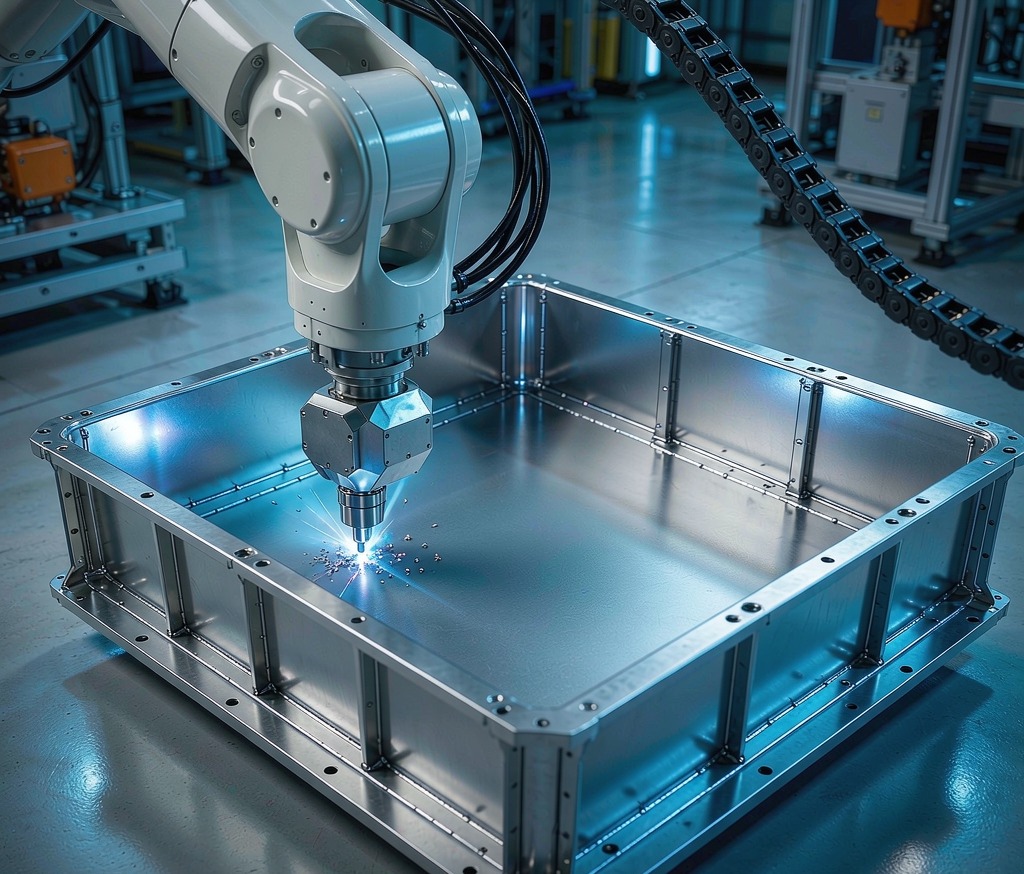
Why Battery Enclosures Matter
The enclosure is a structural and safety component, not packaging. It protects cells from crush and ingress, manages heat through integrated cooling, and provides the mounting and sealing interfaces the pack needs. A poorly designed or poorly made housing risks thermal runaway, corrosion, and field failure. That is why enclosure design is increasingly integrated with the cell format—prismatic, cylindrical, or blade—from day one.
Aluminum Extrusion for Enclosures
Extruded aluminum profiles form the rails, side walls, and cooling plates of most modern enclosures. Extrusion delivers long, complex cross-sections with built-in channels for liquid cooling and high stiffness at low weight. Our aluminum extrusion capability supports the long rails and structural members that give a pack its frame, while CNC bending forms the enclosures and brackets that tie the structure together.
Welding and Joining
Sealing the enclosure demands consistent, defect-free welds. TIG welding gives precise control on thin-wall aluminum, while robotic welding delivers repeatability across high volumes. For battery trays, friction-stir and laser processes are increasingly common. We cover the trade-offs in our TIG welding and robotic welding service pages; both are core to leak-tight enclosures.
Coating and Corrosion Protection
An enclosure lives outdoors or under a vehicle, so finish is a functional requirement. Powder coating provides a durable, chipping-resistant barrier, while sheet metal laser cutting ensures the panels and covers register precisely before welding. Specifying the right coating and salt-spray rating up front prevents premature corrosion in the field.
Tolerance and Sealing
Sealing interfaces—gasket grooves, bolt patterns, and cover flanges—must hold tight tolerances so the enclosure passes ingress and pressure testing. Our work on automotive metal parts and custom metal enclosures shows how dimensional control and secondary machining combine to hit sealing specs reliably.
FAQ
Q: Aluminum or steel for a battery enclosure?
A: Aluminum is preferred for weight-sensitive EV packs; steel or composites suit stationary storage where weight is less critical and cost drives the decision.
Q: How do I verify a sealed enclosure?
A: Require leak and ingress (IP) testing, salt-spray validation, and vibration qualification, supported by PPAP documentation for automotive programs.
Q: Can one supplier handle extrusion, welding, and coating?
A: Yes—consolidating these steps under one roof is the best way to control lead time, cost, and traceability on a structural housing.
Sourcing an Enclosure Partner
A capable battery enclosure manufacturer controls extrusion, welding, finishing, and inspection under one accountable process. If you are designing an EV or storage housing, our engineers can review your drawings and return a build-ready quote covering process, lead time, and pricing—so your pack gets a housing that is light, sealed, and certified.
Ready to Start Your Project?
Get a build-ready quote on your custom metal parts within 24 hours. Share your drawing and our engineers will respond with process, lead time, and pricing.

