
Some finishes remove material; burnishing improves the surface by cold-working it instead. Burnishing services press a hard, smooth tool against a rotating or moving part to compress and level the surface, leaving it smoother, harder, and more fatigue-resistant – often in a single pass.
This guide compares roller, ball, and diamond burnishing, explains the process parameters that matter, and shows where burnishing beats polishing for functional surfaces. It also notes the inspection methods that confirm the finish actually improved, not just changed appearance.
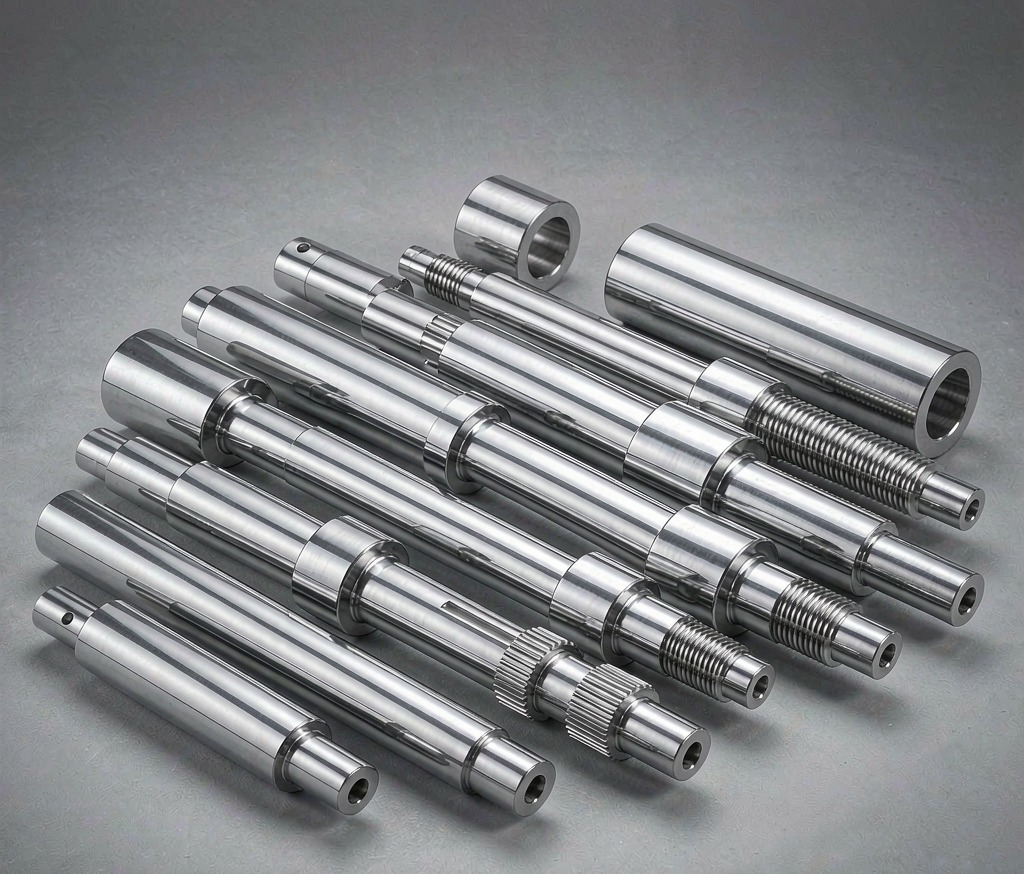
What Burnishing Does
Burnishing displaces rather than cuts: a hardened roller or ball rides under pressure across the surface, flattening peaks and work-hardening the layer beneath. The result is a finer finish, improved wear resistance, and compressive stress that fights fatigue cracking. Because nothing is removed, there is no swarf and no change to the part’s mass, which matters for balanced rotating parts. It is often the last step before plating or coating, giving those layers a sound base.
It is the final step in many metal surface treatment programs where a functional surface matters more than a cosmetic one.
Roller, Ball, and Diamond Burnishing
Roller burnishing suits cylindrical OD and ID surfaces such as shafts and bores. Ball burnishing handles contoured or smaller areas. Diamond burnishing uses a tiny tip for very fine, localized finishes on hard materials.
For broad area refinement, polishing removes material instead and is better when stock must come off. Where geometry must be set first, surface grinding or cylindrical grinding establishes the size before burnishing. A burnished surface also seals pores that grinding leaves open, helping corrosion resistance.
How Burnishing Improves Parts
Beyond looks, burnishing raises surface hardness, seals pores, and leaves compressive residual stress that slows crack growth. Sealed surfaces also resist corrosion and clean more easily – valuable in hydraulic and food contact parts. The process is also fast, often a single pass on a lathe or machining center, so it adds little to cycle time.
It pairs well with honing where a bore needs both geometry and a burnished running surface. Sealing the bore surface also reduces weeping in hydraulic and pneumatic cylinders.
Process Parameters
Pressure, tool geometry, feed, and speed set the outcome. Too little pressure leaves the surface unchanged; too much work-hardens or cold-flows it excessively. The starting roughness also matters – burnishing refines a turned surface but cannot fix deep defects.
Preparing the part with centerless grinding or turning, and deburring it first, to a known baseline makes the burnish predictable. A consistent pre-finish means the burnish depth is repeatable part to part, not dependent on the operator’s feel.
Burnishing vs Polishing
Polishing removes material to a shine; burnishing cold-works the existing surface. Burnishing is faster, adds no waste, and improves function, while polishing is better for cosmetic or tightly sized removal.
For edge and batch cleanup before burnishing, deburring removes the burs that would otherwise mark the tool. Light deburring also stops a sharp edge from tearing the burnishing roller on the first pass.
Where Burnishing Pays Off
Hydraulic rods, cylinder bores, orthopedic implants, and decorative turned parts all benefit. Anywhere a smooth, hard, sealed running surface matters is a candidate.
For the finest functional finishes, superfinishing can follow burnishing where specification demands it. Medical and food contact parts benefit most, since a smooth sealed surface is easier to clean and certify.
Quality Control and Inspection
Burnished surfaces are measured by profilometer for roughness and, where specified, by hardness or residual-stress methods. The starting roughness baseline is recorded so the improvement is documented. For bores, geometry is confirmed before and after to prove no size loss beyond plan. A profilometer trace is kept with the lot so a future audit can compare repeat runs.
Lead Time and How to Request a Quote
Send the part, material, starting finish, target roughness, and the surfaces to burnish. Deburring and polishing are quoted ahead where the baseline must be prepared first. Batch size and fixture needs set the schedule. Dedicated rollers for a family of diameters shorten changeover, so recurring volumes run faster.
Common Cost Drivers in Burnishing
Part geometry and the number of surfaces drive cycle time, while custom rollers or ball tools add setup. Over-specifying roughness wastes passes. Stating the functional target – not a mirror finish where a working surface suffices – keeps the operation lean and repeatable. Over-burnishing adds passes without benefit and can work-harden the part past a useful limit, so the spec should name the real requirement. A measured pre-finish baseline also keeps the result repeatable between batches and simplifies incoming inspection.
Frequently Asked Questions
Does burnishing remove material?
No. It cold-works the surface by displacing metal, unlike polishing which cuts material away.
What is roller burnishing used for?
Cylindrical surfaces such as shafts and bores, where it smooths and work-hardens in one pass.
Does burnishing improve fatigue life?
Yes. The compressive surface stress it leaves resists fatigue crack initiation.
Can burnishing replace grinding?
No. It refines an already-sized surface; grinding sets the dimension first.
Is diamond burnishing different?
It uses a tiny diamond tip for very fine, localized finishes on hard materials.
How is a burnished surface checked?
By profilometer roughness and, where needed, hardness or compressive-stress verification.
Ready to Start Your Project?
Get a build-ready quote on your custom metal parts within 24 hours. Share your drawing and our engineers will respond with process, lead time, and pricing.

