
For electrical, thermal, and structural components, the recurring decision is copper vs aluminum. Copper delivers nearly double the conductivity of aluminum; aluminum delivers roughly one-third the weight and a far lower price. Neither is universally better—the right answer depends on whether your limiting factor is power loss, mass, or cost. This guide compares the two across the properties that actually drive CNC machining and assembly decisions.
Conductivity and Thermal Performance
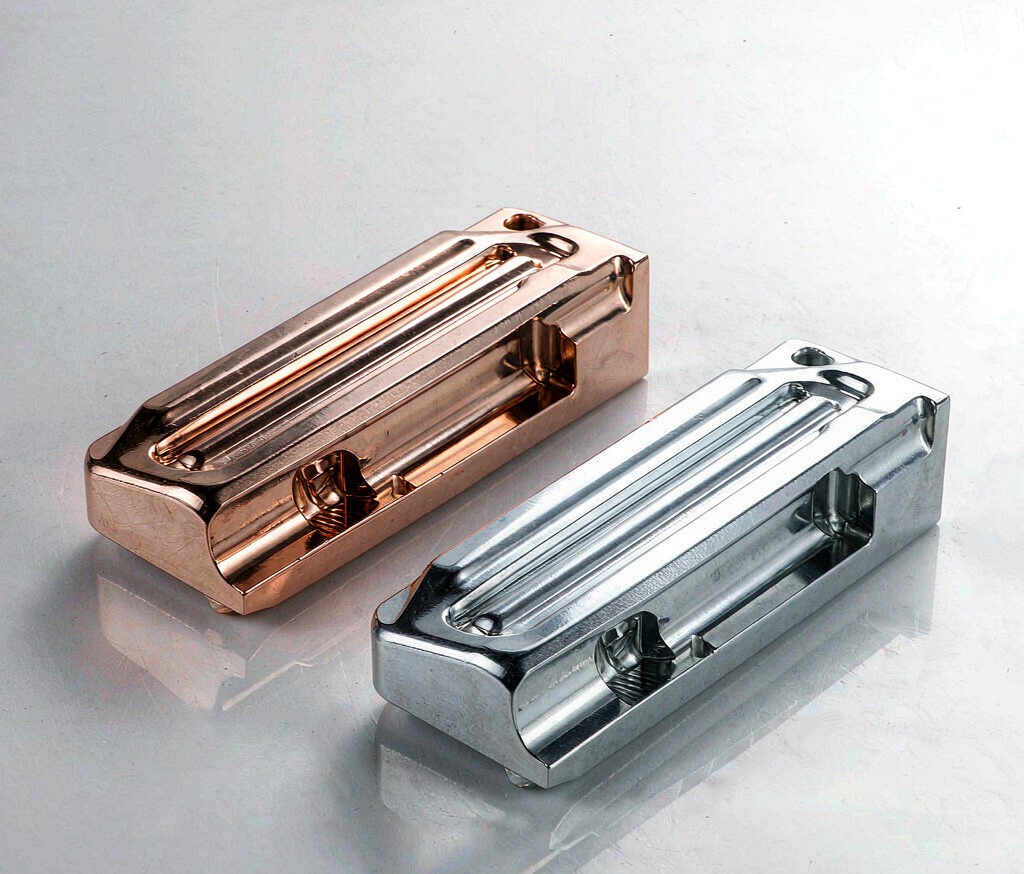
Copper sets the benchmark at ~100% IACS; 6061 aluminum lands near 40–43% IACS. In volumetric terms copper is the clear winner, which is why busbars, heat sinks, and high-current links default to it. But on a weight-normalized basis aluminum is surprisingly competitive—its conductivity per gram can exceed copper’s because it is so light. For machined conductive parts our copper CNC machining and aluminum CNC machining guides detail the process differences.
Weight and Strength-to-Weight
Aluminum (2.70 g/cm³) is about 70% lighter than copper (8.96 g/cm³). In aerospace, automotive, and portable power systems that weight saving can dominate the material choice even when aluminum is electrically inferior. Alloys such as 6061 and 7075 also provide a useful strength-to-weight ratio, while copper’s higher mass helps where stability and damping matter. Extruded aluminum sections from our aluminum extrusion line are a common way to get both structure and current path in one profile.
Machinability and Production Cost
Aluminum is dramatically easier to machine: cutting speeds of 300–900 m/min versus 80–150 m/min for copper, with tool life 3–5× longer and clean, easily broken chips. Copper is gummy, prone to built-up edge, and demands sharp polished carbide and high-pressure coolant. The economics are stark—aluminum parts cost far less to produce per piece. Both materials run well on our CNC turning and CNC milling platforms, but aluminum wins on throughput.
Corrosion Resistance and Finishing
Aluminum forms a protective oxide that resists outdoor and industrial corrosion and is routinely anodized for added protection and appearance. Copper develops a patina; for conductive surfaces this is often undesirable, so plating or passivation is used. Mixed-metal joints need design care to avoid galvanic corrosion. Our copper and brass extrusion capability supports busbar and terminal stock in the right alloy.
Choosing by Application
Choose copper when maximum conductivity, thermal transfer, or current density is non-negotiable—compact busbars, low-loss terminals, heat exchangers, and EV charging parts. Choose aluminum when weight, cost, or large footprint dominate—lightweight conductors, enclosures, and structural current-carrying members. Many of the best designs are hybrid: copper where density is highest, aluminum where span and mass matter. See our copper busbar manufacturing and machined aluminum parts posts for real examples, and our custom metal enclosures guide for combined mechanical-and-electrical housings.
Plating, hybrid designs, and prototyping. Many production parts deliberately pair the two metals—an aluminum structural shell with copper insert contacts, or a copper busbar carried by aluminum supports—so joint design, not a single property chart, decides reliability. Correct hardware, surface prep, and plating keep galvanic effects in check, and a hybrid layout often beats forcing one metal to do everything. For early validation our OEM services and rapid prototyping let you test the real assembly before committing to volume, while a clear duty cycle lets the shop optimize alloy temper, finish, and tolerance for the lowest total cost. When weight and conductivity both matter, the answer is usually a carefully engineered mix rather than a single compromise material.
Frequently Asked Questions
Is copper always better for conductivity?
Volumetrically yes, but aluminum offers more conductivity per unit weight, making it attractive for weight-sensitive conductors.
Which is cheaper to CNC machine?
Aluminum, by a wide margin—higher speeds, longer tool life, and shorter cycle times than gummy, work-hardening copper.
Can aluminum replace copper in electrical parts?
Often, if the joint is engineered correctly; otherwise copper remains the default for compact, low-loss designs.
Do these metals corrode together?
They can galvanically corrode; design the joint, hardware, and finish to manage the interface.
Ready to Start Your Project?
Get a build-ready quote on your custom metal parts within 24 hours. Share your drawing and our engineers will respond with process, lead time, and pricing.

