
An axle or shaft looks simple, a round bar with features, until you need it to carry load, run true at speed, and survive millions of revolutions. Custom metal axles demand tight concentricity, straight journals, and a hardness profile that resists wear without becoming brittle. Making one is a chain of turning, heat treatment, and grinding, each step setting up the next. For buyers in automotive, agriculture, and machinery, knowing that chain explains why a cheap axle quote often becomes an expensive failure.
The hidden cost of a weak axle is rarely the part itself, it is the bearing it destroys, the vibration it sends through the machine, and the downtime that follows. Specifying the full process, not just the diameter, is how you avoid paying for that failure downstream.
What a Custom Axle Requires
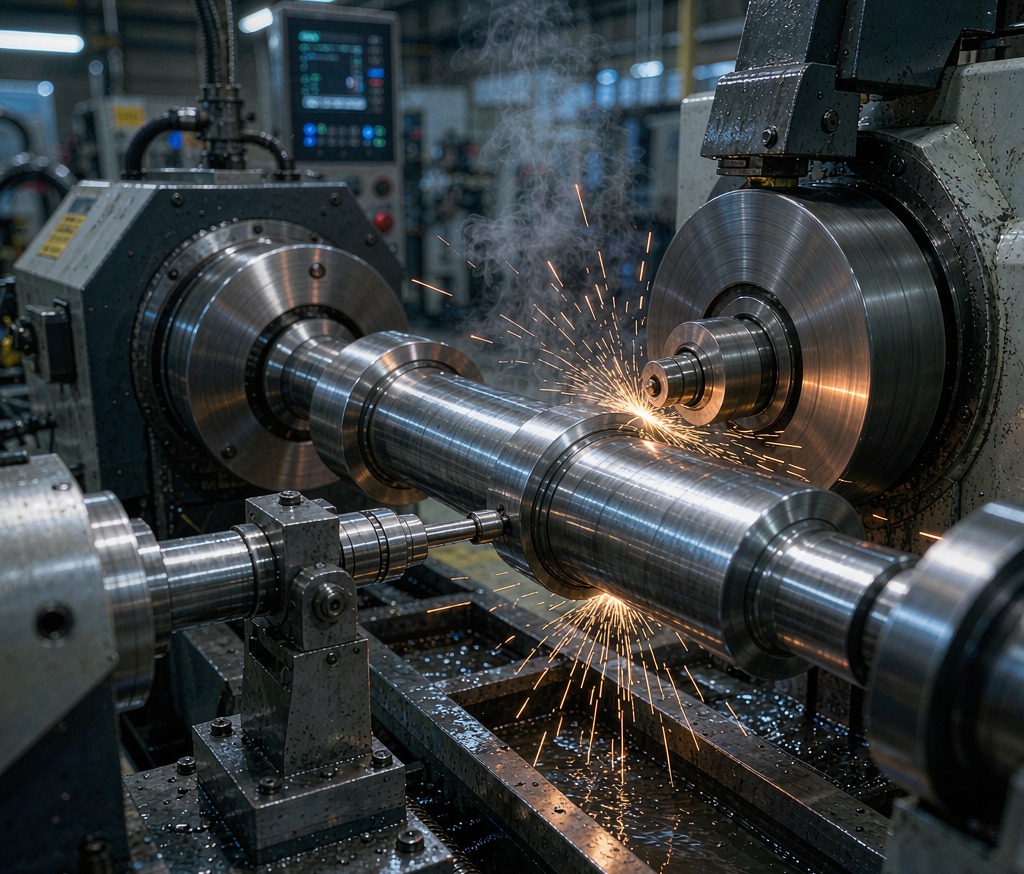
Beyond the obvious diameter and length, an axle needs controlled runout between bearing journals, a hardness that matches the load, and features such as keyways, splines, or threads placed without weakening the shaft. Our CNC turning and Swiss turning cells produce the geometry, while 5-axis CNC machining handles complex end features that a lathe alone cannot reach. The part starts as a turned blank with stock left for finishing.
Turning and Swiss Machining
For long, slender axles, Swiss turning supports the bar right at the cut, holding diameter and straightness that a conventional lathe would let wander. For shorter, heavier shafts, a strong lathe with live tooling cuts the journals, shoulders, and grooves in one setup. Either way the goal is a consistent blank with minimal distortion, because every error here is amplified by the later grind. The choice between methods tracks with length, diameter, and volume.
Live tooling matters more than buyers expect. A shaft that needs a cross-hole, a flat, or a keyway can be roughed and feature-cut in the same turning setup, which protects concentricity and removes a fixturing step that would otherwise add error and cost.
Heat Treatment and Grinding
Most axles are hardened, through or locally, to resist wear at the bearing surfaces. After heat treatment, the shaft moves to centerless grinding for the journals and often cylindrical grinding for profiles, taking the surfaces to final size and finish. Grinding after hardening is what delivers the round, true, low-roughness journal a bearing needs to live. Skipping the post-hardening grind trades cost for premature wear.
Tolerances and Materials
Axles run from mild steel, where cost matters, to alloy steels and even stainless for corrosive duty. Tolerances on journals are typically held to microns on diameter and a tight runout across the length. The full route, from CNC machining through grind, is planned so the hardened part lands inside the print without rework.
Distortion Control Across the Chain
The art of axle making is managing distortion at every step. Turning leaves residual stress, heat treatment moves the part, and grinding removes the movement. A supplier who plans stock allowance and support points up front keeps the final grind light and the journal true, whereas a shop that grinds blindly fights a part that will not sit straight. Ask how distortion is controlled, not just what tolerance is claimed.
Material Selection for Axle Life
The alloy choice drives both cost and service life. A mild steel axle may be fine for a lightly loaded conveyor roller, while a transmission output shaft wants a quenched-and-tempered alloy for strength and a carburized journal for wear. Stainless enters the picture only when corrosion, not load, is the limiting factor, and it machines and grinds differently enough that the process plan must account for it. Naming the duty cycle up front lets the supplier pick the cheapest material that still meets the life target, instead of over-specifying out of caution.
Sourcing a Custom Axle
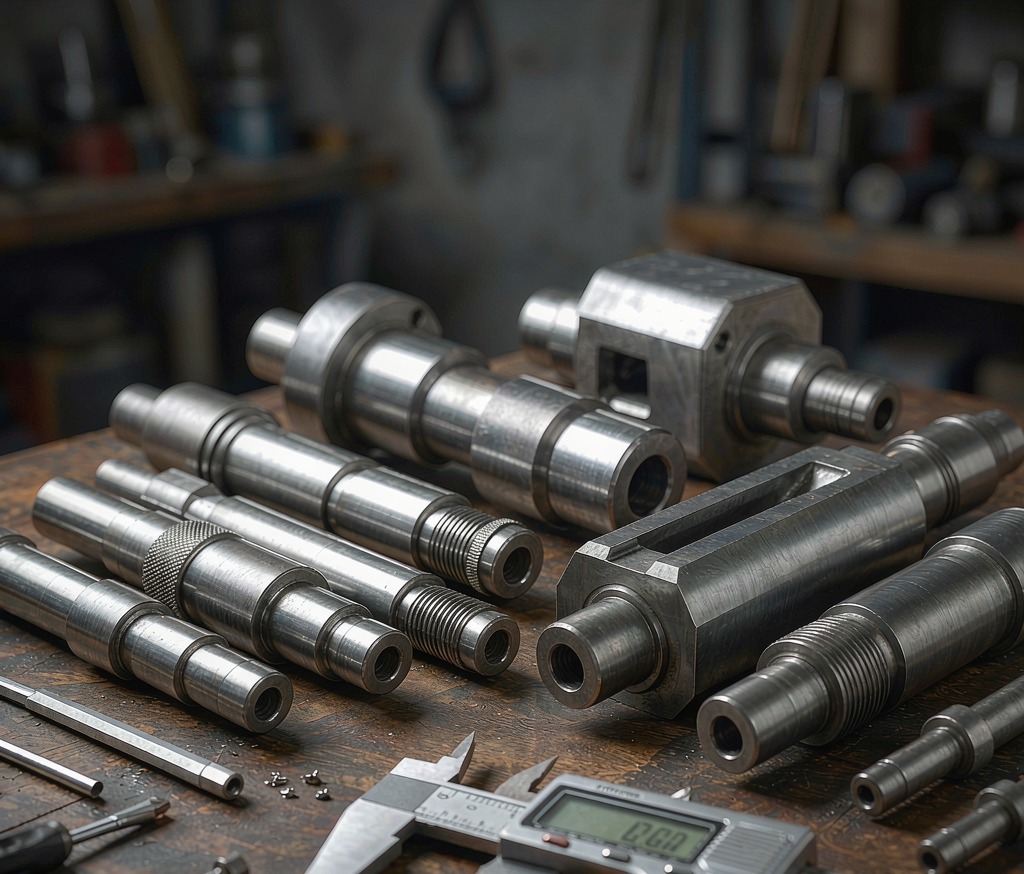
A supplier who turns, treats, and grinds in one flow controls distortion instead of passing it downstream. Buyers can read our precision shaft manufacturing guide for the full discipline, our custom metal parts overview for the broader capability, and our precision machined parts notes for tolerance context. For the turning foundation, see our CNC turning services.
Frequently Asked Questions
Why grind after heat treatment instead of before?
Hardening distorts the shaft. Grinding after the heat treat removes that distortion and brings journals to final size and finish, which is why the grind step follows, not precedes, treatment.
Can Swiss turning make a long axle?
Swiss turning excels on long, slim parts because it supports the bar at the cut. For very large diameters, a conventional lathe is the better fit. The method follows the geometry.
What runout can a finished axle hold?
Bearing journals are typically held to a tight runout across the length, often a few microns, set by the drawing and confirmed by grinding and inspection.
Design the Axle as One Process
The best custom axles are planned turn, treat, and grind as a single controlled flow. Specify it that way, and the shaft runs true for the life of the machine. Treat the three steps as separate purchases and you inherit the gaps between them as noise, wear, and warranty claims.
Bring the bearing specification into the conversation early, because the journal finish and tolerance are set by the bearing, not by habit. A shaft designed around the actual bearing grade, rather than a generic smooth surface, avoids both over-machining and premature failure in the field.
Ready to Start Your Project?
Get a build-ready quote on your custom metal parts within 24 hours. Share your drawing and our engineers will respond with process, lead time, and pricing.

