
A connector is only as reliable as the metal body that holds its contacts and seals its interface. Custom metal connectors are made to order when a standard shell cannot meet the size, material, or sealing demands of an electrical, hydraulic, or pneumatic system. Whether it is a machined aluminum housing for an aerospace loom or a cast zinc body for a hydraulic coupler, the manufacturing route decides cost, accuracy, and durability.
This guide walks through the three main ways custom metal connectors are produced, how material and plating choices affect performance, and the tolerances and seals that keep a connection live in the field. Use it to brief a supplier or to firm up your own drawing requirements before requesting a quote.
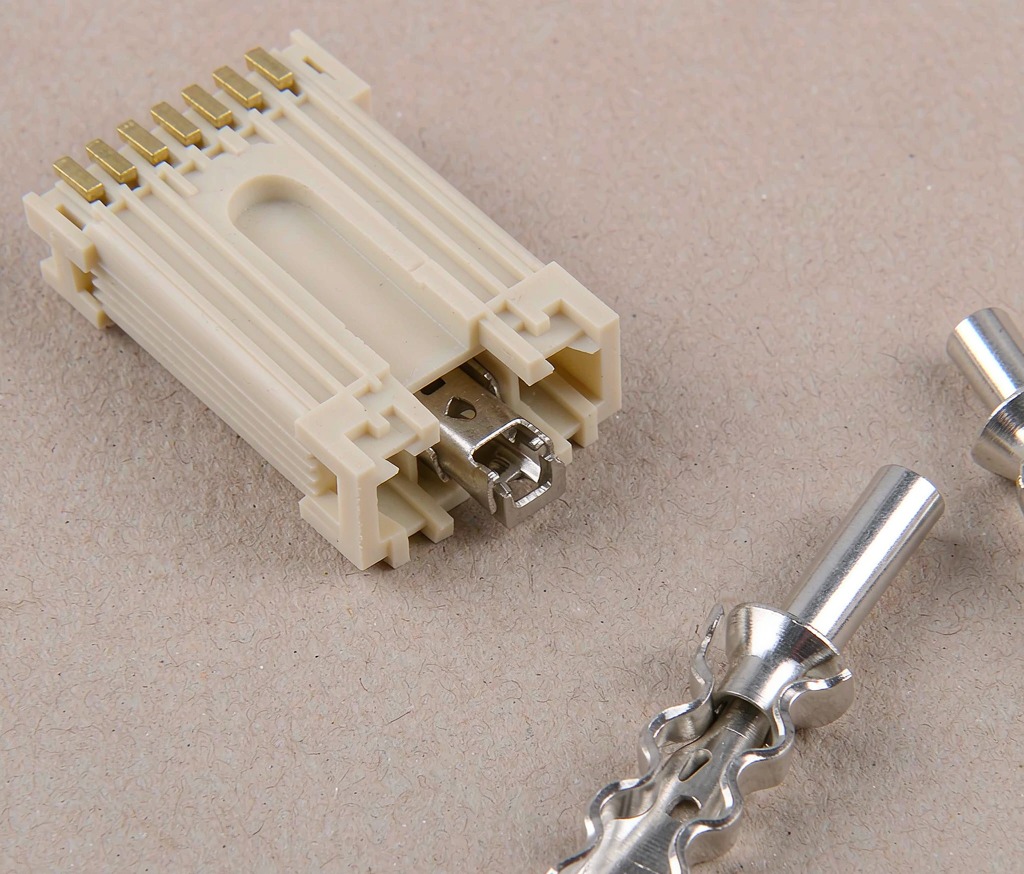
What a Custom Metal Connector Body Does
The metal body carries the mechanical load, positions the contacts or ports precisely, and shields the interface from moisture, vibration, and corrosion. For an electrical connector the shell also aids EMI shielding; for a fluid connector it holds pressure and alignment. Getting the body right is what separates a connector that lasts from one that works once.
The same discipline that builds the shell also builds adjacent hardware such as turned contacts and the broader family of custom brackets used to mount it. Where a contact must be machined from bar, Swiss turning keeps small diameters tight and concentric.
Three Manufacturing Routes
Machining from bar or billet gives the tightest accuracy and the best material choice, which is why CNC milling and CNC turning dominate low-volume and high-precision connector bodies. Stamping is faster and cheaper for thin sheet shells at volume, while casting suits complex hollow shapes. The route tracks the geometry and the quantity.
For cast shells, die casting and investment casting both make net-shape bodies; precision boring then finishes the bores that matter. Choosing the route early keeps tooling cost in line with the expected run size.
Materials and Plating
Aluminum is the default for light electrical shells; brass and zinc alloys suit fluid and stamped bodies; stainless is chosen where corrosion or strength rules. Platings – nickel, zinc, or anodizing on aluminum – protect the surface and, for electrical parts, keep contact resistance low at the mating face.
Plating strategy overlaps the wider precision machining program, and where a true precious-metal face is needed the shell is often paired with custom pins finished to the right spec. Specifying the governing corrosion or conductivity standard up front prevents a costly re-coat.
Tolerances, Seals, and Mating
Contact positioning, bore size, and thread fit decide whether the connector seats and stays sealed. A drilled or bored pilot, plus a controlled thread, lets an O-ring or gasket do its job. Threads and keyways are usually called out to a standard so mating hardware lines up first time.
Where the connector must hold a fastener, the body is often designed alongside custom fasteners so the whole joint is quoted as one package. Tight position tolerances on contact holes are usually held by boring rather than by the casting alone.
Where Custom Metal Connectors Pay Off
You will find them in aerospace looms, hydraulic couplers, sensor housings, and medical instrument shells where a catalog part will not fit. The business case is strongest when the shape is unique or the environment is harsh. A well-specified body also simplifies assembly downstream because it locates every other component.
For structural mounting, pairing the shell with steel fabrication of the bracket keeps the interface rigid under vibration. Early involvement lets the shop suggest a symmetrised shell that machines or casts more stably.
Quality Control and Inspection
Connector bodies are checked by CMM for contact position and bore size, by thread gauge for mating threads, and by plating-thickness test where the spec calls for it. For fluid connectors, a pressure or leak test confirms the seal seat. Batch traceability from material to finish supports regulated programs.
Lead Time and How to Request a Quote
Send the drawing with material, plating, tolerances, seals, and annual volume. Precision machining and any custom fasteners are quoted together so the joint is one package. Volume decides whether machining, stamping, or casting is the right route, and tooling lead sets the first-article date.
Common Cost Drivers in Custom Connectors
Material and plating dominate the cost, then the accuracy of contact bores and the tooling for the chosen process. Over-specifying tolerances or platings on non-critical faces adds cost with no benefit. Sharing the real environment and volume lets the shop pick the leanest route that still meets the duty.
Frequently Asked Questions
What is the best process for a custom connector?
Machining for tight tolerance and low volume; stamping for thin sheet at volume; casting for complex hollow shapes.
Which metal should the body use?
Aluminum for light electrical shells, brass or zinc for fluid parts, stainless where corrosion or strength rules.
Do connectors need plating?
Usually. Plating protects the surface and, for electrical parts, keeps contact resistance low at the mating face.
Can cast connectors hold tight bores?
Yes, if critical bores are finished by boring or CNC after casting rather than relied on from the mold.
How are connector bodies inspected?
By CMM for position and bore size, thread gauge, and plating thickness checks where specified.
What should I send for a quote?
A drawing with material, plating, tolerances, seals, and annual volume so the shop can pick the right route.
Ready to Start Your Project?
Get a build-ready quote on your custom metal parts within 24 hours. Share your drawing and our engineers will respond with process, lead time, and pricing.

