
A sprocket is a deceptively demanding part. The tooth form has to match the chain standard exactly, the pitch diameter and runout control noise and wear, the hub has to transmit torque without fretting, and the tooth flanks usually need a hardened case over a tough core. Get any of those wrong and the chain drive becomes the maintenance problem in the machine.
This guide explains sprocket types and standards, the manufacturing routes from hobbing to sintering, material and heat treatment choices, the inspection points that matter, and how to write an RFQ for custom sprockets so you get a quote that reflects real service life rather than the cheapest possible blank.
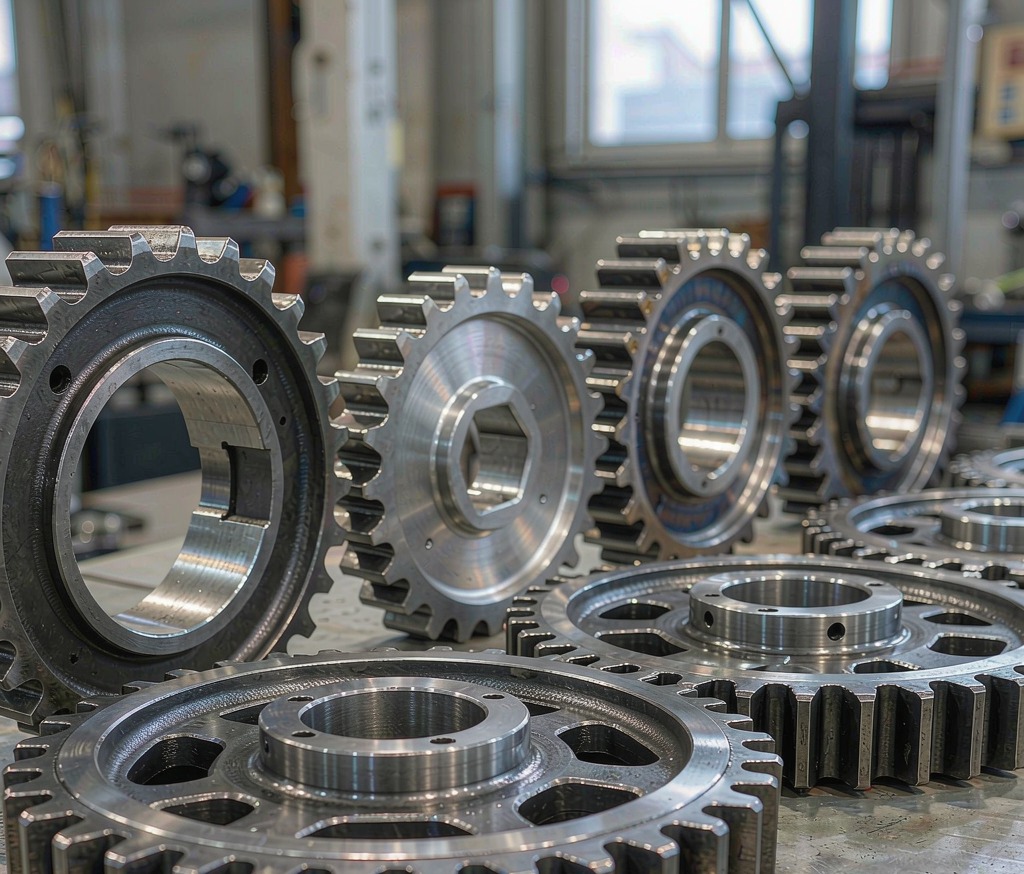
Sprocket Types, Standards and Tooth Geometry
Roller chain sprockets to ANSI B29.1 and ISO 606 cover most industrial drives, in single, duplex and triplex form. Conveyor and agricultural drives add heavy-duty and detachable chain profiles. Timing and synchronous drives use toothed pulley profiles rather than chain tooth forms, and silent chain uses its own involute-based geometry.
Tooth form must be generated to the chain standard, not approximated. Pitch, roller diameter, tooth gap radius and pressure angle all interlock; a tooth that is a fraction narrow concentrates load on one roller and accelerates chain elongation. We generate profiles on hobbing and shaping machines from the chain data, then verify against a master gauge.
Hub configuration is the second decision: plain bore, finished bore with keyway, taper-lock bushing, split hub, or a flange for bolted mounting. If you are also specifying gears or pulleys in the same drive, our custom metal gears guide and custom metal pulleys guide cover the matching requirements.
Manufacturing Routes and When Each Wins
For prototype and low volume, we turn the blank on CNC turning centres and cut teeth by hobbing or milling. This is the fastest route to a first article and carries no tooling cost, which is why most new drive designs validate this way.
At medium volume, forged blanks reduce material cost and improve grain flow around the teeth. Hot forging the blank then machining the bore and teeth gives the best strength per kilo for heavy-duty drives. Gear tooth generation practice is described in our gear hobbing services guide.
At high volume in smaller sizes, powder metallurgy is dramatically cheaper because the tooth form comes straight from the die. Our sintered gears guide and the related sintered gears capability cover the density, strength and sizing steps involved. Fine profiles and hardened post-machining go to wire EDM.
Materials and Heat Treatment for Wear Life
C45 medium carbon steel is the industrial default, induction hardened on the tooth flanks to 45 to 55 HRC while the hub stays tough. 4140 gives higher core strength for shock loads. Case hardening grades such as 8620 and 20CrMnTi are carburised for the deepest, most wear-resistant case where duty is severe.
Stainless 304 and 316 serve food, beverage and washdown drives where corrosion beats wear as the failure mode; because they cannot be through hardened, expect a shorter tooth life and design for it. Cast iron suits low-speed heavy drives, and bronze or plastic-faced sprockets appear in special low-noise applications.
Heat treatment sequencing matters. We normally cut teeth soft, then harden, then finish the bore so the mounting fit is unaffected by growth. Heat treatment is run in-house with documented furnace charts, and hardness and case depth are reported on the inspection sheet.
Inspection, Runout and Documented Quality
Runout is the number that predicts noise and chain wear. We check total radial runout of the tooth form relative to the mounting bore, plus axial face runout, on every first article and on a sampling plan in production. Pitch accuracy is verified over a span of teeth rather than tooth to tooth.
Bore and keyway are inspected for size, position and parallelism, because a sloppy keyway is the most common cause of fretting and hub failure in the field. Tooth hardness is checked on the flank, and case depth on a sectioned sample from the lot.
For critical drives we supply a full first article report, material certificates, heat treatment records and, where required, magnetic particle inspection on forged blanks. Precision ground shafting to match is covered in our precision shaft manufacturing guide.
Cost Drivers and Design Choices That Reduce Price
Volume drives the process, and the process drives the price. Below a few hundred pieces, machined-from-blank is almost always cheapest overall because tooling is zero. Above a few thousand in small sizes, sintering or forging pays back quickly. Tell us the annual volume and we will quote the route that actually suits it.
Material removal is the next lever. A sprocket machined from a solid disc wastes a lot of steel; a forged or laser-cut blank close to final shape cuts both material and cycle time. Web thickness, spoke design and hub length all trade weight against machining time.
Finishing choices are small but add up. Black oxide is inexpensive corrosion protection for indoor drives, while stainless or plated hardware is needed for washdown. Ask for the tolerance you need on the bore, not the tightest one available, because a reamed H7 bore costs more than a turned one.
Lead Time and What to Include in the RFQ
Machined prototype sprockets ship in 10 to 15 working days including heat treatment. Production lots from machined blanks run 15 to 25 days. Forged blanks add three to four weeks for die work on the first order, and sintered tooling four to six weeks, after which releases are quick.
To quote we need chain standard and pitch, number of teeth, single or multiple strand, hub style with bore and keyway detail, material and hardness requirement, overall dimensions or a drawing, quantity per release and annual volume, plus operating speed and load if you want a material recommendation.
If you are replacing a worn part with no drawing, send the old sprocket or a photograph with the chain data. Our reverse engineering team will produce a drawing, confirm the tooth form against the chain standard, and quote a direct replacement.
Frequently Asked Questions
What information do you need to make a custom sprocket?
Chain standard and pitch, tooth count, strand count, hub and bore configuration including keyway, material and hardness requirement, plus overall dimensions or a drawing. Operating speed and load help us recommend the right material and heat treatment.
Which material is best for a sprocket?
C45 induction hardened on the flanks is the industrial default. 4140 suits shock loading, carburising grades such as 8620 give the deepest wear-resistant case, and stainless 304 or 316 is used for washdown service where corrosion matters more than tooth life.
Should the teeth be hardened?
For most power transmission drives, yes. Induction hardening the flanks to 45 to 55 HRC while leaving the hub tough gives long tooth life without making the part brittle. Light-duty and low-speed drives sometimes run acceptably unhardened.
Can you make sprockets without a drawing?
Yes. Send the worn sprocket or clear photographs with the chain data and we will reverse engineer it, generate the correct tooth form from the chain standard, produce a drawing for your records and quote a replacement.
At what volume does sintering or forging beat machining?
Roughly speaking, machined blanks win below a few hundred pieces because there is no tooling cost. Forged blanks pay back in the low thousands for heavy sections, and powder metallurgy becomes very attractive in the thousands for smaller diameters.
How do you control runout and noise?
By generating the tooth form with the mounting bore as the datum, then measuring total radial and axial runout on first articles and on a production sampling plan. Finishing the bore after heat treatment prevents distortion from spoiling the fit.
Ready to Start Your Project?
Get a build-ready quote on your custom metal parts within 24 hours. Share your drawing and our engineers will respond with process, lead time, and pricing.

