
A yoke is the quiet workhorse of any pivoting or lifting assembly—it connects a rod to a clevis, anchors a shaft, or carries a load across a gap. Because custom metal yokes often sit in the load path, their bores and welds have to be right the first time. This guide covers how we fabricate and machine yokes that hold alignment under load, from plate blanks to finished, inspected parts.
What a Yoke Does
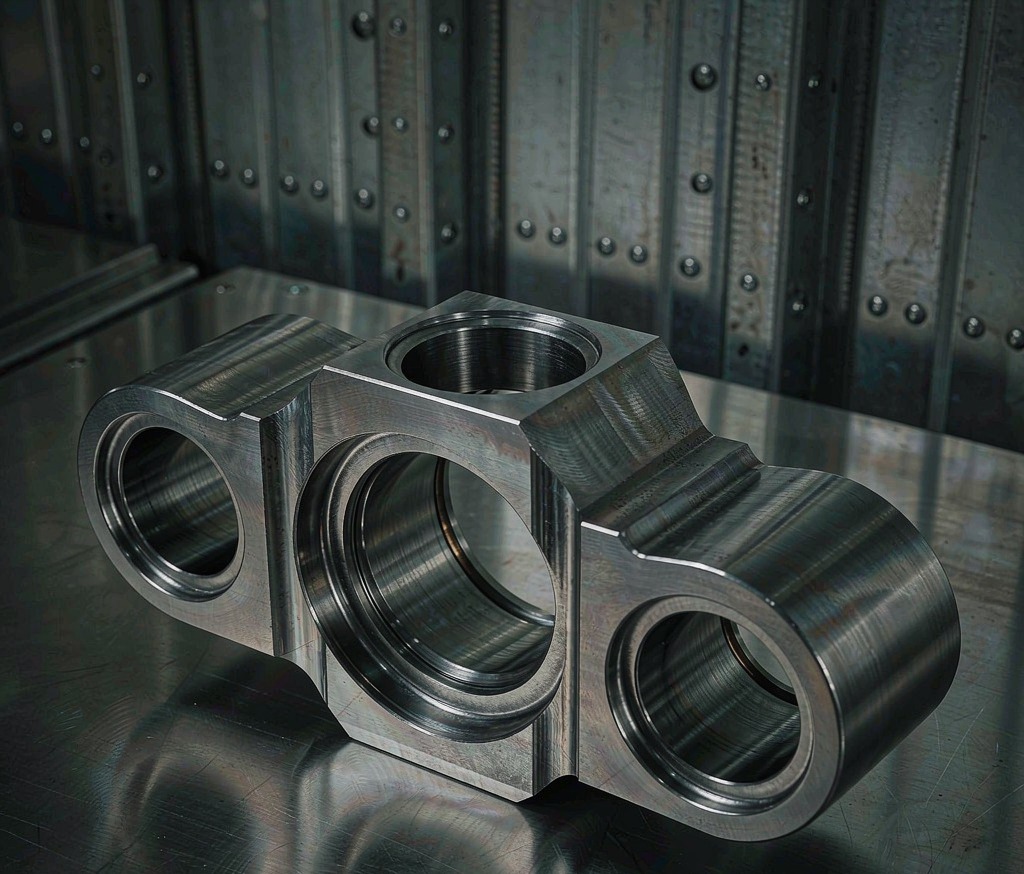
At its core a yoke is two arms with a bore (or two) that let a pin or shaft rotate or pivot. You see them in actuators, lever arms, and suspension links. The design goal is simple: keep the bores coaxial and the web stiff so the pin does not bind, because a yoke that binds wears the pin and the clevis at the same time.
Fabrication Methods
Light yokes are cut and bent from plate, then MIG welded into shape. Heavier yokes start as a forging or casting for grain flow through the load path. Lever programs use the same press brake and weld cells, so a yoke is often a natural extension of a bracket program and shares the same inspection discipline end to end.
Machining the Bores
After welding we mill the pads and bore both eyes in a single setup so they stay parallel. Housing programs share the same datum discipline. We probe the welds first so any distortion is corrected before the final cut, which is cheaper than discovering runout on the assembly line after paint.
Welding and Finish
Full-penetration welds carry the load; we inspect them by dye check on demand. Surfaces get ground where a seal rides, and every edge is deburred to avoid line-assembly cuts. A phosphate or zinc finish is common for outdoor yokes, and we mask the bores so the coating never tightens the pin fit you specified.
Design Tips to Save Cost
Make the web thick enough to resist flex but not so heavy it needs a bigger weld; a rib often beats bulk. Call the bore true-position from a single datum so the two eyes are defined together, not independently. Bending before welding beats machining a thick plate, and it saves both material and cycle time on long runs.
Quality Control and Inspection
We CMM the bore-to-bore parallelism and the pin fit, and we verify weld size by section or UT on structural parts. First-article control catches a distorted weld before it becomes a batch problem. For safety-critical yokes we add a proof-load check so the part you receive has already survived more than it will ever see in service.
Lead Time and How to Request a Quote
Send the model, material, the bore callouts, and the load. Plate yokes quote fast; forged or cast yokes add a tooling step we will map out for you. We return the process route with the price, and we will tell you plainly if bending-and-welding beats casting for your volume. A 15-minute call on the load path usually prevents a redesign.
Getting the Yoke Right the First Time
Most yoke problems trace back to one drawing choice: defining the two bores from different datums. When each eye is called out independently, the shop cannot guarantee they stay parallel, and the pin binds in service. Define the bore true-position from a single datum and let us machine both eyes in one setup so parallelism is built in, not inspected in. Bracket programs use the same rule, and a yoke plus its carrier can be cut as a matched set at no extra cost. Web thickness is the other lever: a rib often beats bulk for stiffness, and a thick plate just needs a bigger weld and more material. If the yoke is long or thin, bending before welding beats machining a solid plate, saving both stock and cycle time. Mask the bores before any zinc or phosphate finish so the coating never tightens the pin fit you specified, and call out the load so we can add a proof-load check on safety-critical parts. A 15-minute call on the load path usually prevents a redesign, and we will tell you plainly whether plate-and-weld or casting wins for your volume because the cheaper blank is the one closest to your final shape.
Weld quality matters most where the yoke sits in the load path, so we use full-penetration joints and dye-check them on demand, with UT on structural parts. Distortion after welding is corrected by probing the weld before the final bore cut, which is cheaper than finding runout on your assembly line after paint. A yoke that binds in service is almost always a datum problem, not a machining one, so the single-datum callout is the cheapest insurance you can write into the drawing.
Frequently Asked Questions
Plate or casting for my yoke?
Plate+bend for low volumes and thin webs; casting or forging for thick, high-load yokes.
Can you hold both bores parallel?
Yes—milled in one setup, typically within 0.02 mm over the arm.
What materials are common?
1018/4140 steel, 304/316 stainless, and 6061 aluminum are the usual choices.
Do you weld and machine in one order?
Yes; we fabricate, stress-relieve if needed, then machine to print.
Can you add a grease nipple boss?
Easily—tell us the thread and we build it into the web.
Ready to Start Your Project?
Get a build-ready quote on your custom metal parts within 24 hours. Share your drawing and our engineers will respond with process, lead time, and pricing.

