
Design for Manufacturing (DFM) is the habit of shaping a part so it is cheap and reliable to make—not a heroics exercise after the drawing is locked. A DFM review before release can cut cost 20–40% and kill most scrap. This guide gives concrete DFM rules for the four processes buyers use most: CNC, sheet metal, casting, and forging, so your next design is build-ready the first time.
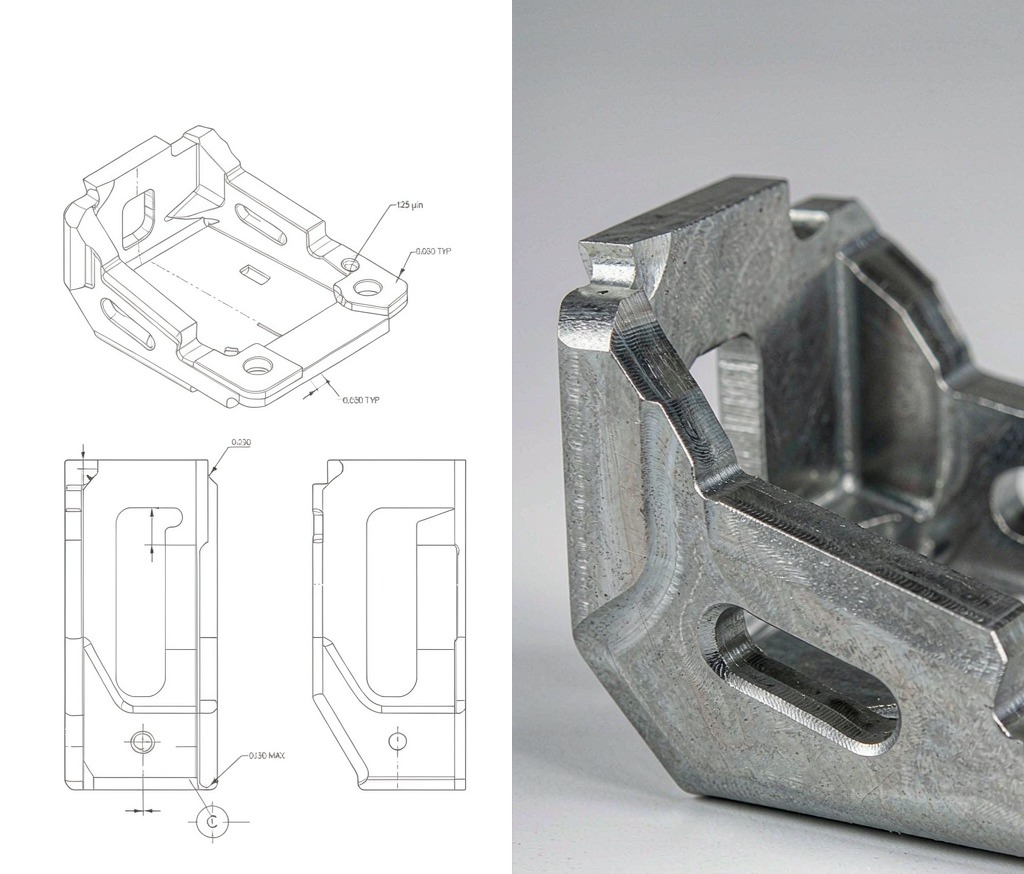
What DFM Delivers
DFM aligns geometry to process limits: standard tools, natural feature shapes, and tolerances only where function needs them. Done early it shortens lead time and lifts yield; done late it means expensive re-tools and a frustrated supplier. The mindset is simple—design the part so the machine’s easiest move also makes the part you want. Our DFM support services fold this into quoting, so you get manufacturing feedback while the design is still fluid.
DFM for CNC Machining
Keep walls thick enough to mill (avoid <1 mm on long spans), use standard drill sizes, add fillets to internal corners (cutters are round), and design holes that can be reached in one setup. Symmetrical parts and stock bar sizes save material, and shallow depths of cut run faster than deep ones. Our CNC machining design guide lists exact limits and examples, including how to avoid the thin, tall ribs that chatter and drift out of tolerance.
DFM for Sheet Metal
Keep bend radii consistent, stay clear of the punch’s minimum flange, and place holes outside the bend-affected zone so they do not distort. Use standard sheet metal gauges and avoid welded seams where a single bend works. Sheet metal fabrication rewards uniform features across a panel: same radius everywhere, same hole sizes, and reliefs at corners so the brake does not crack the material. Dimples and tabs beat welds for alignment and cost.
DFM for Casting and Forging
Castings need draft on every vertical face, uniform wall thickness, and generous fillets to avoid shrink defects; die casting adds corner radii and ejector considerations, while sand casting tolerates larger, simpler shapes. Forgings want simple parting lines and balanced sections so the die fills without cold shuts or laps. Both hate sudden thickness changes that cause porosity, so taper from thick to thin instead of stepping abruptly.
The cost of a late change dwarfs the cost of an early review. A DFM pass at CAD catches the expensive mistakes—un-millable corners, impossible bends, un-cast sections—while they are still free to fix. Build the habit of a 30-minute manufacturing read before every release, and the savings compound across the catalog. Shops that offer custom fabrication feedback during design become partners in cost, not just vendors of parts.
Tolerances and Features That Save Money
Specify tight tolerances only on fit features; let the rest float. Avoid threads smaller than M3 in soft metal, and prefer self-fixturing shapes that locate themselves in the machine. Standardize on a few radii, hole sizes, and fasteners across your whole product to shrink setup and inventory, and resist the urge to tolerance a cosmetic edge to micron level just because the CAD slider lets you.
Early Supplier Involvement
Loop in manufacturing at the CAD stage, not after prototyping. A shop that runs CNC, turning, and fabrication can flag a $5 feature that would cost $40 to machine and suggest a near-net alternative. Custom fabrication teams do this daily, and the feedback often reveals a process you had not considered that beats your assumed route on both cost and lead time.
DFM Review Checklist
Before release: stock sizes used? corners filleted? walls feasible? tolerances minimal? finish consolidated? features reachable in one setup? If every box ticks, the part is build-ready and priced right—and your supplier will quote it faster because the drawing already tells them exactly what to do. Close the loop with a first-article review so the next revision benefits from what the floor learned.
DFM Across the Product Family
The biggest savings appear when you apply DFM across a whole product, not one part. Standardize radii, hole sizes, fasteners, and wall thicknesses so a single setup, die, or gauge serves many components, and so operators stop re-learning each piece. Where several parts assemble, design the interfaces for the same process—two fabricated brackets that share a bend radius and hole pattern are cheaper together than each optimized alone. A shared sheet metal or CNC standard pays back on every new revision.
Make DFM a checklist item in your release gate, with manufacturing sign-off before production. Capture the lessons from each first article into a living design standard so the next engineer starts where the last one finished. Over a product line, this discipline compounds: fewer surprises, shorter quotes, and a supplier that quotes you tighter because your drawings already tell them exactly what to do.
Frequently Asked Questions
When should DFM start? At CAD, ideally with the supplier in the loop.
Biggest CNC DFM mistake? Square internal corners and walls too thin to mill.
Does DFM hurt function? No—it tightens tolerances only where function needs them.
Can DFM cut cost that much? Commonly 20–40% via material and setup savings.
Who owns DFM? Best as a shared review between design and manufacturing.
Ready to Start Your Project?
Get a build-ready quote on your custom metal parts within 24 hours. Share your drawing and our engineers will respond with process, lead time, and pricing.

