
For the most demanding aerospace and high-tech structures, sometimes the best joint is no joint at all. Diffusion bonding joins two carefully prepared surfaces by holding them under heat and pressure in a vacuum until the atoms interdiffuse and the interface simply disappears—leaving one monolithic piece with no filler, no melt and no weakening seam. It is the process behind honeycomb panels, titanium integrally stiffened structures and heat-exchanger cores. Huaxiao offers diffusion bonding as a specialist service that dovetails with TIG welding and our other joining capabilities.

What Diffusion Bonding Is and How It Works
Two ultra-clean, flat surfaces are stacked and loaded into a hot press or autoclave, often in vacuum or inert gas. Heat and pressure are held long enough for atoms to migrate across the original interface, erasing the boundary. No liquid phase forms, so there is no solidification structure and no heat-affected zone. Our robotic welding line handles conventional joints, while diffusion bonding handles the structures where a weld would be a liability.
Why It Suits Titanium and Superalloys
Titanium, aluminum and nickel superalloys bond cleanly by diffusion and keep their base properties across the joint, which is why the process is central to airframe and engine structures. Because there is no filler, the bonded region has the same chemistry and strength as the parent. Many programs begin as titanium machining services work and move to bonding for the final assembly.
Diffusion Bonding vs Welding and Brazing
Welding and brazing introduce a different microstructure or filler at the joint; diffusion bonding does not. The result is uniform and leak-tight, ideal where fatigue, pressure or weight matter. As our friction stir welding services guide points out, both are solid-state, but diffusion bonding excels at complex, multi-layer monolithic builds that stirring cannot.
Aerospace and High-Tech Applications
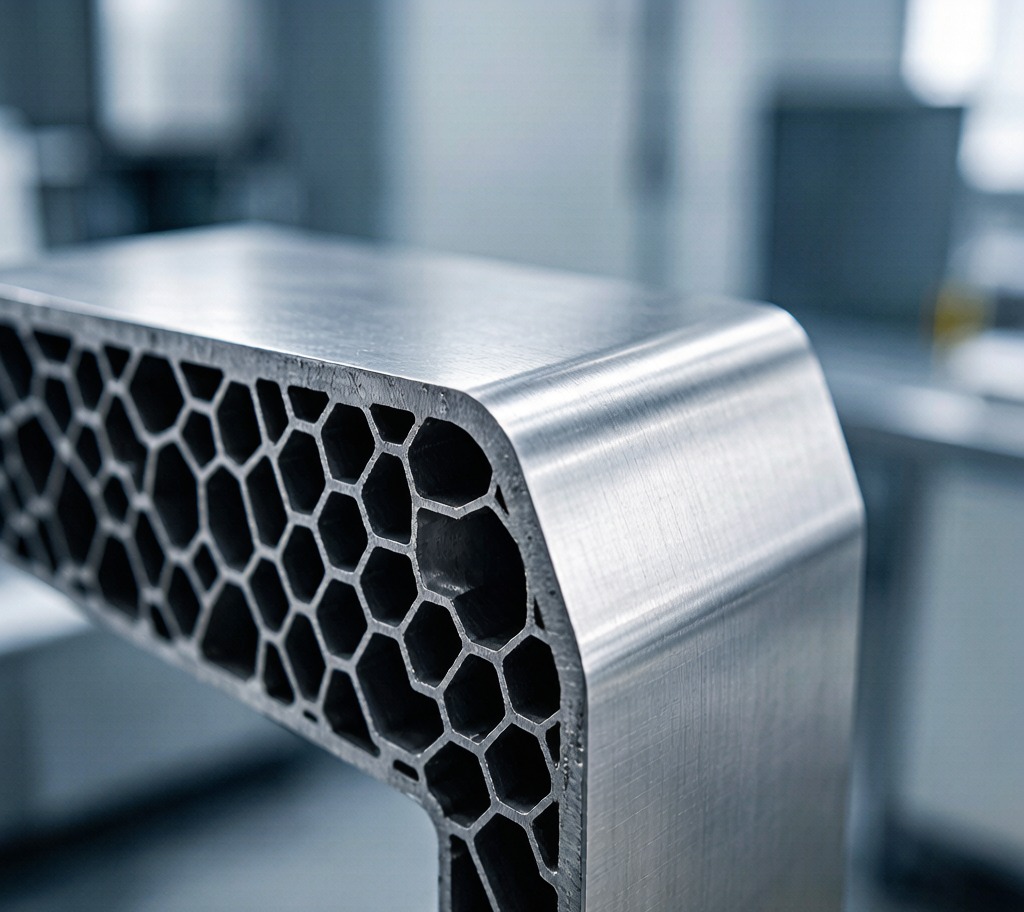
Think titanium honeycomb sandwich panels, integrally stiffened wing skins, heat-exchanger cores and bimetallic transitions. These are exactly the structures where a conventional weld would add weight or a failure point. They are usually specified within aerospace machining services programs with full traceability.
Cycle time and tooling are the trade-offs to plan for. Diffusion bonding runs at elevated temperature and pressure for hours, in a hot press or autoclave with purpose-built tooling, so it is a high-value, lower-volume process rather than a high-rate one. The payback comes in parts where a weld would add weight, a weak seam or a failure point—typically aerospace structures, pressure equipment and bimetallic transitions where the joint is in the critical load path. We scope it accordingly and quote on the structure’s value, not just its size.
Traceability is built into how we run it. Surface preparation, load, temperature, pressure and time are recorded for every cycle, and bond integrity is confirmed by ultrasonic inspection and section coupons so you have objective evidence the interface has disappeared. For programs governed by aerospace or pressure-equipment standards, that documentation is as important as the part itself, and we deliver it alongside the bonded component so your quality file is complete.
Design Rules for Bonded Structures
- Surfaces must be flat, clean and matched—bonding quality lives or dies at the interface prep.
- Keep bond areas accessible to uniform pressure; complex internal voids need engineered tooling.
- Specify the service environment (pressure, temperature, fatigue) so we set time, temperature and pressure.
- Plan for post-bond machining of features that bonding cannot create, such as holes and threads.
Bonded assemblies can be finished on our laser marking line for traceability, and our custom metal flanges are often the starting stock for bimetallic transitions.
Quality and Inspection of Bonds
We verify bond integrity with ultrasonic inspection, section macro-etch and, where required, shear or peel coupons. For laser welding services comparison programs, we document the absence of a heat-affected zone as a key advantage of the bonded route.
In practice, diffusion bonding is selected when the structure is too valuable or too integrated to weld conventionally, not as a default. If a conventional weld or braze meets the spec, it will almost always be faster and cheaper, and we will say so. The process earns its place for monolithic titanium structures, leak-tight cores and bimetallic transitions where any seam is a liability—precisely the cases where its higher cycle time is justified by what it enables you to build.
Frequently Asked Questions
Is the bond as strong as the parent metal?
When properly processed, the interface disappears and strength matches the base, with no filler or cast structure to act as a weak point.
Which metals can be diffusion bonded?
Titanium, aluminum, nickel superalloys and many stainless grades bond well; dissimilar but compatible metals can also be joined, such as aluminum-to-titanium with care.
How is it different from welding?
There is no melting and no filler. The parts fuse by atomic interdiffusion under heat and pressure, leaving a uniform monolithic structure.
Is it leak-tight?
Yes—fully bonded interfaces are leak-tight, which is why the process is used for heat-exchanger cores and pressure structures.
What are the limitations?
It needs flat, clean, matched surfaces and long cycle times with specialized hot-press tooling, so it suits high-value parts rather than high volume.
Can you bond complex shapes?
Multilayer and honeycomb structures are a strength, but internal features must be designed so pressure is applied uniformly across the bond.
Ready to Start Your Project?
Get a build-ready quote on your custom metal parts within 24 hours. Share your drawing and our engineers will respond with process, lead time, and pricing.

