
Electric motors, whether in EVs, appliances, pumps, or industrial drives, rely on a set of precision metal components working together: housings, rotors, stators, shafts, and end-bells. Small errors in these parts translate directly into noise, heat, and lost efficiency. This guide explains how each motor metal component is made and what to specify when you source them for reliable, quiet operation.
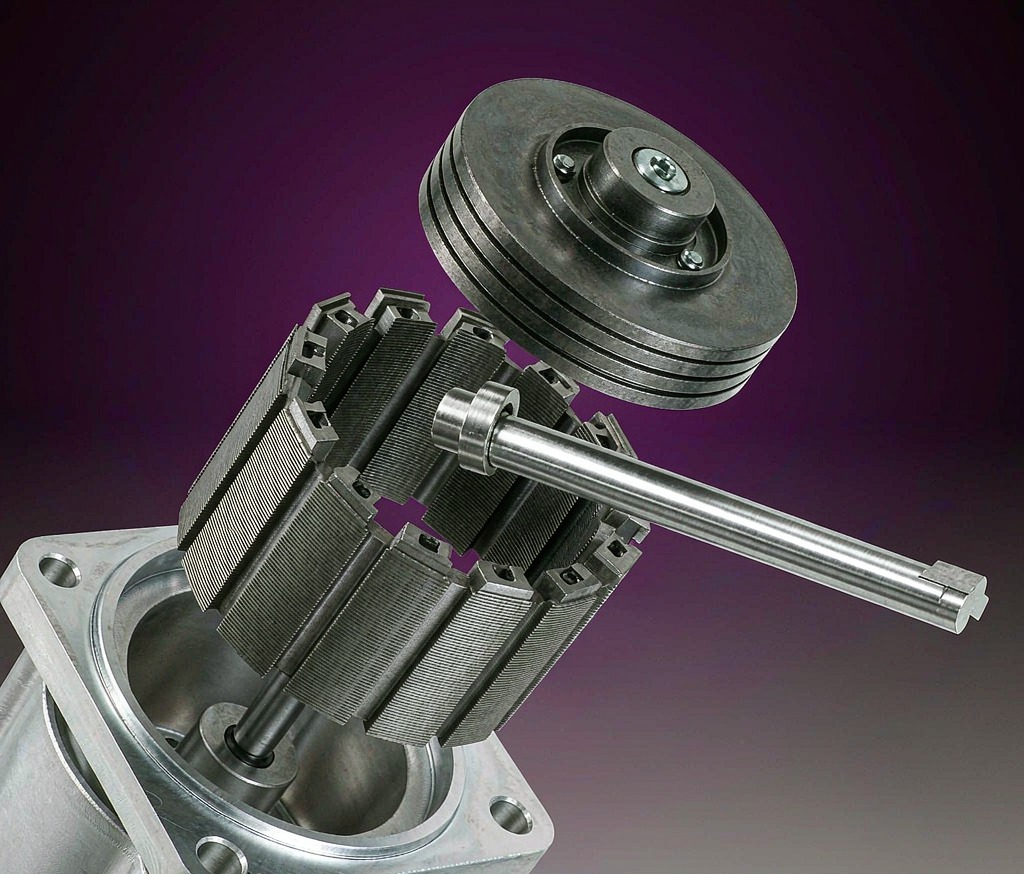
Motor Housings
The housing supports bearings, dissipates heat, and protects the windings from contamination. Aluminum housings are machined for flat mating faces and bearing bores that keep the rotor centered under load. Our CNC milling and CNC turning hold the geometry that matters, while cast variants are covered by our die casting services for higher volumes where tooling is justified.
Shafts & Rotors
The shaft transmits torque and must be straight and concentric to avoid vibration. Turning plus grinding yields the required runout, and balance is checked before the rotor is assembled. See our precision shaft manufacturing guide for tolerance detail and the inspection steps that catch a bad shaft before it reaches the line. Rotor cores are often laminated stacks; our custom metal housings article touches on related assembly practices.
Stators & Laminations
Stator laminations are thin stamped or cut steel sheets stacked to minimize eddy-current loss and keep the motor efficient. Accuracy in the stack height and bore is essential to avoid air-gap variation that hurts torque. Heat generated during operation is managed through housing fins and thermal paths, sometimes with heat treatment of structural members to retain strength at temperature.
End-Bells & Mounting
End-bells close the motor and locate the bearings on the opposite side from the shaft. They are typically cast or machined aluminum, and surface quality on the sealing faces prevents contamination ingress that would shorten bearing life. Anodizing adds durability in humid or outdoor environments where a bare casting would oxidize.
Bearings, Tolerances & Balance
Bearing bores are held to tight limits and verified by CMM; rotor assemblies are balanced to control vibration that would otherwise damage windings and mounts. Our CNC grinding and surface grinding services support these finishing steps, delivering the roundness and flatness that quiet, long-lived motors require across their operating range.
Efficiency Implications of Tolerances
Air-gap consistency between rotor and stator drives motor efficiency more than many engineers expect; a few thousandths of variation repeats as lost torque and extra heat. Holding bore, stack, and runout to the design intent is not fussiness but a direct efficiency decision. A supplier who measures and reports these characteristics protects the performance your electrical design team worked to achieve.
Assembly & Test Readiness
Deliver motor components as balanced, deburred, and inspect-ready to shorten your final assembly. Pre-balancing rotors and verifying shaft runout before shipment moves the bottleneck off your line and onto the supplier’s, where it is cheaper to correct. Ask for a simple incoming inspection summary so your team can trust the parts and focus on winding and testing rather than rework.
Working With Your Supplier Early
Motor performance is a system property, so the housing, shaft, and end-bell should be developed together rather than sourced separately and hoped to align. A supplier who makes the set can optimize interfaces, balance the rotor, and verify runout as a unit before shipment. This integration removes a whole class of assembly surprises and shortens your path from prototype windings to a quiet, efficient production motor.
Documentation & Traceability
Keep material certificates and inspection summaries with each component lot so any field issue can be traced to its source quickly. A supplier who delivers first-article data and batch records treats your motor as a qualified assembly, not loose parts. This rigor pays off when a customer reports a noise or efficiency concern and you can confirm the exact specification of the components in the unit without guesswork.
Getting Started on Your Motor Parts
Start by treating the housing, shaft, and end-bell as one system and briefing a supplier who can make all three. Share the air-gap, runout, and balance targets up front so they are designed in rather than inspected for afterward. This systems view shortens development and yields a motor that is quiet, efficient, and repeatable, instead of a set of individually acceptable parts that fight each other on the assembly line.
Cross-Industry Examples
Similar component logic applies across sectors, from tiny drone motors to large industrial drives. Our motorcycle metal parts article shows how compact motor and bracket assemblies are produced for vehicles, where space and weight are at a premium and reliability is non-negotiable for the end user.
Choosing a Motor Parts Supplier
Look for a shop that can deliver matched sets, not just isolated parts, because housing, shaft, and end-bell must align as a system. Request first-article data on bore, face, and runout, and confirm the supplier can scale from prototype quantities to production without drifting from that baseline as volumes climb.
Frequently Asked Questions
What tolerance on a motor shaft?
Bearing journals commonly sit at ±0.005 to 0.01 mm with tight runout control to avoid vibration and premature bearing wear.
Why laminated stators?
Thin insulated steel sheets cut eddy-current losses, improving efficiency versus a solid core and reducing heat that would otherwise waste energy.
Aluminum or steel housing?
Aluminum for weight and cooling in most modern drives; steel where rigidity or lower cost drives the choice in stationary equipment.
Can one shop make the full set?
A supplier with turning, milling, casting, and grinding can deliver matched housing, shaft, and end-bell sets that assemble correctly the first time.
Ready to Start Your Project?
Get a build-ready quote on your custom metal parts within 24 hours. Share your drawing and our engineers will respond with process, lead time, and pricing.

