
Furniture metal parts combine structural function with visible design. Legs, frames, brackets, and connectors must be strong enough to support load, consistent enough to assemble cleanly on a production line, and finished to match a brand’s aesthetic on a showroom floor. Sheet metal and tube fabrication make it possible to produce these parts reliably at scale, turning a designer’s sketch into a repeatable, shippable component.
This article reviews the components we build for furniture, the fabrication methods, and the finishing options that define the final look and feel of the product.
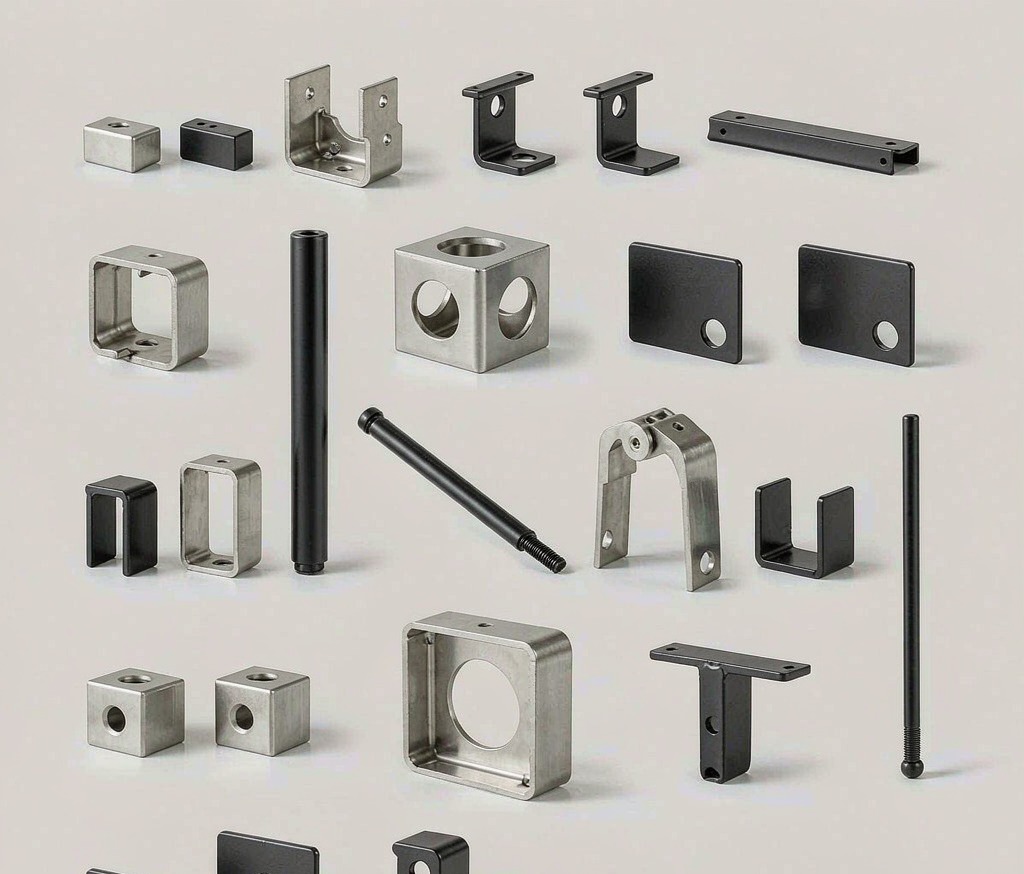
Where Metal Is Used in Furniture
Metal appears in table and chair legs, frames, joints, brackets, and decorative trims across residential, office, and contract furniture. Our custom metal brackets are a staple of flat-pack and commercial furniture alike, where a consistent bracket means a table that assembles the same way every time.
Common Furniture Metal Components
We fabricate legs, frames, stretchers, mounting plates, and enclosures. CNC bending“>CNC bending forms the profiles with repeatable angles, and CNC punching“>CNC punching adds holes and features such as slots and embossed locating marks that speed final assembly.
Fabrication: Bending, Cutting, and Welding
Blanks are produced by sheet metal laser cutting“>sheet metal laser cutting or tube laser cutting“>tube laser cutting, then formed and joined. TIG welding“>TIG welding gives clean, low-spread joints suited to visible furniture surfaces, avoiding the heavy bead that would need grinding and re-finishing before coating.
Finishes That Match the Design
Powder coating“>Powder coating delivers durable matte, gloss, or textured colors that resist scratching in daily use, while brushed or plated finishes suit premium lines where the metal itself is the design statement. Finish choice drives both durability and brand identity on the showroom floor.
Tolerances for Assembly
Consistent bend and hole tolerances let furniture assemble without rework, which is critical when thousands of units ship to retailers or direct customers. Our custom metal enclosures program applies the same fixturing discipline for repeatable quality across a production run.
Quality and Finish Consistency
First-article approval and batch checks keep color and geometry consistent across production, so a replacement part ordered months later still matches the original. For the full capability set see our sheet metal fabrication overview covering cutting, forming, joining, and finishing.
Lead Time and Quote Process
Send drawings or samples with material, finish, and quantity. We quote fast and can supply prototypes before volume runs, letting your design team confirm both the fit and the look before committing to tooling and inventory.
Cost Drivers in Furniture Metal Parts
Furniture parts live or die on the combination of look, consistency, and price, and most of the cost is set at the design stage. A leg or frame that is easy to laser cut, bend, and weld in fixtures runs fast and rejects less, while a shape that demands manual touch-up after welding quietly erodes margin. We review your drawings for opportunities to simplify forms without changing the design language.
Finish choice is the other big lever. Powder coating is durable and economical at volume, while brushed or plated premium finishes cost more but define the product tier. Matching the finish to the price point keeps the part profitable across the range.
How We Ensure Quality on Furniture Parts
Because furniture ships in large identical runs, we lock the process at first-article approval and repeat it on every batch. Geometry, hole patterns, and color are checked so a replacement part ordered later still matches the showroom original and assembles the same way on the line.
We also manage the small details that affect perceived quality, such as clean weld roots and consistent edge breaks, because in visible furniture those details are exactly what the end customer notices first.
For ongoing furniture programs we hold approved setups so repeat orders release quickly and stay consistent, and we track finish and tool wear so a leg produced in different months still matches on the assembly line. Commonizing features across a product family is another way we reduce both cost and the number of parts you must qualify. If a design change is planned, we can prototype the new version alongside the current one so the transition does not interrupt supply or force a costly line stoppage during the switchover.
The goal is a stable, repeatable supply that keeps your assembly line moving without surprises from one batch to the next.
Send a sample or drawing and we will quote both prototype and production with the same consistent controls.
Frequently Asked Questions
What furniture metal parts do you produce?
Legs, frames, brackets, stretchers, connectors, and decorative trims in sheet and tube metal.
Which fabrication methods are used?
Laser cutting, CNC punching, CNC bending, tube cutting, and TIG welding.
What finishes are available?
Powder coating in many colors plus brushed, plated, or anodized premium finishes.
How consistent is batch quality?
Fixture-based bending and first-article approval keep geometry and color uniform.
Can you match an existing furniture part?
Yes. Send a sample and we reverse-engineer geometry and finish, often with improvements.
Do you handle both prototypes and production?
Yes. Prototypes confirm fit and look, then production scales with consistent controls.
Ready to Start Your Project?
Get a build-ready quote on your custom metal parts within 24 hours. Share your drawing and our engineers will respond with process, lead time, and pricing.

