
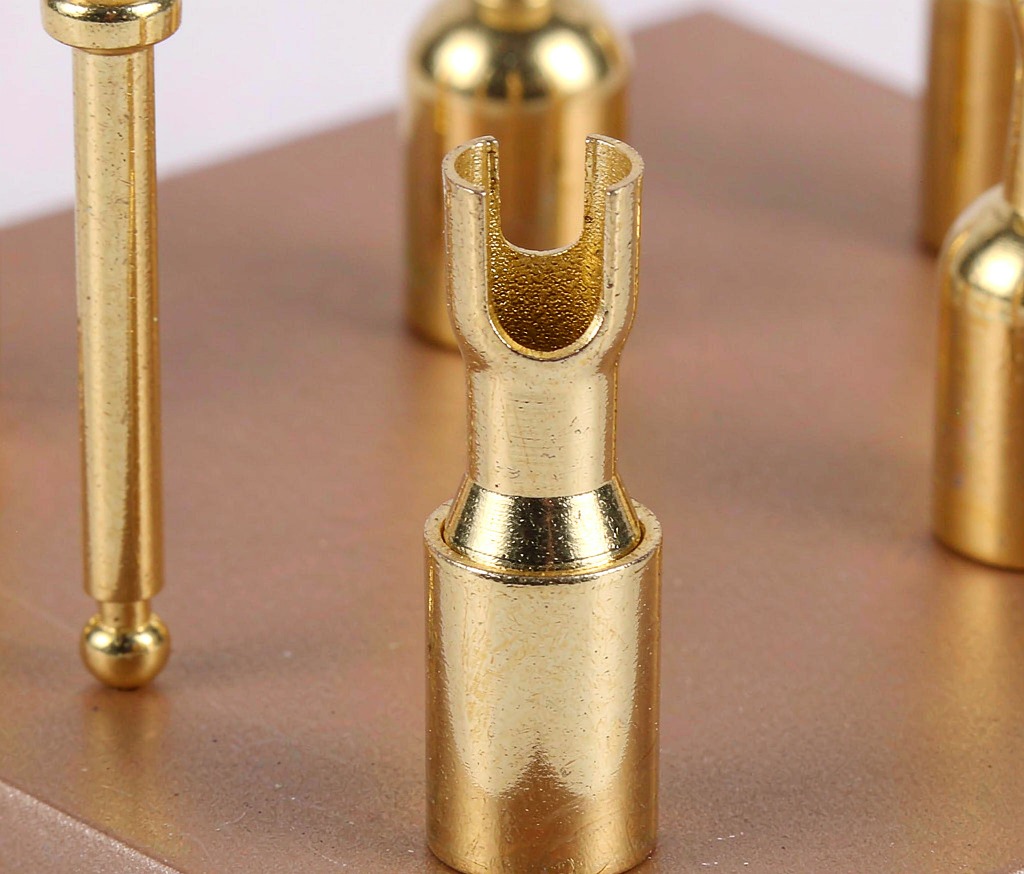
Gold is one of the few finishes that combines excellent electrical conductivity, outstanding corrosion resistance, and a surface that is easy to bond or weld. That combination is why gold plating services are standard in connectors, contacts, switches, and medical devices where reliability cannot be compromised.
This guide explains the two main forms of gold plating, when selective and brush plating make sense, which base metals and under-plates work best, and how thickness and purity are specified. Use it to brief a plating supplier or to tighten your own drawing requirements.
What Gold Plating Actually Does
Gold plating deposits a thin layer of gold onto a base metal by electrolytic or occasionally electroless means. Even a micron-scale layer protects the underlying metal from oxidation and provides a stable, low-resistance contact surface. Because gold does not tarnish, contact resistance stays predictable over the life of the part.
The finish is frequently specified alongside nickel plating as an under-layer, which also appears in our broader metal plating program for corrosion-critical components. Where a harder, lower-cost barrier is enough, zinc plating or chrome plating may be used instead, while anodizing protects aluminum hardware in the same assembly.
Hard Gold vs Soft Gold
Hard gold is alloyed with small amounts of cobalt or nickel to raise hardness and wear resistance, making it the right choice for connectors, edge cards, and sliding contacts that see repeated mating cycles. Soft (pure) gold is nearly 99.9% gold and is favored where it must be thermosonic bonded or where maximum conductivity matters more than wear.
Choosing between them is a trade-off: silver plating can rival gold on conductivity but tarnishes, while hard gold sacrifices a little conductivity for durability. The application’s mating cycle count usually decides.
Selective and Brush Plating
Selective plating confines gold to the exact contact area using masks or reel-to-reel strips, saving precious metal and cost on large parts. Brush (tampon) plating localizes the deposit with a handheld anode, useful for repairs and touch-ups on existing assemblies.
For high-volume strip and wire terminals, tin plating is often the low-cost alternative, but where signal integrity is critical, selective gold remains the standard.
Base Metals and Strike Layers
Gold is rarely plated directly onto steel or copper. A thin nickel strike or copper flash improves adhesion and blocks base-metal migration that would discolor the gold. Stainless and copper alloys are common substrates in electronics hardware.
Proper pre-treatment, including passivation of compatible substrates, keeps the interface clean so the deposit bonds rather than flakes.
Specifying Thickness and Purity
Thickness is called out in micro-inches or microns and depends on wear and environment: a few micro-inches for decorative use, 30–100 µin for connectors, more for heavy wear. Purity (e.g., 99.7% or 99.9% soft gold) is specified where bonding or corrosion limits apply.
Military and telecom specs often define both minimum thickness and porosity, so stating the governing standard up front prevents rework.
Where Gold Plating Pays Off
You will find gold plating on RF connectors, PCB edge contacts, semiconductor fixtures, medical leads, and aerospace instrumentation where a single bad contact is unacceptable. It is also used decoratively on premium hardware.
When the joint must survive corrosion and repeated mating, electroless nickel may handle the bulk corrosion resistance while a thin gold cap handles the contact face.
Quality Control and Inspection
Gold plating is verified by X-ray fluorescence for thickness, adhesion bend tests, and porosity checks where the standard requires them. For critical contacts, a coupon from the same lot confirms purity and confirms the under-plate is intact. Documenting the bath chemistry and rack layout keeps results repeatable across batches.
Lead Time and How to Request a Quote
Send the base material, geometry, target thickness, purity, and any governing spec (ASTM, MIL, or customer standard). Nickel plating under gold is quoted together so the stack is consistent. Stating annual volume helps the shop choose reel-to-reel or rack plating and quote a realistic lead time.
Common Cost Drivers in Gold Plating
Gold cost dominates the quote, so selective plating and the thinnest spec that meets performance are the biggest savings. Alloy choice, thickness, and inspection level add to the total. Sharing the true wear and environment lets the shop specify the minimum viable gold rather than a blanket heavy deposit. For high-volume strip plating, reel-to-reel tooling further lowers per-part cost and keeps the deposit thickness uniform across the whole production run.
Frequently Asked Questions
What is the difference between hard and soft gold?
Hard gold contains a hardening alloy for wear resistance; soft gold is nearly pure for bonding and maximum conductivity.
How thick should gold plating be?
A few micro-inches for decorative use, 30–100 µin for connectors, more for heavy sliding wear.
Can gold be plated selectively to save cost?
Yes. Masks and reel-to-reel methods confine gold to contact areas, which is standard for connectors.
What base metal is best under gold?
Nickel strike over copper or copper alloy gives the best adhesion and blocks migration.
Is gold plating good for outdoor corrosion?
Yes, but a nickel under-layer is usually added for long-term durability in harsh environments.
How are plated parts inspected?
Thickness is checked by X-ray fluorescence, and adhesion and porosity by standard bend and porosity tests.
Ready to Start Your Project?
Get a build-ready quote on your custom metal parts within 24 hours. Share your drawing and our engineers will respond with process, lead time, and pricing.

