
Heat exchangers move energy, and the metal parts inside them—tubes, tubesheets, plates, and headers—decide how efficiently and how long they do it. In power generation, petrochemical, marine, and HVAC systems, those parts face corrosion, pressure, and thermal cycling that punish poor material choices and sloppy fabrication. This guide covers the components, the fabrication methods, and the material strategy behind reliable heat exchanger metal parts.
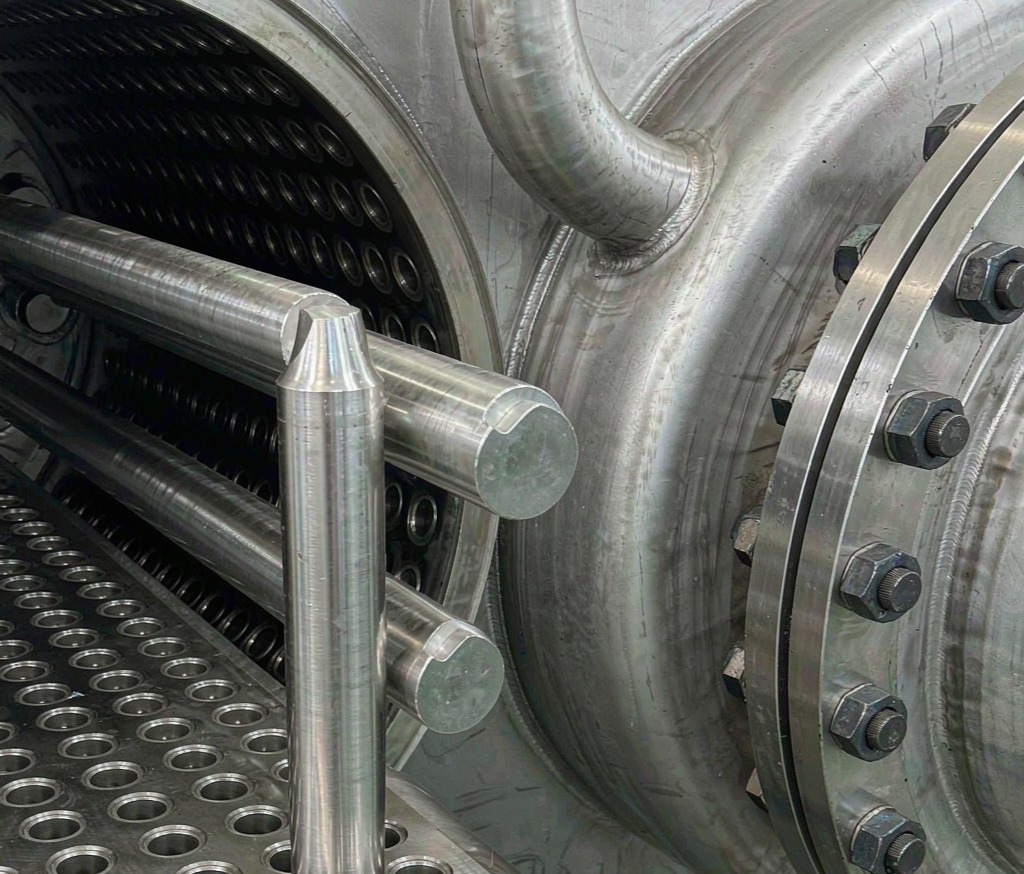
Components of a Heat Exchanger
A shell-and-tube unit alone contains tubes, a tubesheet, shells, baffles, and headers; a plate exchanger adds stamped or machined plates and frame members. Each part has a distinct fabrication route, and getting them to mate precisely is what separates a unit that passes hydro-test from one that leaks. Our tube laser cutting and CNC bending services produce the tubes and bent runs, while sheet metal laser cutting handles plates and shells.
Tube and Tubesheet Fabrication
Tubes must hold wall thickness and straightness; tubesheets demand tight hole-pattern accuracy so tubes expand cleanly without leak paths. Machining the tubesheet flat and drilling it to spec is precision work, and that is where surface grinding and CNC drilling earn their place in the process chain. Tube-to-tubesheet joints are then welded or rolled, with weld quality checked by pneumatic or helium leak test.
Plate and Header Manufacturing
Plate exchangers rely on thin stamped or machined plates with engineered corrugation; headers and nozzles collect and distribute flow. Joining is typically TIG or orbital welding for a clean, controllable root pass. We detail the process in our TIG welding service page, a mainstay for corrosion-resistant joints on stainless and nickel alloys.
Material Selection for Corrosion Resistance
Material is the single biggest lever on service life. Stainless steels suit general duty; copper-nickel and titanium resist seawater and brine; high-nickel alloys (Inconel, Hastelloy) handle aggressive chemical and high-temperature service. Choosing correctly—and verifying with material test reports—prevents the in-service failures that shut a plant down. Our stainless steel fabrication and copper busbar manufacturing guides show how alloy and process combine for conductive, corrosion-resistant parts.
Machining and Finishing
After forming and welding, parts are often passivated to restore corrosion resistance on stainless, or finished to a controlled surface for cleanability. Passivation is a standard final step for stainless exchanger parts exposed to fluids. Cleanliness and traceability matter as much as geometry in this industry.
FAQ
Q: Which material is best for seawater cooling?
A: Copper-nickel or titanium are the safe choices for seawater and brackish service; carbon steel will corrode rapidly without heavy protection.
Q: How are tube-to-tubesheet joints sealed?
A: Typically by hydraulic or pneumatic expansion, followed by a seal weld where code requires it, then verified by leak testing.
Q: Can a supplier make both prototype and production parts?
A: Yes—look for a shop that handles small-batch and volume runs so your spare parts and new units come from the same qualified process.
Sourcing Heat Exchanger Parts
Reliable heat exchanger metal parts depend on material knowledge, precision fabrication, and verifiable quality. Our team machines, welds, and finishes tubes, tubesheets, plates, and headers in corrosion-resistant alloys, with full traceability. Share your drawings and we will return a build-ready quote with process, lead time, and pricing.
Ready to Start Your Project?
Get a build-ready quote on your custom metal parts within 24 hours. Share your drawing and our engineers will respond with process, lead time, and pricing.

