
Magnesium is the lightest structural metal in commercial use — 1.74 g/cm³, roughly 35% lighter than aluminium and 75% lighter than steel. For any product where grams matter, that number alone justifies a serious look. What makes magnesium die casting genuinely compelling, though, is that the weight saving does not come with the usual penalties. Magnesium casts faster than aluminium, fills thinner walls, is easier to machine than almost any other metal, and is less abrasive on tooling, so dies last two to three times longer. For laptop chassis, camera bodies, steering column brackets, power tool housings, and drone frames, it is frequently the cheapest way to hit an aggressive mass target.

Why Engineers Choose Magnesium
Beyond raw density, magnesium brings a set of properties that suit housings and structural brackets particularly well:
- Highest strength-to-weight ratio of the common die casting alloys
- Excellent damping capacity — magnesium absorbs vibration far better than aluminium, which is why it appears in steering wheels, seat frames, and power tool bodies
- Very good EMI/RFI shielding, unlike plastic, making it a natural choice for electronics enclosures
- Superb thin-wall castability — 0.6-1.0 mm walls are routine versus 1.5-2.0 mm minimum in aluminium
- Excellent thermal conductivity for passive heat dissipation in sealed electronics
- Outstanding machinability — cutting forces are about half those of aluminium, tool life is long, and cycle times are short
- Fully recyclable with low re-melt energy
The comparison that matters most in practice is against aluminium. Our aluminium die casting guide covers that process in depth; the short version is that magnesium wins on mass, wall thinness, damping, and tool life, while aluminium wins on raw strength, corrosion resistance, and material cost per kilogram.
Alloy Selection: AZ91D, AM60B and AS41B
AZ91D is the default, accounting for the large majority of magnesium castings. Aluminium 9%, zinc 1%. It offers the best combination of strength, castability, and corrosion resistance, with tensile strength around 230 MPa and yield around 160 MPa. Choose it for housings, covers, brackets, and general structural parts.
AM60B and AM50A trade some strength for markedly better ductility and impact energy absorption — elongation of 8-15% versus 3% for AZ91D. These are the crash-relevant alloys, used for steering wheel armatures, seat frames, instrument panel beams, and anything that must deform rather than shatter.
AS41B and AE44 add silicon or rare earths for creep resistance at elevated temperature, which matters for powertrain components such as transmission cases that see 150-175 °C continuously. Standard AZ91D creeps under sustained bolt load at those temperatures, which is a classic and expensive design mistake.
Hot Chamber vs Cold Chamber
Magnesium has a significant process advantage here. Its low melting point (around 650 °C) and lack of attack on steel mean it can be run in a hot chamber machine, where the injection system sits in the molten metal. Cycle times fall to 15-40 seconds, metal handling is cleaner, and die life extends. Aluminium must use cold chamber machines because it dissolves the steel injection components.
Larger magnesium parts — above roughly 1.5-3 kg — still use cold chamber machines with ladle transfer, at longer cycles. There is also thixomolding, a semi-solid injection process resembling plastic moulding, which produces very fine grain structure and minimal porosity for premium consumer electronics housings.
Safety deserves mention because it is the most common objection we hear. Molten magnesium oxidises readily and machining chips can ignite. Both are entirely manageable with established controls: SF6-free cover gas systems over the melt, dedicated chip handling with no water contact, and proper Class D extinguishing media. Any competent magnesium foundry has these as standard practice, and the finished part is completely inert.
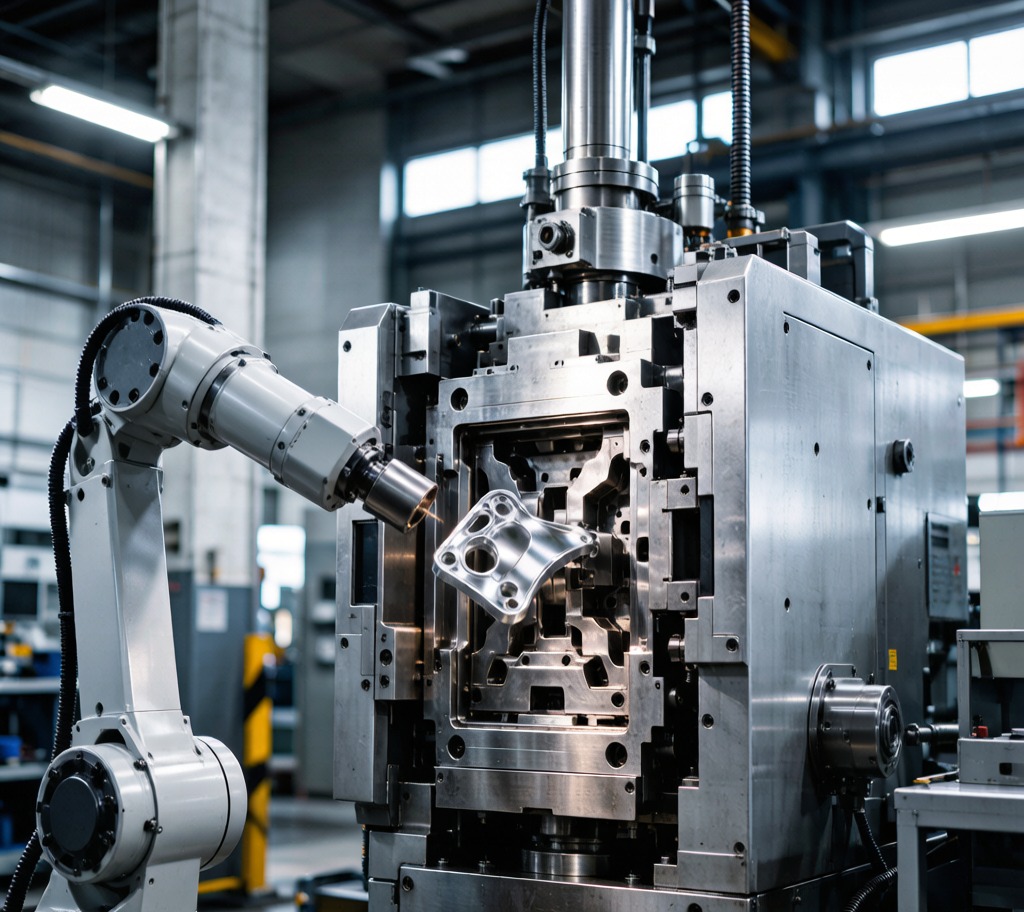
Design Rules, Tolerances and Finishing
Design guidance for magnesium die castings:
- Wall thickness — 1.0-2.5 mm typical, with 0.6 mm achievable on small parts. Keep walls uniform to avoid shrinkage porosity at junctions.
- Draft angle — 1-2° on external surfaces, 2-3° on internal, slightly less than aluminium requires
- Linear tolerance — ±0.1 mm for the first 25 mm, then roughly ±0.02 mm per additional 25 mm
- Fillets — generous radii at all wall junctions to control turbulence and hot tearing
- Ribs — use many thin ribs rather than thick sections; magnesium’s thin-wall capability makes rib-stiffened designs extremely efficient
- Cast-in inserts — steel bushings and threaded inserts are common where bolt loads would otherwise creep
Corrosion protection is the one area demanding real attention. High-purity alloys such as AZ91D (with tightly controlled iron, nickel, and copper) have salt-spray performance comparable to some aluminium alloys, but galvanic corrosion at steel or aluminium interfaces remains a genuine risk. Standard protection routes are chromate-free conversion coating, anodising (Keronite or similar), wet painting for uniform coverage on complex shapes, and powder coating for durable decorative finishes. Isolate dissimilar-metal fasteners with washers or coatings.
Post-cast machining is quick and inexpensive. Castings move to CNC milling for sealing faces, bearing bores, and threads through our casting plus machining cell, followed by deburring. Magnesium cuts so freely that machining is rarely the cost driver — a useful contrast with the aluminium and zinc routes described in our die casting services overview.
Cost: Magnesium vs Aluminium vs Zinc
Magnesium ingot costs more per kilogram than aluminium — but you buy parts, not kilograms. Because a magnesium part is around 35% lighter for the same volume, the material cost per part is often close to parity. Add faster cycle times, two to three times longer die life, and cheaper machining, and total landed cost frequently comes out equal or lower.
Where magnesium loses is on parts requiring high absolute strength, heavy pressure tightness, or exposure to harsh marine environments without coating. Where zinc die casting competes, the decision usually flips on mass: zinc is dense but casts extremely fine detail at low tooling cost, so it suits small precision parts, while magnesium suits large lightweight housings.
Automotive remains the largest volume market, driven by fuel economy and EV range targets — a theme running through our automotive metal parts guide. Consumer electronics is the second: laptop and camera chassis where thin walls, stiffness, EMI shielding, and heat spreading all matter at once. Full metal casting and die casting capability under one roof lets us benchmark all three alloys against your actual part before tooling is cut.
Frequently Asked Questions
Is magnesium safe to use in production parts?
Completely. Solid magnesium castings are not a fire risk — bulk magnesium is very difficult to ignite. The precautions apply only to molten metal handling and fine machining chips inside the factory, and are standard practice in any magnesium foundry.
How does magnesium corrosion resistance compare to aluminium?
High-purity AZ91D is far better than older alloys and can approach some aluminium grades in salt spray, but it still requires conversion coating or paint for outdoor and automotive service. The bigger risk is galvanic coupling with steel or aluminium fasteners, which must be isolated by design.
What is the thinnest wall you can cast?
Around 0.6 mm on small parts, with 1.0-1.5 mm typical for structural components. This is significantly thinner than aluminium die casting allows and is one of magnesium’s strongest advantages.
Can magnesium castings be welded?
Yes, TIG welding of magnesium is established for repair and joining, though die castings can suffer porosity blowout in the weld zone. For structural joints we normally prefer mechanical fastening into cast-in steel inserts or bosses.
What is minimum order quantity?
Tooling cost means magnesium die casting suits annual volumes from roughly 3,000-5,000 pieces upward. Below that, machining from wrought magnesium plate or an alternative process usually costs less overall, and we will tell you if that is the case.
Can magnesium be anodised?
Yes. Plasma electrolytic oxidation processes produce a hard, corrosion-resistant ceramic layer on magnesium. It is more expensive than conversion coating but delivers substantially better wear and corrosion performance for demanding applications.
Get a Magnesium Feasibility Review
Send us your current part — whether it exists today in aluminium, zinc, steel, or plastic — together with the mass target, load case, operating temperature, and environment. Our engineers will confirm whether magnesium is the right answer, recommend an alloy, flag wall thickness and creep risks, propose a corrosion protection scheme, and quote tooling, piece price, and lead time. If magnesium is not the right call for your application, we will show you the numbers that say so.
Ready to Start Your Project?
Get a build-ready quote on your custom metal parts within 24 hours. Share your drawing and our engineers will respond with process, lead time, and pricing.

