
Some geometries simply cannot be milled or cast economically: internal cooling channels, lattices, and consolidated assemblies that would otherwise be ten welded pieces. Metal 3D printing services build those parts layer by layer, turning a complex shape into a printable one. Buyers searching metal 3D printing services want to know when additive is the right call and when it is not, plus how to finish the part so it performs in service. This guide compares processes and shows where additive beats machining and casting, and where it still falls short.
What Additive Buys You
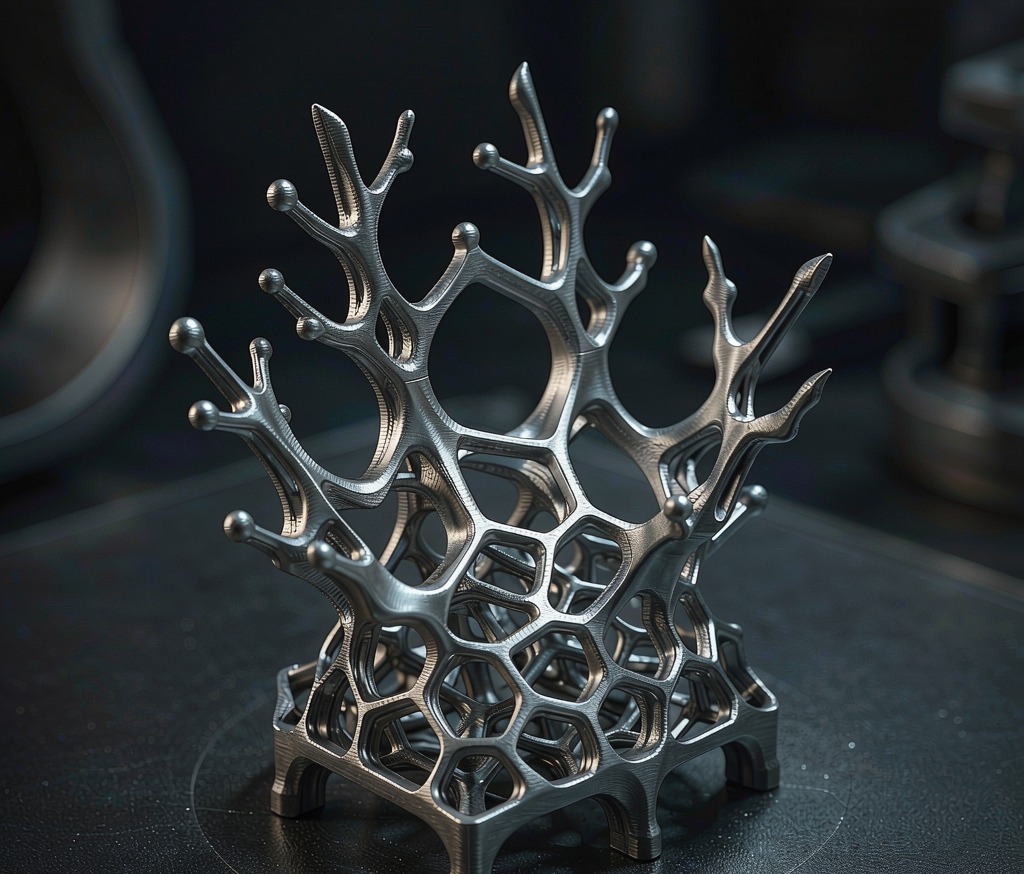
Additive manufacturing removes the constraint of tool access. You can print a part with internal passages, organic ribs, and part consolidation that would require assembly if made conventionally. For low-volume, high-complexity metal parts, that means fewer components, less welding, and faster iteration than CNC milling from solid stock. The trade-off is surface finish and anisotropy, which post-processing addresses. Additive is a design freedom, not just a rapid prototype tool, and it changes how engineers think about what is manufacturable.
Consolidation is the headline benefit. A bracket that was five laser-cut and welded pieces becomes one print, removing joints, fasteners, and the tolerance stack-up between them. For aerospace and medical where weight and part count matter, that consolidation is worth a real premium.
Process Choice: SLM, EBM, Binder Jetting
Selective laser melting fuses fine powder with a laser for high detail and density. Electron beam melting uses an electron beam in a vacuum, favoring high-temperature alloys such as titanium. Binder jetting prints with a binder then sinters, scaling to larger batches. CNC turning and milling still finish critical faces after printing. We choose the process by material, accuracy, and volume, then prove it with the print itself rather than guessing from a brochure.
Post-Machining and Accuracy
As-printed surfaces are rough and features need true positioning. After the build, CNC milling and turning bring datums, seals, and bores to tolerance, while heat treatment relieves stress and sets properties. Support removal and surface finishing complete the part. The hybrid print-plus-machine route delivers both complexity and the precision a working assembly demands, which is why pure as-printed parts are rare in production and why we treat machining as part of the process, not an optional extra.
Materials and Properties
Ti-6Al-4V, Inconel, stainless, tool steel, and aluminum are common printable alloys, each with its own density and anisotropy profile. Properties depend on orientation and post-processing, so we qualify the process for the grade and report actual results. Our selective laser melting services and EBM services for titanium cover the high-end alloys, while metal binder jetting serves larger batches where speed matters more than fine detail.
When to Choose Additive
Pick additive for low-volume, high-complexity parts, consolidated assemblies, and designs where internal channels matter. For simple, high-volume shapes, investment casting, powder metallurgy, or MIM usually win on cost. The honest answer depends on quantity and geometry, and our team will tell you when a conventional route is cheaper. Additive earns its place when complexity or consolidation offsets its premium, and we will say so plainly.
Cost modeling is where additive decisions are won or lost. We compare the print-plus-machine route against casting or fabrication at your expected volume and hand you the break-even, not a sales pitch. Tooling amortization, scrap, and post-processing hours all enter the number, and so does lead time when a program is slipping. A part that is perfect on a bench but uneconomic at ten thousand units is a design that needs rethinking, and we would rather surface that during prototyping than after a purchase order. Honest comparison is the service, not an upsell, and it protects your budget as much as your part.
Frequently Asked Questions
Which metal 3D printing process is best?
SLM for detail and density, EBM for titanium and high-temperature alloys, binder jetting for larger batches. We pick by material, accuracy, and volume and prove it with a sample rather than guessing.
Are printed metal parts as strong as machined?
In their strong direction, yes; properties can be anisotropic, so orientation and heat treatment matter. We qualify the process for the grade and report measured results, not catalog claims.
Do you machine the printed part afterward?
Yes. We finish datums, seals, and bores with CNC milling and turning so the part meets working tolerances, not just as-printed ones that would fail assembly.
When is additive cheaper than casting?
For low volumes and complex shapes with internal features. For simple high-volume parts, investment casting or MIM usually costs less. We advise the break-even honestly so you do not overpay.
What materials can you print?
Ti-6Al-4V, Inconel, stainless, tool steel, and aluminum among others. Our SLM services and binder jetting services cover the common production grades with qualified parameters.
What is the lead time?
Prototype prints often ship in days to a couple of weeks including post-machining. A quote returns within one business day once the model and material are set.
Ready to Start Your Project?
Get a build-ready quote on your custom metal parts within 24 hours. Share your drawing and our engineers will respond with process, lead time, and pricing.

