
When a flat or lightly curved metal part is needed by the thousand, buyers face a familiar fork: stamp it from sheet with a progressive die, or machine it from bar or plate. Stamping wins on unit cost at volume but needs tooling upfront; machining wins on flexibility and zero setup but costs more per part. This guide helps sourcing and design teams match the process to the actual production volume and geometry.
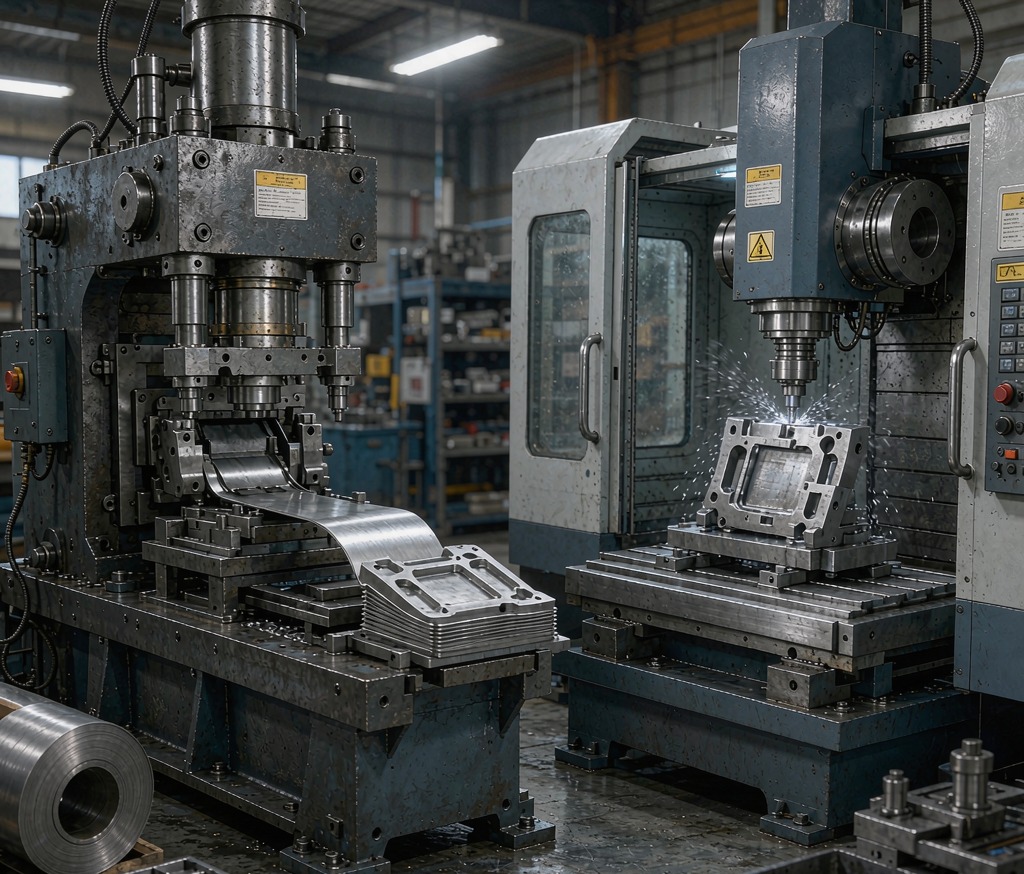
How Stamping and Machining Differ
Stamping shears, bends and forms sheet in a die at high cycle rates, producing identical parts in seconds. CNC machining removes material from a solid blank with CNC milling and turning, giving precise control but a longer cycle. Our sheet metal processing line and our machining cells are often quoted side by side for the same bracket or plate.
Tooling and Upfront Cost
A progressive stamping die is a capital investment — often five figures and weeks to build. Machining needs essentially no hard tooling beyond fixtures and a program. So for prototypes and short runs, machining is cheaper to start; for long runs, the die amortizes and stamping pulls ahead. The same economic logic appears in our CNC bending vs full-die decisions.
Unit Cost at Volume
Stamping’s per-part cost can be a fraction of machined cost once volume reaches the thousands, because cycle time is seconds and scrap is minimal. Machining’s cost stays roughly constant per part. Break-even is usually a few thousand parts, shifting with part complexity and material. For high mix, low volume, machining stays king. Our precision metal stamping article details the tolerances stamping can hold.
Tolerances and Materials
Machining holds tighter, more consistent tolerances and works any material — including thick plate and bar. Stamping suits sheet gauges and moderate tolerances, with springback and burr control as the main watch-outs. Laser cutting often bridges the gap for low-volume flat profiles. Material choice also matters: stamping loves ductile sheet; machining handles hardened or exotic alloys.
Lead Time and Flexibility
Machining turns a drawing into parts in days and absorbs design changes for free. Stamping locks you into a die; every revision costs tool rework. For a moving design or uncertain volume, machine it. For a frozen, high-volume part, stamp it. Our sheet metal fabrication overview explains how we combine cutting, bending and finishing.
Frequently Asked Questions
Which is cheaper per part? Stamping, at volume (thousands+); machining, for prototypes and short runs.
Can stamping hold tight tolerance? Moderate tolerances yes; machining is tighter and more repeatable.
What if my design changes? Machining absorbs changes cheaply; stamping needs die rework.
Which materials work? Stamping favors ductile sheet; machining handles nearly any metal including thick plate.
Ready to Start Your Project?
Get a build-ready quote on your custom metal parts within 24 hours. Share your drawing and our engineers will respond with process, lead time, and pricing.

