
“What is your minimum order quantity?” is usually the second question a buyer asks after price. But the honest answer is that CNC machining has no true technical minimum, and the MOQ you are quoted is really three different numbers rolled into one. Understanding them lets you lower your effective minimum and avoid paying for parts you do not need.
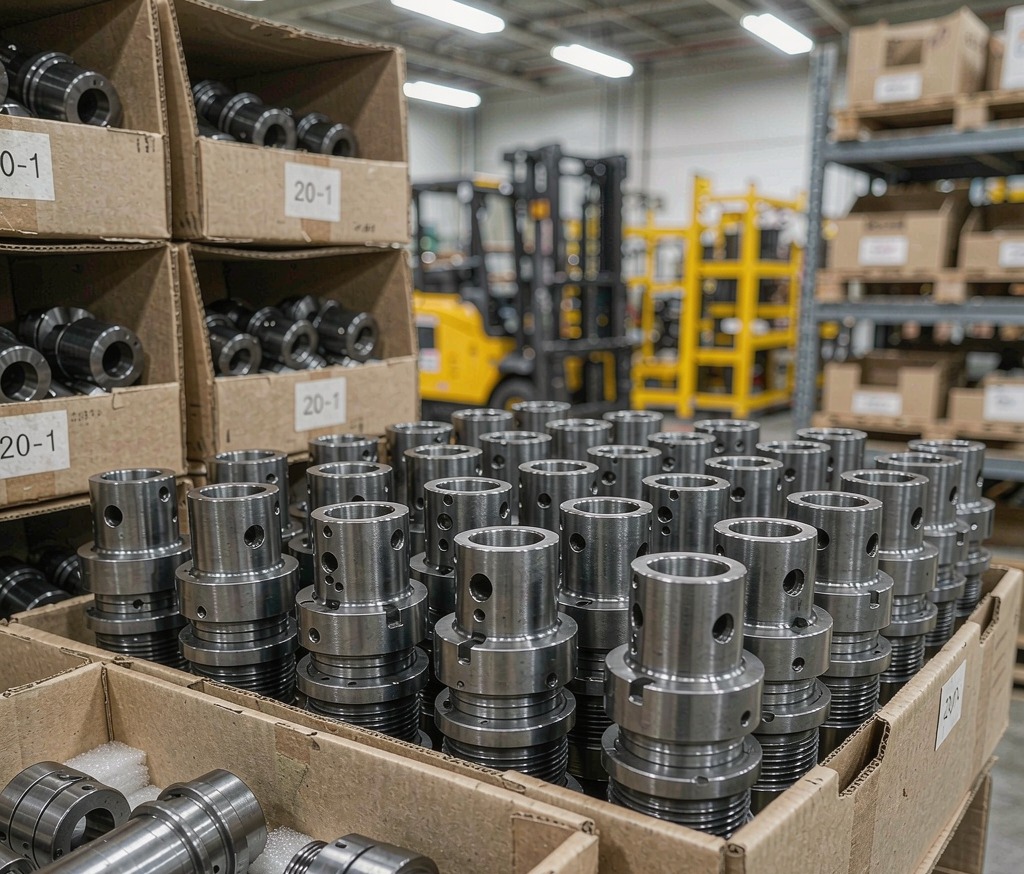
What MOQ Means at a Metal Shop
Unlike injection molding, CNC machining has no tooling cost that forces a floor. In practice most shops will machine a single piece. So when a supplier states an MOQ, they are usually pointing at one of three practical thresholds, not a hard rule. That reframing alone changes how you negotiate CNC milling and CNC turning orders.
Economic, Material, and Freight Minimums
Economic MOQ is the quantity below which fixed costs (programming, setup, finishing minimums) dominate the unit price, typically 10-50 pieces. Material MOQ comes from your supplier’s supplier, such as a specialty alloy bought by the full bar or plate. Freight MOQ is the point where sea freight’s minimum charge stops making sense and air becomes cheaper per landed unit. Our low-volume manufacturing service is designed around these realities.
Why CNC Has No Hard Tooling Floor
Because there is no mold or die, the cost curve is driven by fixed job setup rather than per-cavity tooling. That means a one-off is possible, just expensive per piece. As quantity rises, those fixed costs spread, and unit price typically drops 40-60% from single-piece to 25-50 pieces before flattening. See our small-batch manufacturing guide for the math.
How to Lower Your Effective MOQ
Three levers work: group parts that share material and finish into one order, accept a longer consolidated lead time to clear freight minimums, and drop cosmetic finishes that carry tank or rack minimums in favor of as-machined. For DFM-supported parts, simplifying features also lowers the setup that drives the economic knee of the curve.
Minimums Across Different Processes
MOQ logic changes completely by process. CNC machining has essentially no technical floor, so its minimum is economic. Die casting and injection tooling impose a real tooling-driven floor and a long setup, so the sensible minimum is hundreds to thousands. Metal stamping with hard tooling is similar, though progressive dies spread cost over very high volumes. Powder metallurgy needs a compacting tool, so it favors steady mid-to-high volume. The practical takeaway: if your volume is low and variable, CNC keeps you free; if volume is high and stable, a formed process lowers unit cost but raises the commitment. Choose the process to match the forecast, then negotiate the order quantity within that process’s economics rather than against a generic shop minimum.
Negotiating MOQ With a New Supplier
When you approach a new shop, ask directly which of the three minimums drives their number, because the answer changes your strategy. If it is an economic MOQ, bundling or a slightly higher price for a smaller lot may win. If it is a material MOQ, switching to stock sizes removes it. If it is a freight MOQ, consolidating releases or accepting sea freight changes the math. A transparent shop will tell you; a vague one is a risk. Also ask about their standard stock list, because designing around 6061, 304, or 1018 eliminates most material minimums entirely. The goal is not to force a tiny order, but to understand the floor so you can plan quantities that are both economical and realistic for your program.
Grouping Parts to Beat Fixed Costs
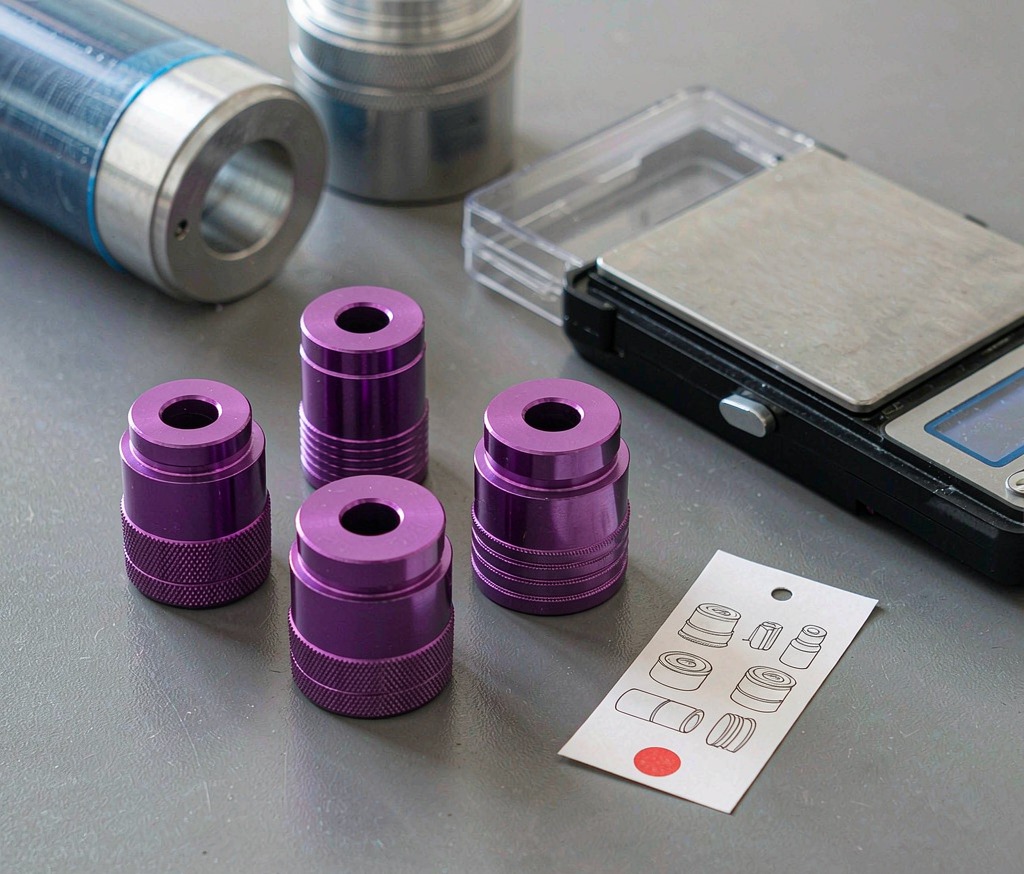
If you need 5 brackets now and 20 later, one order of 25 usually beats two orders, because you pay setup, programming, and finishing minimums once. The same logic applies to powder coating racks and anodize loads. Bundling is the simplest way to cut both MOQ and unit cost. Our CNC machining cost guide shows how batch multiples change price.
Frequently Asked Questions
Is there a real minimum order quantity for CNC parts?
Not technically. Most shops will make a single piece. The stated MOQ usually reflects economic, material, or freight minimums rather than a hard floor.
Why is a single prototype so expensive per piece?
Fixed costs (programming, setup, first-article verification, finishing minimums, freight minimums) are divided by one instead of many.
How do I reduce my MOQ?
Group parts sharing material and finish, accept consolidated lead times, and relax non-critical finishes to remove tank or rack minimums.
Does material choice affect MOQ?
Yes. Standard stock like 6061 aluminum or 304 stainless has effectively no material minimum, while odd bar sizes or specialty alloys can inherit a mill buy floor.
Key Takeaways
Minimum order quantity is rarely a hard wall. For CNC machining there is no tooling floor, so the MOQ you are quoted is almost always an economic, material, or freight minimum in disguise. Once you know which one it is, you can lower your effective minimum by bundling parts that share material and finish, designing around stock sizes, and accepting consolidated freight. The unit-price curve flattens quickly as quantity rises, so a single well-planned order beats several small ones. Ask a new supplier directly which minimum drives their number, and you will often find the floor is far lower, or more flexible, than it first appeared.
Quote the Quantity That Fits
Send your real mix and target dates and we will show the economic batch size and whether a consolidated release lowers your landed cost. Our CNC machining cost guide is a good starting point.
Ready to Start Your Project?
Get a build-ready quote on your custom metal parts within 24 hours. Share your drawing and our engineers will respond with process, lead time, and pricing.

