
When a steel part needs a hard, low-friction, corrosion-resistant case but cannot tolerate the distortion of high-temperature hardening, nitrocarburizing is often the answer. This low-temperature thermochemical treatment builds a tough compound layer with minimal size change. Here is what nitrocarburizing services offer, how the variants differ, and how they compare to similar processes so you can specify the right one.
What Nitrocarburizing Does
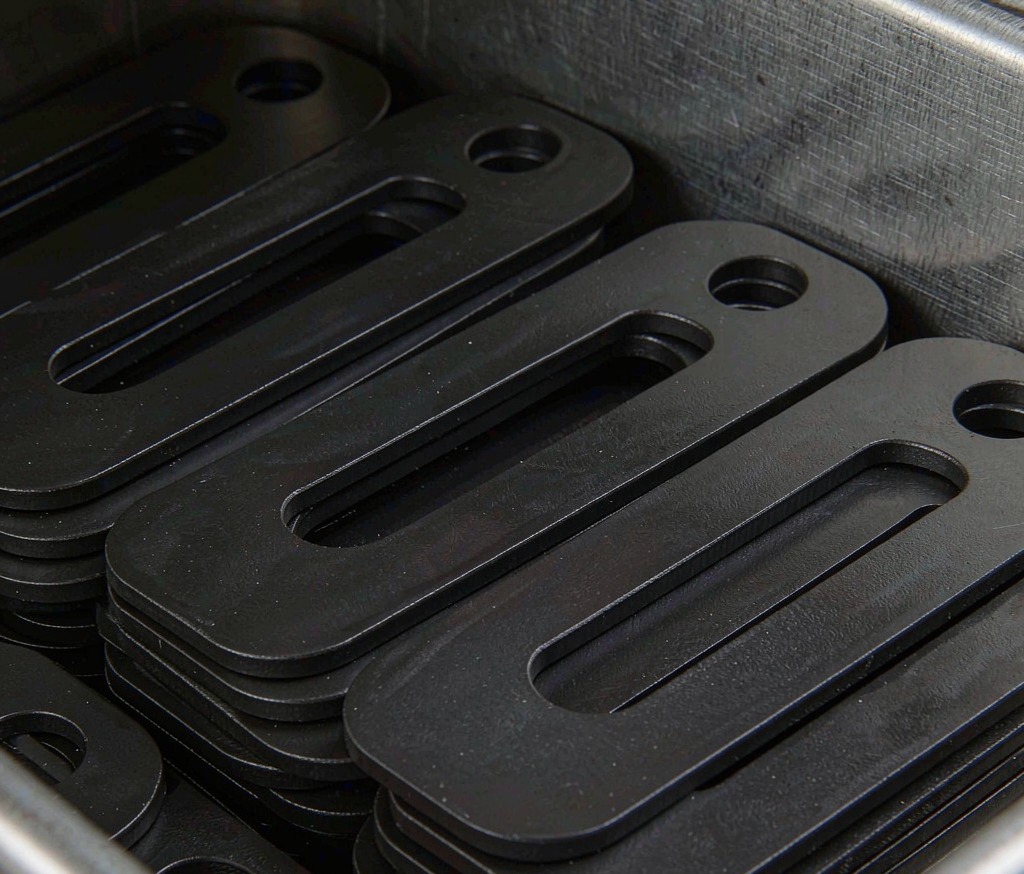
Nitrocarburizing diffuses nitrogen and a little carbon into the steel surface at roughly 500–580°C, forming a thin, dense compound layer (epsilon/gamma prime) over a diffusion zone. The result is excellent anti-scuffing, improved fatigue strength, and moderate corrosion resistance, with distortion low enough that finish-machined parts often need no correction. That last property is why it is a favorite for precision components that must stay in tolerance.
Salt Bath, Gas & Plasma Variants
The three main routes—salt-bath (liquid), gas, and plasma (ion)—differ in control and post-cleaning. Salt bath gives consistent, fast treatment and a naturally dark, attractive finish; gas is clean and flexible; plasma offers the tightest control and lowest temperature. We select based on part geometry, alloy, and cleanliness requirements, and we will recommend the variant that best fits your volume and spec.
Nitrocarburizing vs Nitriding & Carbonitriding
Plain nitriding uses only nitrogen and runs slightly hotter, giving deeper cases; nitrocarburizing adds carbon for a denser outer layer and better corrosion resistance. Carbonitriding is a higher-temperature case-hardening process better for heavier loads but with more distortion. Our case hardening overview maps all three so you can see where each belongs in a design.
Best Applications
Crank and cam components, injection screws, valve parts, gears, and tooling all benefit. The process shines where sliding wear and galling are the failure modes. After treatment, parts may receive a light polishing or be paired with black oxide for added corrosion protection, and our black oxide coating often complements the natural dark finish the process produces.
Process Fit & Limitations
Nitrocarburizing works on ferrous alloys—steels and cast irons—but not non-ferrous metals. It is a surface treatment, not a through-hardening step, so the core properties come from the base material and any prior heat treatment. We verify layer thickness and hardness and can add passivation for stainless parts where a cleaner, brighter surface is required for the application.
Designing Parts for Nitrocarburizing
Because distortion is minimal, you can finish-machine before treatment rather than after, which collapses lead time. Avoid sharp corners that concentrate the compound layer unevenly, and specify the compound-layer thickness you need for the duty. We review prints for compatibility and tell you when a different treatment would be more cost-effective for your load and environment.
Corrosion Performance & Field Life
The corrosion resistance of nitrocarburizing is good in mild and indoor atmospheres and is often better than plain nitriding because the compound layer seals the surface. For outdoor or chemically aggressive service, the natural dark finish is usually paired with oil, wax, or a thin electroless nickel topcoat to extend life. In practice, components such as hydraulic pistons, pump shafts, and valve bodies see dramatically longer service before scuffing or seizing, which is why the process is a staple in fluid-power and powertrain applications. We set the layer thickness and post-treatment to match the expected duty cycle rather than applying a one-size-fits-all spec.
Standards, Specs & Acceptance
Nitrocarburizing is covered by several industry standards (for example the AMS and ISO families for ferritic nitrocarburizing), which define compound-layer thickness, hardness, and corrosion targets. We work to your cited specification or, if you have no formal spec, recommend one based on the duty. Acceptance is typically by microsection for layer depth, microhardness for case strength, and salt-spray or humidity testing for corrosion where required. Because the process is low-distortion, first-article approval is usually straightforward, and subsequent lots are released against that approved sample. Our heat treatment services group manages the full documentation trail that audits and PPAP submissions expect.
Comparing Total Cost of Ownership
Nitrocarburizing often wins not on piece price but on total cost of ownership. A part that resists scuffing and corrosion lasts longer, needs less lubrication, and fails less often in the field—benefits that dwarf the modest treatment cost. Against plating, nitrocarburizing avoids coating adhesion failures and flaking, and against through-hardening it avoids distortion and rework. We help customers quantify this by comparing expected service life and warranty exposure, not just the line-item quote. For applications where a thin coating is still preferred, our black oxide coating and electroless nickel plating pages describe the alternatives we quote in the same conversation.
Getting a Quote for Nitrocarburizing
To quote accurately we need the material grade, the finished dimensions (so we can confirm distortion risk), and the duty—load type, lubricant, and environment. Send the print and a note on where the part fails today, and we will propose a layer thickness, post-treatment, and validation plan. For parts already in service that are scuffing or corroding, nitrocarburizing is frequently a drop-in upgrade that needs no redesign, which makes it one of the highest-leverage changes you can make to field reliability. Our surface treatment guide is a good reference while you decide.
Frequently Asked Questions
Does it distort my finished parts?
Very little—the low temperature and short cycle keep size change within microns for most geometries.
Nitrocarburizing or nitriding?
Choose nitrocarburizing for better corrosion and anti-scuff with low distortion; nitriding for deeper, harder cases.
What corrosion resistance do I get?
Good against mild atmospheres; for harsh duty we add black oxide or electroless nickel.
Which materials qualify?
Carbon, alloy, and tool steels plus ductile and gray cast iron. Stainless can be treated with adjusted parameters.
Is it better than plating for wear?
For integral, non-flaking wear resistance with no coating thickness, yes—see our surface treatment guide.
Ready to Start Your Project?
Get a build-ready quote on your custom metal parts within 24 hours. Share your drawing and our engineers will respond with process, lead time, and pricing.

