
Pneumatic systems move, clamp, and actuate across factories, laboratories, and mobile equipment, and their reliability starts with the metal parts inside. Valves, cylinders, manifolds, and fittings must seal under pressure, resist wear, and machine to fine tolerances. This buyer’s guide covers how pneumatic components are manufactured, which processes fit which parts, and what to specify when you outsource production to keep your line running.
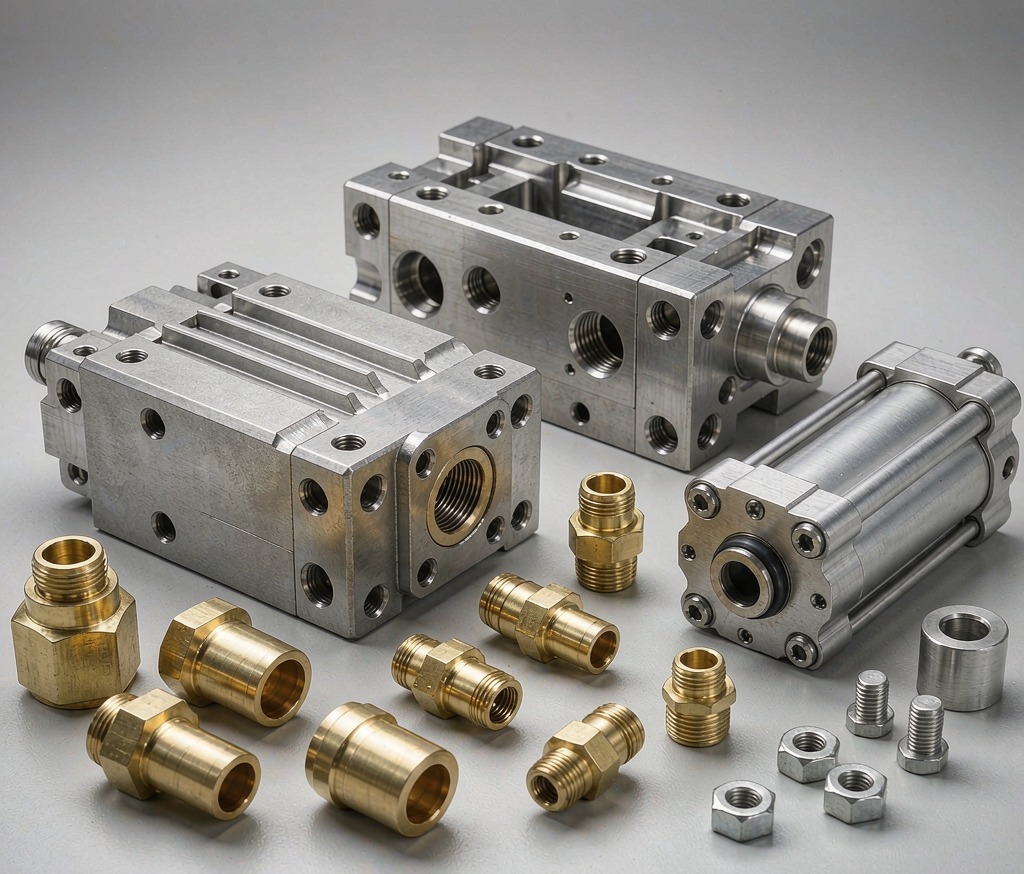
Core Pneumatic Components
The heart of any pneumatic circuit is a valve body that directs flow, a cylinder that converts pressure into motion, and a manifold that distributes air to multiple actuators. Each is a machined or cast metal part with drilled passageways and precision bores that must align perfectly. Our CNC drilling services create the internal cross-holes, while CNC milling defines the external envelope, port faces, and mounting features that let the component bolt cleanly into your assembly.
Valve Bodies: Cast or Machined?
For low to mid volumes, machining from bar stock or plate is fastest and most flexible, letting you iterate the port layout without tooling delays. Higher volumes shift to die casting or investment casting with finish machining of sealing surfaces. Our die casting services deliver the complex internal cavities pneumatic valves need at production scale, with consistent wall thickness that withstands operating pressure. For design detail, see our custom metal valve bodies guide.
Cylinders & Pistons
Cylinder tubes require straight, round bores; pistons need concentric lands and clean sealing diameters. CNC turning handles both, often followed by honing for the surface finish that keeps seals alive. Manifold blocks route multiple air lines through a single part, a topic covered in our custom metal manifolds article, which explains how passage sizing affects flow and pressure drop.
Fittings & Connectors
Push-to-connect fittings, elbows, and threaded adapters are high-mix, often small parts produced in the thousands. Turning and secondary threading produce them efficiently, with consistent thread form that prevents cross-threading on the line. Our custom metal pipe fittings guide explains port standards, thread classes, and sealing approaches used across industries.
Surface Treatment for Longevity
Pneumatic parts see moisture and cycling loads, so finish selection is not cosmetic. Anodizing protects aluminum from corrosion, while powder coating or plating guards steel in washdown or outdoor duty. Specifying the right finish prevents corrosion at seals and threads, which is where most field failures begin. Pair the finish with a compatible seal material to avoid chemical incompatibility over the service life.
Common Failure Modes
Most pneumatic component failures trace back to three causes: leakage at poorly specified threads, corrosion at uncoated sealing faces, and bore wear from contaminated air. Each is preventable through the choices made at the drawing stage. Defining surface finish, finish type, and filtration expectations up front removes the ambiguity that leads to field returns and unplanned downtime on the production line.
Prototyping Strategy
For a new valve or manifold, machine a small pilot run before committing to casting tooling. This validates port layout, pressure rating, and assembly fit at low risk, and the machined parts can ship as early samples to your customer. Only after the design is proven should you invest in dies, which then lock in the geometry for the production life of the product and amortize across the volume.
Designing for Easy Assembly
Pneumatic components rarely ship alone; they install into a larger valve bank or cylinder. Designing port orientations, mounting holes, and seal grooves so the part drops into place without special tools reduces assembly time and error. A supplier who sees the end application can suggest features, such as lead-in chamfers or standardized port spacing, that make the whole system easier to build and service in the field over its operating life.
Specifying Pressure Rating
State the working and proof pressure clearly, not just a nominal value, because wall thickness and thread engagement follow from the peak load the part may see. Over-specifying wastes material and weight; under-specifying risks failure. A short discussion of your actual duty cycle with the manufacturer yields a part rated correctly for the real world rather than for an assumed worst case that never occurs.
Sealing & Tolerance Tips
Define bore roundness, surface roughness on sealing diameters, and port thread class up front, because these drive leakage more than nominal size. Poorly specified finishes are the leading cause of pneumatic leakage in the field, and rework after assembly is far more expensive than a clear drawing note. Request a first-article report that documents these characteristics before releasing the full order to production.
Supplier Evaluation Checklist
Beyond price, evaluate material traceability, inspection method, and the supplier’s experience with your pressure class. Ask for sample inspection data and references from similar pneumatic programs. A shop that questions your drawing and proposes a better port layout is usually a better long-term partner than one that quotes silently and ships defects.
Frequently Asked Questions
Which process is cheapest for 5,000 valve bodies?
Die casting with finish machining typically wins on unit cost once tooling is amortized, versus fully machined billet, which stays competitive at lower volumes.
What surface finish is needed on a cylinder bore?
Generally Ra 0.4 to 0.8 micrometres after honing, with strict roundness control to keep seals seated and wear even across the stroke.
Can manifolds be made from aluminum?
Yes. Aluminum manifolds with anodized passages are common in lightweight and corrosion-sensitive systems where steel would add unnecessary mass.
How do I avoid leakage at fittings?
Specify the correct thread form, such as NPT, BSPP, or metric, and apply proper torque with a compatible sealant or O-ring sized to the groove.
Ready to Start Your Project?
Get a build-ready quote on your custom metal parts within 24 hours. Share your drawing and our engineers will respond with process, lead time, and pricing.

