
Sheet metal is the fastest route to lightweight enclosures, brackets, and panels, but bend allowance and hole placement decide whether the first part comes out right. A handful of rules keep parts flat before bending and true after: bend radius, K-factor, hole spacing, and material choice. This sheet metal design guide covers the rules that fabrication shops actually quote against, so your price stays predictable and your first article fits.
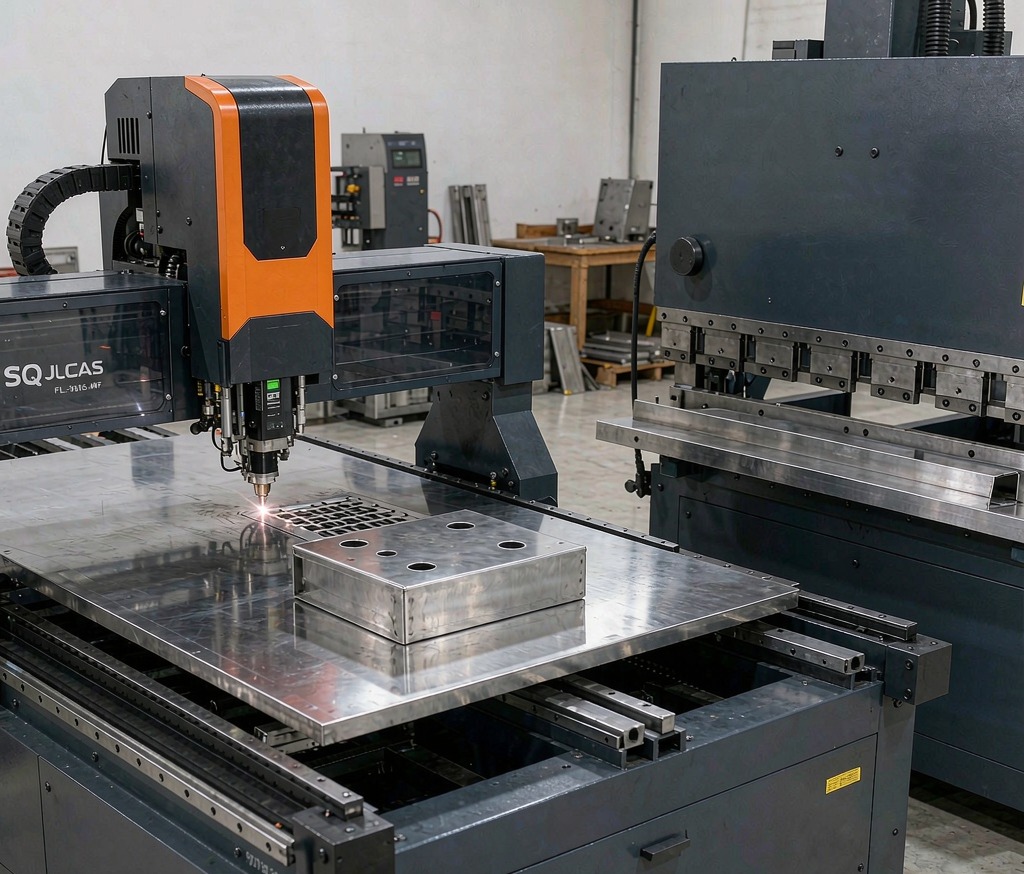
Why Sheet Metal Design Differs From Machining
Machining removes material; sheet metal forms it from a flat blank. That means the part’s final shape depends on how the flat pattern bends, not just the 3D model. A good sheet metal fabrication partner reads your model back to the flat pattern and flags bends that will crack or distort before cutting. Send the flat pattern with the formed model and you remove a whole class of surprises.
Bend Radius and K-Factor
Inside bend radius should be at least the material thickness; thinner invites cracking, especially in aluminium and high-strength steel. The K-factor describes where the neutral axis sits through the bend and drives flat-pattern length. Standard K-factors run 0.3 to 0.5 depending on material and tooling. Your CNC bending shop will set the press parameters from this, so give them the right gauge and alloy up front and confirm the K-factor they use.
Hole and Slot Placement Near Bends
Holes too close to a bend deform as the material flows. Keep hole edges at least 2.5 times material thickness from the bend line, or the feature goes oval. Slots and tabs follow the same rule. A sheet metal laser cutting nest cuts these accurately, but only if the flat pattern respects the bend zone. For high-volume holes, CNC punching is faster and cheaper than laser once the tool is set, so design hole sizes to standard punch diameters.
Flanges, Tabs, and Reliefs
Flanges stiffen edges and give screws something to bite. Where two flanges meet at a corner, add a relief slot so the metal does not pile up and tear. Tabs that fold over need clearance on both sides. These small details separate a clean MIG welding or TIG welding assembly from one that needs rework. Corners without relief are the most common cause of scrap on a new job.
Material and Gauge Selection
Aluminium bends easily and resists corrosion; cold-rolled steel is cheap and strong; stainless holds up in harsh service but work-hardens fast. Pick the thinnest gauge that meets stiffness, because material is priced by weight. Match the choice to the finish: a powder coating line loves clean, consistent edges, and metal shearing services cut the blank square so the first bend lands where it should.
When to Weld or Coat
Welding joins flanges into rigid boxes; coatings protect and brand them. Plan weld access and flat surfaces for grounding before the part is cut, not after. Review the full laser cutting services and forming workflow, weigh metal stamping when volumes climb past what fabrication justifies, and consider stainless steel fabrication for corrosion service. Coating early in the plan avoids masking headaches later.
Common Sheet Metal Mistakes to Avoid
The most expensive sheet metal errors show up on the first article. The first is skipping the flat-pattern check, so a part that looks right in 3D bends into the wrong shape because the K-factor was wrong. Always confirm the bend calculation with the shop before cutting.
The second is crowding holes and tabs near a bend, which distorts them and forces rework, and the third is over-gauging for stiffness you do not need, which quietly raises material cost on every part. A short design review catches all three before they reach the press, and it is far cheaper than scrapping a finished batch.
Sheet Metal Design Checklist
Before you release the flat pattern, confirm these points. They are the ones that decide whether the first bend comes out true.
- Set the inside bend radius at least equal to the material thickness, and confirm the K-factor with your CNC bending shop before they cut the blank.
- Keep every hole at least 2.5 times the thickness from the bend line so it does not go oval as the flange forms.
- Nest holes to standard CNC punching diameters when volume is high, and use sheet metal laser cutting for prototypes and odd shapes.
- Add corner relief where flanges meet, and plan the powder coating color early so masking is simple.
What gauge should I specify for a sheet metal bracket?
Pick the thinnest gauge that meets stiffness, because material is priced by weight. A bracket that is over-gauged costs more per part than one designed to the real load, and the saving compounds across the run.
Frequently Asked Questions
What is the minimum bend radius for sheet metal?
As a rule, the inside radius should equal the material thickness. Tighter bends risk cracking in aluminium and high-strength steels, so confirm the alloy before specifying a sharp bend, and add relief where flanges meet.
How far should holes be from a bend?
Keep the hole edge at least 2.5 times the material thickness from the bend line. Closer and the hole distorts as the flange forms, which can scrap an otherwise good part.
When should I switch from fabrication to stamping?
Fabrication wins for low and mid volumes with frequent design changes. Once annual volume is high and the design is stable, metal stamping spreads tooling cost across many parts and drops unit price sharply.
Does material thickness change the K-factor?
Yes. Thicker, softer materials shift the neutral axis outward and raise the K-factor, lengthening the flat pattern. Your bending shop sets the exact value, so share gauge and alloy before they cut the blank.
Ready to Start Your Project?
Get a build-ready quote on your custom metal parts within 24 hours. Share your drawing and our engineers will respond with process, lead time, and pricing.

