
Splines transmit torque between shafts and hubs, and they must do so reliably for millions of cycles. Producing them accurately is a specialty: spline cutting combines gear-like precision with tight fit requirements. This guide explains the process end to end.
We cover spline types, the cutting methods – hobbing, broaching, and milling – plus materials, heat treatment, and inspection. If your part carries rotation and load, understanding splines helps you specify it correctly.
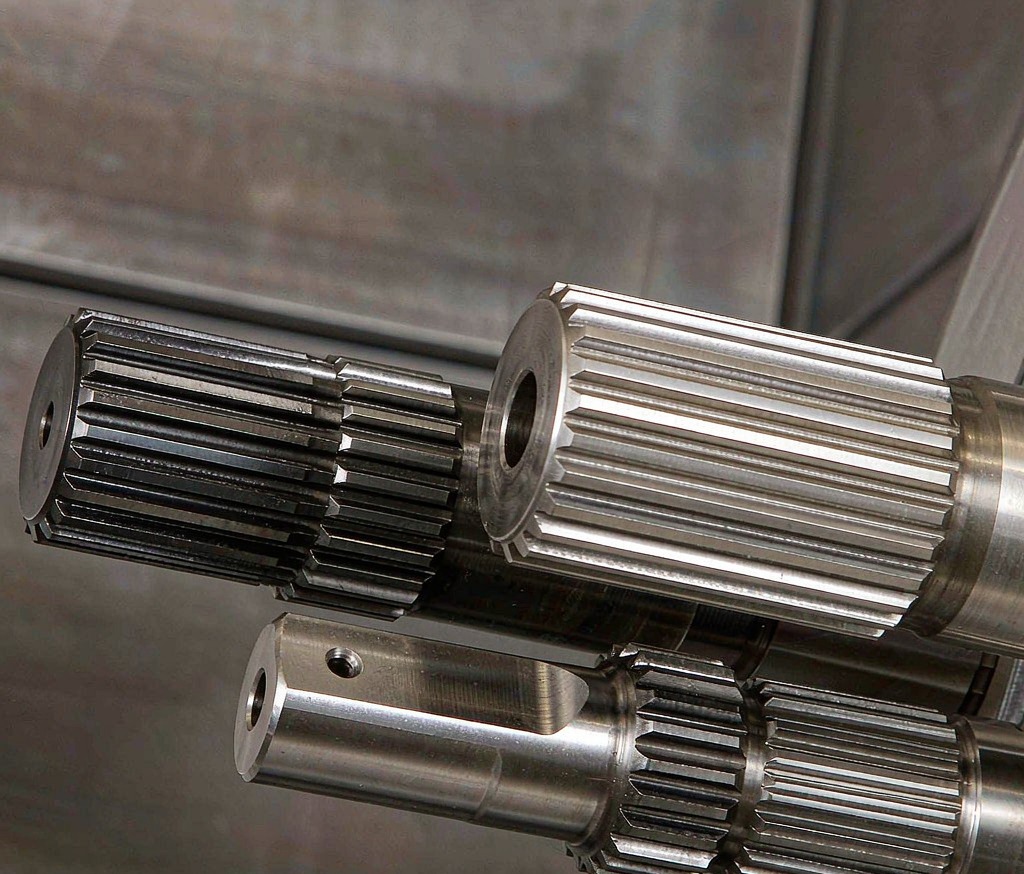
What Is Spline Cutting
A spline is a series of equally spaced ridges on a shaft or inside a hub that mesh with a matching part to transfer rotation without slip. Cutting it means generating those precise teeth to a defined profile and tolerance.
Splines are common in transmissions, couplings, and custom metal gears, wherever torque must move reliably between components.
Spline Types: Involute, Straight, and Helical
Involute splines are the most common because they share load evenly and self-center under torque. Straight-sided splines are simpler to produce for light duty. Helical splines handle shock and misalignment better but cost more to cut.
The profile should follow the application’s load and alignment needs rather than habit; the wrong type shortens service life.
For very high torque, serrations or multiple keyways are sometimes chosen instead of splines, but splines remain the standard where axial sliding or frequent engagement is required. Discussing the duty cycle with the supplier ensures the chosen profile matches reality rather than a catalog default, which prevents premature wear in the field.
Cutting Methods: Hobbing, Broaching, and Milling
Gear hobbing and gear shaping generate splines efficiently on external features. Broaching is fast for internal splines and keyways. CNC milling handles low volumes and prototypes with flexible tool paths.
For one-off or complex geometry, milling on 5-axis CNC machining avoids dedicated tooling while still hitting tolerance.
Materials and Tolerances
Splines are cut in steel, stainless, and alloy grades, often the same material as the mating shaft for uniform wear. Tolerances on tooth profile, pitch, and major diameter decide how smoothly the joint seats and how much backlash exists.
CNC turning and CNC boring prepare the shaft blank so only the spline itself remains to be generated accurately.
For shafts that also carry bearings or seals, the spline is usually cut before those features are finish-ground, so the reference diameters stay true. Coordinating the sequence with the supplier prevents a situation where grinding removes too much material and the spline no longer fits its mating hub within the specified backlash.
Heat Treatment for Spline Durability
Because splines see repeated contact stress, many are hardened after cutting. Heat treatment raises surface hardness while a surface grinding finish restores any dimension altered by the cycle.
Proper sequencing – cut soft, harden, finish – protects tooth geometry and extends service life under load.
Inspection and Quality
Spline teeth are checked with dedicated gauges, tooth calipers, or optical comparison for profile and pitch. First-article inspection confirms the whole process before a run proceeds.
For critical drivetrain parts, material certification and hardness verification accompany the dimensional report, supporting traceability.
Quality Control and Inspection
Spline quality is confirmed with dedicated gauges, tooth calipers, or optical comparison for profile and pitch, plus hardness and material checks on critical drivetrain parts. First-article inspection validates the process before volume runs. Traceability from bar to finished spline supports regulated applications.
Lead Time and How to Request a Quote
Provide the spline type, size, teeth count, profile, material, and hardness needs. ” + rlink(“gear-hobbing-services”,”Hobbing”) + ” suits production volumes; milling handles prototypes. Stating annual quantity helps the shop select tooling and balance cost against lead time.
Common Cost Drivers in Spline Cutting
Spline cost depends heavily on volume and method. Hobbing is fast and economical for production quantities, while milling suits prototypes but runs slower. Internal splines via broaching need a dedicated broach, so they favor higher volumes; for low runs, milling or wire EDM may be more practical despite longer cycle times.
Material and heat treatment also shape cost. Hardened splines need stock for a finish grind, adding a step but improving service life under load. Specifying only the tooth features that actually carry torque – and relaxing non-critical dimensions – keeps the part affordable while still meeting performance.
Lead time is shortest when the supplier already holds the right hob or broach; for a novel profile, tooling lead dominates the schedule. Sharing annual volume and the full tooth specification early lets the shop choose the right tooling investment and quote both a fair price and a realistic delivery date.
Frequently Asked Questions
What is the most common spline type?
Involute splines are most common because they share load evenly and self-center under torque.
How are internal splines cut?
Broaching is the usual method for internal splines and keyways; milling can also generate them on CNC equipment.
Can splines be cut on a CNC mill?
Yes. Milling handles prototypes and low volumes flexibly, though hobbing is faster for production quantities.
Should splines be hardened?
Often, yes – hardening after cutting improves wear life, with a finish grind to restore critical dimensions.
What materials are used?
Steel, stainless, and alloy grades, frequently matched to the shaft for consistent wear behavior.
How are splines inspected?
With spline gauges, tooth calipers, or optical comparison, plus hardness and material checks for critical parts.
Ready to Start Your Project?
Get a build-ready quote on your custom metal parts within 24 hours. Share your drawing and our engineers will respond with process, lead time, and pricing.

