
For parts that are too small, too delicate or too mixed-material for conventional fusion welding, ultrasonic welding is often the cleanest answer. It uses high-frequency mechanical vibration—typically 20 to 40 kHz—to rub two surfaces together under clamping force, generating frictional heat right at the interface that forges a solid-state bond in under a second. There is no filler, no flux and no molten pool, which is exactly why it is favored for electronics, medical devices and precision micro-components. Huaxiao offers ultrasonic welding as a stand-alone service or integrated into a broader welded assemblies program.

How Ultrasonic Welding Creates a Joint
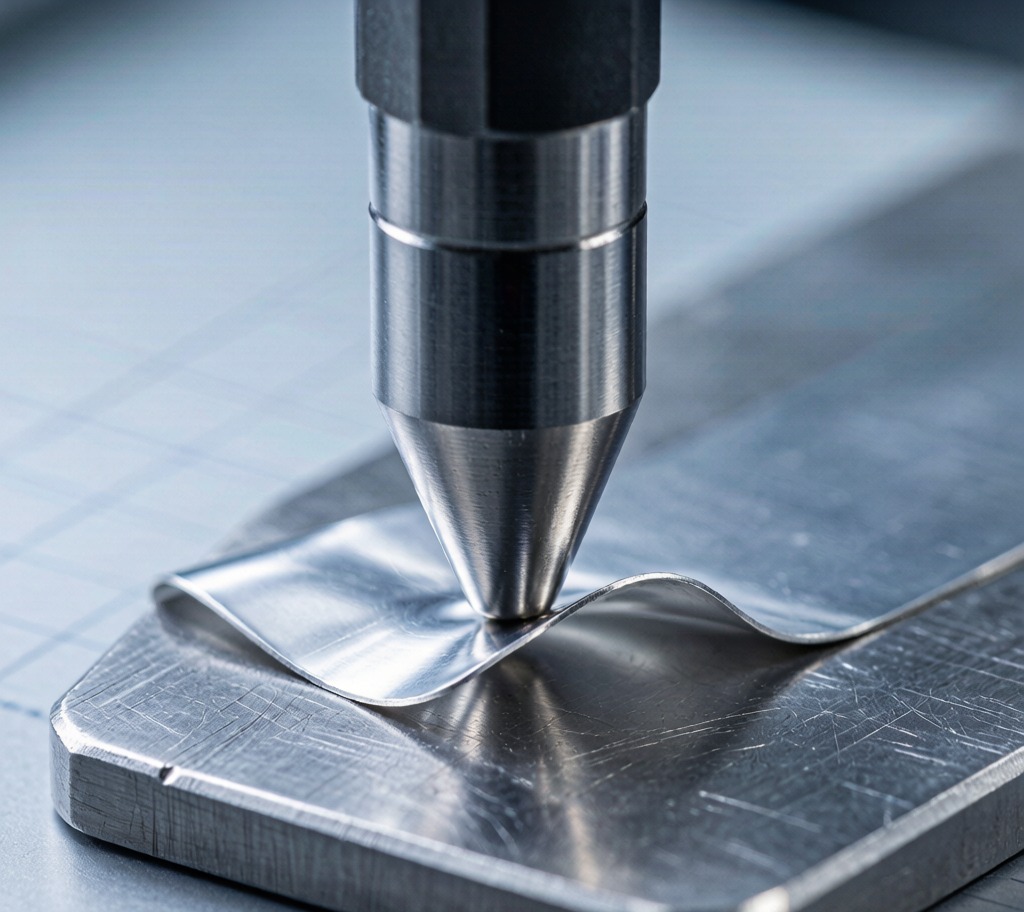
An ultrasonic stack—power supply, converter, booster and horn—delivers vertical vibration through a titanium or aluminum sonotrode onto the top part. Clamping force holds the parts together while the vibration breaks down surface oxides and heats the contact plane to a forgeable state. The result is a true metallurgical bond at the interface with negligible heat-affected zone in the surrounding material. Our spot welding and TIG welding teams often compare processes with customers to pick the right one for a given geometry.
Why It Suits Delicate and Mixed-Material Parts
Because the energy is localized and the cycle is so short, ultrasonic welding can join thin foils, fine wires and heat-sensitive components that would distort or burn under arc welding. It also handles certain dissimilar and mixed-material combinations—metal-to-metal and some metal-to-polymer interfaces—that are impossible with fusion processes. Where a fully non-welded bond is preferred, we can alternatively use our adhesive-bonded assemblies or bolted assemblies in the same cell.
Metals and Geometries That Wemd Best
Aluminum, copper, nickel and gold join particularly well because of their low yield strength at the interface; thin-gauge steels and many alloys are also routine. The practical limit is part size and the ability to transmit vibration—parts need a flat, accessible bonding face and a rigid anvil side. For larger or thicker sections, our riveting service is usually the more robust choice, and we will advise you during design review.
Ultrasonic vs Resistance and Laser Welding
Resistance welding needs electrical conductivity and leaves a visible nugget; laser welding is fast but adds a heat-affected zone and needs joint fit-up. Ultrasonic welding sits in the middle for delicate work: faster and cleaner than adhesive bonds, cooler than arc or laser, and free of consumables. As our spot welding services overview notes, the choice really comes down to part size, material and how much heat the component can tolerate.
Key Application Areas
You will see ultrasonic welding in battery tabs and busbars, sensor housings, medical instrument tips, micro-switch contacts, jewelry and fine wire harnesses. It is a staple wherever a tiny, reliable joint must be made without contamination. Many of these programs begin life as medical device manufacturing projects where traceability and cleanroom discipline matter as much as the weld itself.
Because the joint is made with no heat-affected zone or contamination, ultrasonic welding is also popular for battery foil tabs where a cold, low-resistance connection protects cell chemistry, and for sealing thin metal diaphragms in sensors where any distortion would shift calibration. In consumer electronics it assembles connector shells and shielding cans at line speed, and in jewelry it fuses fine precious-metal links without solder that could weaken under flex. The same clean-bond logic makes it attractive wherever a traditional weld would introduce soot, spatter or a heat sink that pulls tolerance out of the part.
From a production standpoint the economics are compelling once volumes climb. Cycle times under a second, no consumables and minimal operator skill mean the cost per joint falls sharply at scale, and energy monitoring on every shot gives you a built-in quality record. For low-volume or highly variable work the tooling changeover can dominate, so we usually recommend ultrasonic when you have a stable design and a clear run quantity.
Design Considerations for Ultrasonic Joints
- Provide a flat, parallel bond face so the horn energy transfers evenly.
- Keep the joint near the anvil; energy lost over distance weakens the bond.
- Add energy directors (small raised ridges) on one face to concentrate the weld line.
- Minimize dissimilar thicknesses across the joint to keep vibration in phase.
Our TIG welding services and welded assemblies guide cover complementary joining methods when ultrasonic is not the best fit.
Frequently Asked Questions
Is ultrasonic welding strong enough for structural parts?
For the thin sections and micro-components it targets, yes—the bond is metallurgical and can carry the full load of the part. It is not intended for heavy structural sections, where riveting or arc welding is better.
Does it work on dissimilar metals?
Often yes. Aluminum-to-copper battery joints are a classic example. The key is that both faces reach a forgeable state at the interface under vibration.
Is any filler or flux needed?
No. Ultrasonic welding is a solid-state process with no filler, flux, gas or consumable, which keeps the joint clean and contamination-free.
What is the typical cycle time?
Most welds complete in well under a second of vibration plus clamp and unclamp time, making it suitable for high-rate production.
Can you weld to a plastic or polymer part?
Certain metal-to-polymer interfaces can be joined, but pure polymer-to-polymer welding uses a different frequency and tooling; we will advise on feasibility.
How do you verify joint quality?
We use weld-energy monitoring, peel and pull testing and, where required, micro-section inspection to confirm bond integrity against your spec.
Ready to Start Your Project?
Get a build-ready quote on your custom metal parts within 24 hours. Share your drawing and our engineers will respond with process, lead time, and pricing.

