
Wind turbines are mostly metal, and the largest, most demanding metal components—hubs, main shafts, housings, and brackets—decide both the cost of the machine and how long it runs before maintenance. These parts are big, heavy, and subject to fatigue loads that punish any defect. Manufacturing them well means marrying large casting with precision machining and durable surface treatment. This guide covers the components and the process chain that produces them reliably.
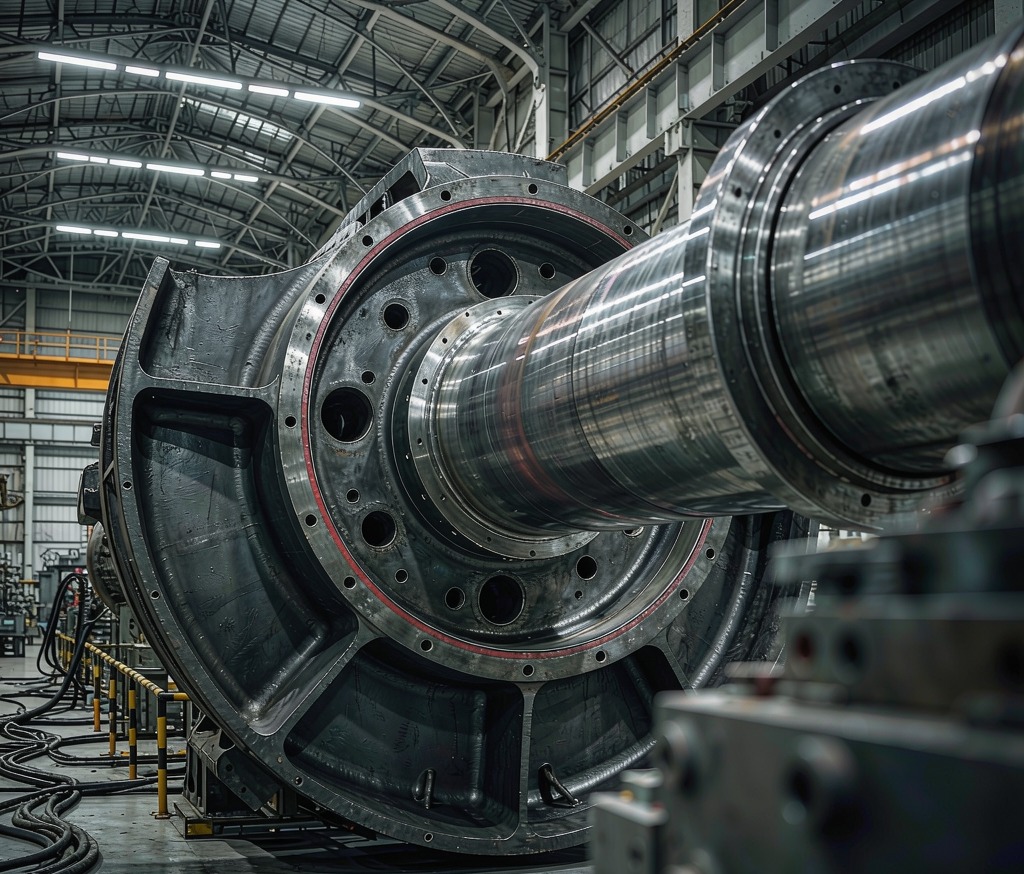
Key Wind Turbine Metal Parts
The drivetrain alone includes the main shaft, main bearing housing, gearbox housings, and the hub that carries the blades. Yaw and pitch systems add brackets, frames, and linkages. Each is a structural safety component where a casting defect or machining error can ground a turbine. Our steel casting and sand casting services produce the large, complex housings and hubs that form the machine’s backbone.
Casting Large Structural Components
Wind components are too large and too low-volume for die casting; sand and investment casting rule here. The challenge is consistency across multi-ton pours and controlled, low-porosity microstructure for fatigue life. Investment casting supplements sand casting for smaller, higher-precision brackets and fittings on the same machine.
Machining Hubs and Shafts
After casting, the hub and shaft need large-bore and face machining to tight runout so bearings seat correctly. That is the domain of CNC boring and large lathe turning, followed by surface grinding for bearing seats. Dimensional accuracy here directly affects vibration and bearing life in the field.
Surface Treatment and Durability
Turbine parts live outdoors for twenty years, so corrosion protection and fatigue resistance are non-negotiable. Heat treatment relieves casting stress and improves strength, while coatings and painting protect against weathering. Specifying the right treatment up front prevents premature cracking and rust.
Tolerances for Rotating Parts
Rotating assemblies demand tight runout and concentricity, because imbalance shortens every bearing downstream. Our related work on precision shaft manufacturing explains how machining strategy controls these critical dimensions on long, heavy shafts.
FAQ
Q: Why are turbine parts usually cast rather than forged?
A: Casting handles the large, complex geometries and lower volumes economically; forgings are reserved for the highest-stress rotating elements where fatigue margin is paramount.
Q: How is fatigue life protected?
A: Through clean, low-porosity castings, stress-relieving heat treatment, controlled machining, and surface treatments that resist corrosion-driven cracking.
Q: Can one supplier make both castings and machined parts?
A: Yes—integrating casting and machining under one roof shortens lead time and keeps accountability for the finished dimension.
Sourcing Turbine Components
Durable wind turbine metal components require large-cast capability, big-part machining, and disciplined surface treatment. Our team casts, machines, and finishes hubs, housings, shafts, and brackets with full traceability for energy programs. Share your drawings and we will return a build-ready quote with process, lead time, and pricing.
Ready to Start Your Project?
Get a build-ready quote on your custom metal parts within 24 hours. Share your drawing and our engineers will respond with process, lead time, and pricing.

