
Stainless steel fabrication builds corrosion-resistant structures and components from plate, sheet, and tube — cutting, forming, welding, and finishing them into parts that survive harsh environments. From food-grade enclosures to marine frames, stainless fabrication combines strength with cleanliness and longevity. This guide covers the methods, the welding pitfalls, and how to brief a fabricator so the result is both strong and rust-free, and passes the hygiene or corrosion standards your application demands.

Why Fabricate in Stainless
Stainless earns its cost when the part faces moisture, chemicals, food, or sterilization. Its chromium oxide layer self-heals, unlike plain steel that needs constant coating. But stainless is also work-hardenable and heat-sensitive, so fabrication demands different technique than carbon steel. Machining stainless and fabricating it share the same discipline: control heat and avoid contamination, or you compromise the very property you paid for.
The decision to use stainless is therefore about lifecycle cost, not just sticker price. A painted mild-steel part may look identical on day one, but in a washdown or coastal environment it will rust while stainless keeps working. When downtime and replacement are expensive, stainless fabrication pays for itself many times over.
Cutting Methods
Fiber laser cutting is the default for clean, fast, burr-free edges on stainless sheet and plate. Plasma suits thicker stock where edge finish is less critical, and waterjet avoids heat entirely for heat-sensitive alloys. Choose laser for precision and throughput, plasma for thick and rough, waterjet for zero heat-affected zone and when preserving the material’s corrosion resistance at the cut edge is critical.
Cut quality matters for what comes next. A clean laser edge needs little deburring and welds more predictably than a rough plasma cut, so the cutting method quietly affects your welding yield and final cosmetics. Specify edge quality in the RFQ if the part is visible or if edges are welded, and the shop will select the right process rather than the cheapest.
Forming and Bending
Press brake bending forms stainless panels and brackets, but stainless springs back more than mild steel and work-hardens, so tooling and bend radii need adjustment. Plan for slightly larger radii and more tonnage. For tubular or axisymmetric parts, spinning or roll forming may be more efficient than welding multiple pieces, and avoids the weld lines that can become corrosion weak points.
Because stainless work-hardens, over-bending and re-straightening can crack the material. Experienced fabricators calculate springback and use the correct die selection, and they avoid unnecessary rework that could embrittle the part. This is exactly why fabrication know-how matters more with stainless than with mild steel.
Welding Stainless the Right Way
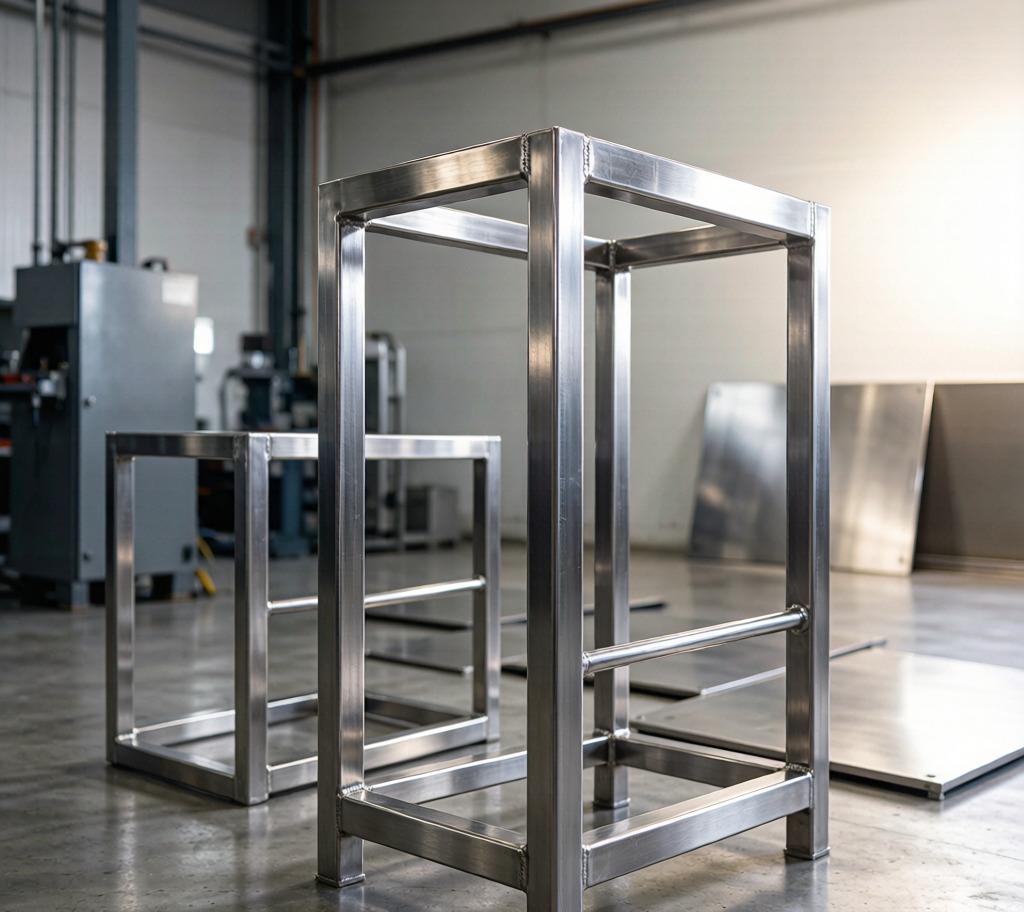
TIG welding is preferred for stainless because it is precise and low-heat, preserving corrosion resistance and a clean look. MIG welding works for thicker structural work with proper gas shielding. The cardinal rule is preventing carbon steel contamination — shared tools or grinding debris can embed iron and trigger rust. Purge gas and back-purge on tube welds protect the weld root and keep the inside corrosion-resistant too.
Heat tint from welding is a real concern: the colored band beside a weld is depleted in chromium and is less corrosion resistant until removed. Wire brushing with dedicated tools, pickling, or passivation restores protection. A fabricator who plans for this — rather than leaving heat tint in place — is protecting your part’s lifespan, not just its appearance.
Finishing and Passivation
After fabrication, passivation removes free iron and restores the passive film, and electropolishing gives a mirror, easy-clean surface for sanitary use. Powder coating can add color and extra protection on less critical surfaces. Specify the finish grade (e.g., #4 brushed, mirror, electropolished) so the aesthetic and cleanability match the application, especially in food, pharma, or semiconductor environments.
For hygienic design, finish is a safety feature. Electropolished, crevice-free stainless surfaces resist bacterial harborage and clean faster, which is why they are mandated in many food and medical standards. Treat the finish spec as part of compliance, not decoration, and confirm the shop can deliver and verify the required roughness.
How to Request a Quote
Send the drawing, material grade (304 vs 316), finish spec, and any sanitary or code requirements. Ask which processes are in-house versus outsourced, because welding and finishing quality vary most between shops. A fabricator who questions your grade choice is worth more than one who simply quotes, and that dialogue often prevents an expensive material mistake.
Frequently Asked Questions
304 or 316 stainless — which should I specify?
304 covers most indoor and mild-outdoor use. Choose 316 (with molybdenum) for marine, chemical, or chloride exposure where pitting resistance matters. The small material premium prevents costly corrosion failures.
Why does my stainless weld discolor or rust?
Discoloration is the heat tint from welding; rust usually means iron contamination from shared tools or inadequate passivation. Proper gas shielding, dedicated tools, and passivation after welding restore corrosion resistance.
Is TIG or MIG better for stainless?
TIG is better for thin, cosmetic, and sanitary work because of precise heat control. MIG is faster for thick structural joints. Both need correct shielding gas to avoid oxidation.
Can stainless be powder coated?
Yes. Powder coating adds color and an extra barrier on stainless, common for architectural and equipment panels. Note that coating can mask the stainless’s natural corrosion advantage if scratches expose the base.
Do I need passivation after fabrication?
Strongly recommended. Cutting and welding introduce free iron and disturb the passive layer; passivation restores it so the part performs as true stainless in service.
How does stainless fabrication differ from carbon steel?
It work-hardens, springs back more in bending, is heat-sensitive, and demands contamination control. Shops experienced in steel fabrication must adjust technique specifically for stainless to avoid warping and rust.
Ready to Start Your Project?
Get a build-ready quote on your custom metal parts within 24 hours. Share your drawing and our engineers will respond with process, lead time, and pricing.

