
A lever is a simple machine, but a good one is not simple to make. Custom metal levers must hold their shape under repeated hand or actuation force, sit comfortably in the operator’s hand, and locate precisely where they pivot or latch. The right process – fabrication, CNC machining, or forging – decides both the cost and how the lever feels in service.
This guide compares the routes, explains how material and geometry set strength and ergonomics, and shows how finish and plating keep a lever working and looking right. Use it to specify a control lever, shift handle, or actuation arm that will not bend, rattle, or corrode.
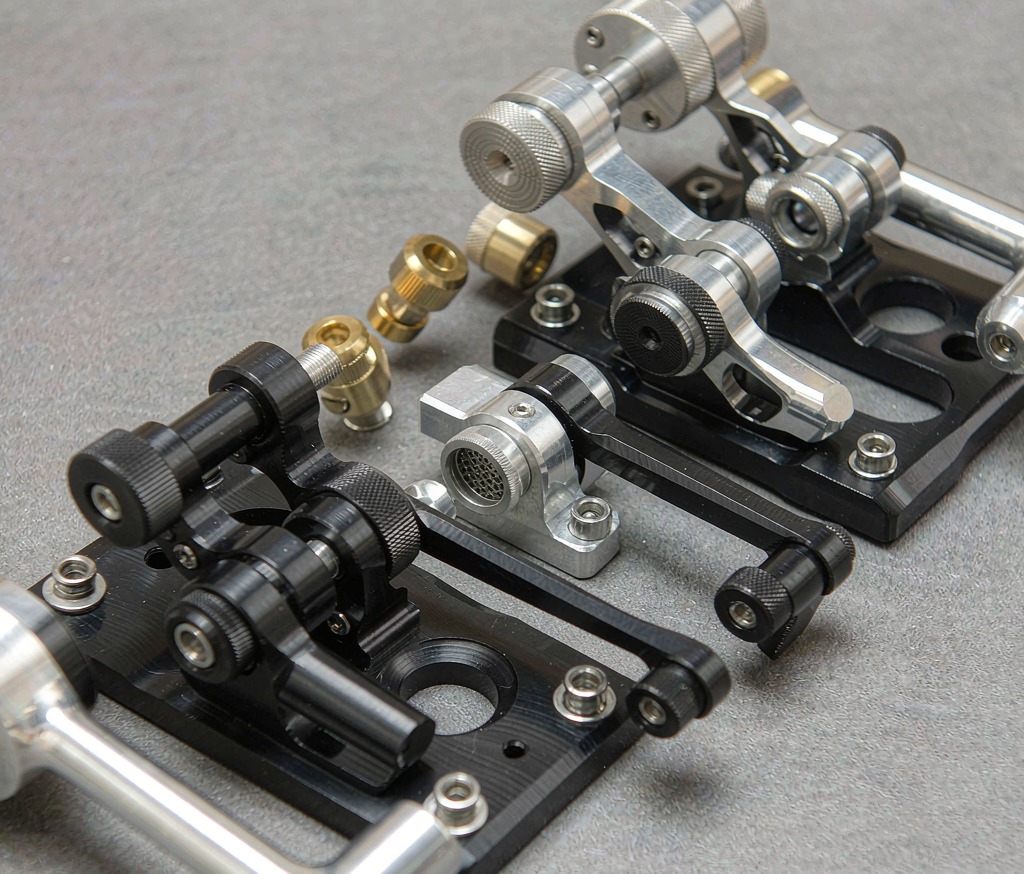
What a Custom Metal Lever Must Do
A lever multiplies force at a pivot and must stay rigid and fatigue-resistant through thousands of cycles. It also has to locate on a shaft, spline, or pin and, for handheld parts, feel right to grip. The body therefore balances stiffness, weight, and ergonomics against cost.
Levers are cousins of the broader custom bracket family, and where they mount a mechanism the same CNC bending and welding logic applies. A lever that locates a shaft precisely is really a bracket with a handle.
Fabrication, Machining, or Forging
Fabrication – cutting, bending, and welding plate – is cheap for simple shapes and low volumes. CNC machining from solid gives the tightest geometry and the best surface for ergonomic grips. Hot forging or cold forging makes a strong, fiber-aligned lever for high-cycle loads where a welded part might fatigue.
The choice tracks the duty: a fabricated steel lever is fine for light duty, while a closed-die forged lever suits a transmission or brake where strength matters. Forging also removes the weld that is often the fatigue weak point.
Materials and Strength
Steel and stainless cover most structural levers; aluminum keeps weight down for handheld or aerospace use; brass appears in precision instruments. Strength comes from both the alloy and the process – a forged lever carries more load at the same size than a fabricated one. Section size at the pivot is the main driver of stiffness.
Where the lever must be machined after forming, the alloy’s machinability affects cost, and precision machining finishes the bore or spline. Choosing a free-machining grade where tolerances are tight keeps the operation lean.
Geometry and Ergonomics
Pivot bore size, handle length, and grip contour set how the lever feels and how much force it applies. A comfortable grip is often a contoured milled surface or a molded sleeve over a steel core. Calling out the pivot tolerance and the handle sweep early avoids a part that binds or feels wrong.
For repeatable pivots, the bore is finished by CNC turning or boring so it runs true on the shaft. A straight, true bore is what keeps the lever from wobbling in service.
Finish and Plating
Indoor levers may need only a clean deburr and paint; outdoor or food levers need anodizing, zinc plating, or powder coat for corrosion. A smooth, rounded edge also matters for safety where hands grip the part. Finish is chosen with the service environment, not just looks.
Coating selection dovetails with the custom metal parts program so the whole assembly matches in appearance and durability. Specifying the real environment prevents a finish that flakes under use.
Where Custom Metal Levers Pay Off
Shift handles, brake and clutch levers, valve operators, and machine controls all benefit from a purpose-built lever. The case is strongest when a standard handle will not fit the space or the load. A well-made lever also improves operator feel and reduces warranty calls from broken or uncomfortable parts.
For high-cycle actuation, pairing the lever with a fabricated bracket keeps the pivot rigid, and forging the lever itself removes the fatigue risk of a welded joint. Early routing advice prevents over- or under-specifying the part.
Quality Control and Inspection
Levers are checked for pivot bore size and runout, handle sweep, and hard or plated surface condition. A fatigue-critical forged lever may get a magnetic or dye check for cracks. The pivot bore is the feature that matters most, so it is gauged rather than assumed true.
Lead Time and How to Request a Quote
Send the drawing with pivot size, handle length, load, material, finish, and volume. Fabrication or machining is chosen to match the duty, and any bracket is quoted alongside. Volume and process decide whether a forging die is worth the investment.
Common Cost Drivers in Custom Metal Levers
Process and material lead cost: a forged lever costs more to tool but lasts longer, while a fabricated one is cheap to start. Over-specifying finish on a non-grip area wastes money. Stating the real cycle life and environment lets the shop pick the leanest route that meets the load.
Frequently Asked Questions
Which process is best for a lever?
Fabrication for simple low-volume parts, CNC machining for precise grips, forging for high-cycle strength.
What material should I choose?
Steel or stainless for structure, aluminum for weight savings, brass for instruments.
Are forged levers stronger?
Yes. Forging aligns the grain and removes welds, so they resist fatigue better than fabricated levers.
How is the pivot kept accurate?
The bore is finished by CNC turning or boring so it runs true on the shaft.
What finish resists corrosion?
Anodizing, zinc plating, or powder coat depending on the environment and appearance needs.
What should I send for a quote?
A drawing with pivot size, handle length, load, material, finish, and volume.
Ready to Start Your Project?
Get a build-ready quote on your custom metal parts within 24 hours. Share your drawing and our engineers will respond with process, lead time, and pricing.

