
Metal fabrication turns flat stock and profiles into the enclosures, brackets, frames and assemblies that house your product. Our metal fabrication services combine cutting, bending, welding and finishing under one roof, so a part moves through the shop without being shipped between vendors. Here is what a complete fabrication programme looks like.
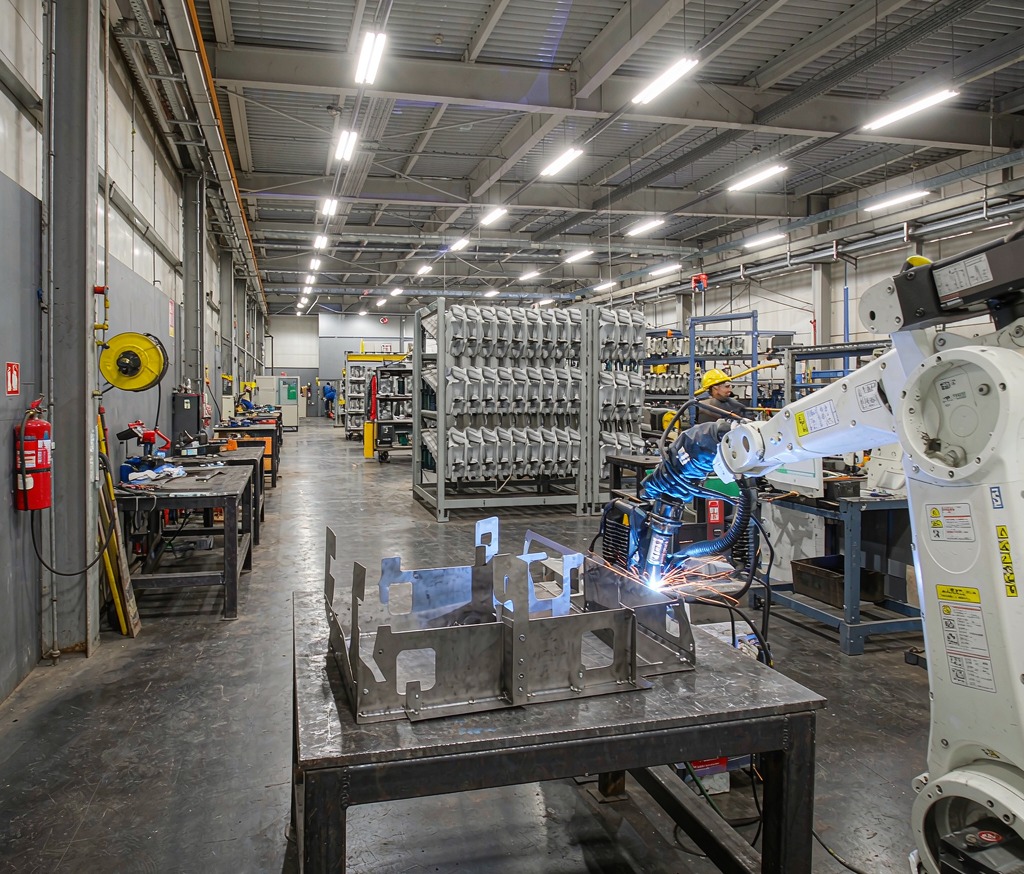
What Metal Fabrication Includes
Fabrication is the sequence of cutting a shape, forming it, joining it and finishing it. We start from sheet, plate or tube and deliver a finished, often painted, assembly. Our custom metal fabrication page covers the end-to-end flow, while sheet metal fabrication focuses on thin-gauge work.
Cutting and Punching
Profiles are cut on lasers or punched on a turret. We use fiber laser cutting for speed and edge quality, and CNC punching for features like tabs and louvres in one hit. For steel fabrication the same cells handle heavier plate.
Press Brake Bending
Formed parts are bent on a press brake with precision tooling. Our CNC bending cells hold bend angles and maintain consistent flange lengths across a run. Complex frames may need multiple bends sequenced to avoid collision — we program and simulate these before cutting metal.
MIG and TIG Welding
Joints are made with MIG welding for speed and TIG welding where appearance and penetration matter. We weld steel, stainless and aluminium, and fixture every job for repeatable weld placement. Our structural steel fabrication work applies the same discipline to load-bearing frames.
Powder Coating and Finish
Finished fabrications are cleaned, then coated. We offer powder coating for a durable colour finish and a range of plating and passivation options. A good finish is what makes a fabricated enclosure look like a product rather than a prototype.
Choosing a Fabrication Partner
Pick a shop that controls cutting, forming, welding and finishing in-house — it shortens lead time and keeps accountability in one place. Ask about DFM feedback; we review drawings for weld access and bend reliefs before we quote.
Tolerance Stack-Up Across Operations
A fabricated part accumulates tolerance at every step: the laser cuts the blank, the brake bends it, the weld shrinks it, the coater adds thickness. If you tolerance each step independently, the corners may not meet. We manage this by assigning the tolerance budget across operations and by designing fixtures that reference the same datums throughout. Our sheet metal fabrication process plans the bend sequence so flat patterns unfold to the right shape, and we simulate welds to predict shrinkage before cutting metal.
For structural steel the same discipline applies at larger scale: hole patterns are located from a single axis, and weld joints are detailed for access and minimal distortion. Good fabrication is mostly planning the order of operations so the tolerances add up the way you want.
From Prototype to Production Run
We like to prove a fabrication as a single prototype — cut, bent, tacked — before committing to tooling or a full run. That first part reveals weld-access problems and bend-relief needs that a drawing hides. Once approved, we lock the flat pattern, bend program and weld fixture, then run repeatable batches with inspection at key stages. Finishing, whether powder coating or plating, happens last so the coating is uniform and undamaged. For ongoing programmes our custom metal fabrication team supports scheduled releases so your assembly line stays fed.
Finishing Options Compared
Fabricated parts finish in several ways. Powder coating gives a thick, durable colour that resists chips; wet paint is cheaper for small runs; plating adds corrosion resistance or solderability; and passivation protects stainless without changing its look. For branding we offer silk screening of logos on the coated surface. The right finish depends on environment and budget, and we will recommend one rather than just quoting what you ask — a marine enclosure needs powder coat, not paint, and we say so before you pay for the wrong thing.
Common Fabrication Mistakes to Avoid
The usual fabrication errors are undertoleranced holes that will not line up, bend reliefs left out so the material tears, and welds specified where access is impossible. We catch these at quote time and propose fixes — relocate a weld, add a relief, or loosen a hole to a slot. Another is forgetting the coating adds thickness, so a pressed fit becomes a sloppy fit after powder coat; we account for that in the flat pattern. None of these are hard to fix, but catching them before cutting metal saves a rejected batch and a missed ship date.
Kitting and Hardware
A fabricated enclosure is rarely shipped alone — it needs hinges, gaskets, fasteners and inserts. We can source and kit those with the part so your line receives one box, not five. Threaded inserts are pressed or welded in-house, and gaskets are cut to the same flat pattern. Kitting turns a fabricated shell into a ready-to-assemble component and removes a whole purchasing step from your side, which is where fabrication pays off beyond the cut and bend.
Frequently Asked Questions
What materials can you fabricate?
Steel, stainless, aluminium and galvanised sheet and plate, plus tube and bar stock.
Do you offer design feedback?
Yes. We provide DFM notes on bend radii, weld access and tolerances before production.
Can you deliver a finished, painted assembly?
Cut, bent, welded and powder coated — turnkey, ready to bolt in.
What are typical tolerances?
Cut features ±0.1 mm; bent parts ±0.5° and ±0.2 mm on flange length.
Ready to Start Your Project?
Get a build-ready quote on your custom metal parts within 24 hours. Share your drawing and our engineers will respond with process, lead time, and pricing.

