
Powder metallurgy (PM) and casting both make near-net-shape metal parts without machining every feature, but they differ in density, tolerance, and economics. PM compacts metal powder and sinters it; casting pours molten metal into a mold. This comparison helps you choose for high-volume components, where the small per-part differences compound into real savings.
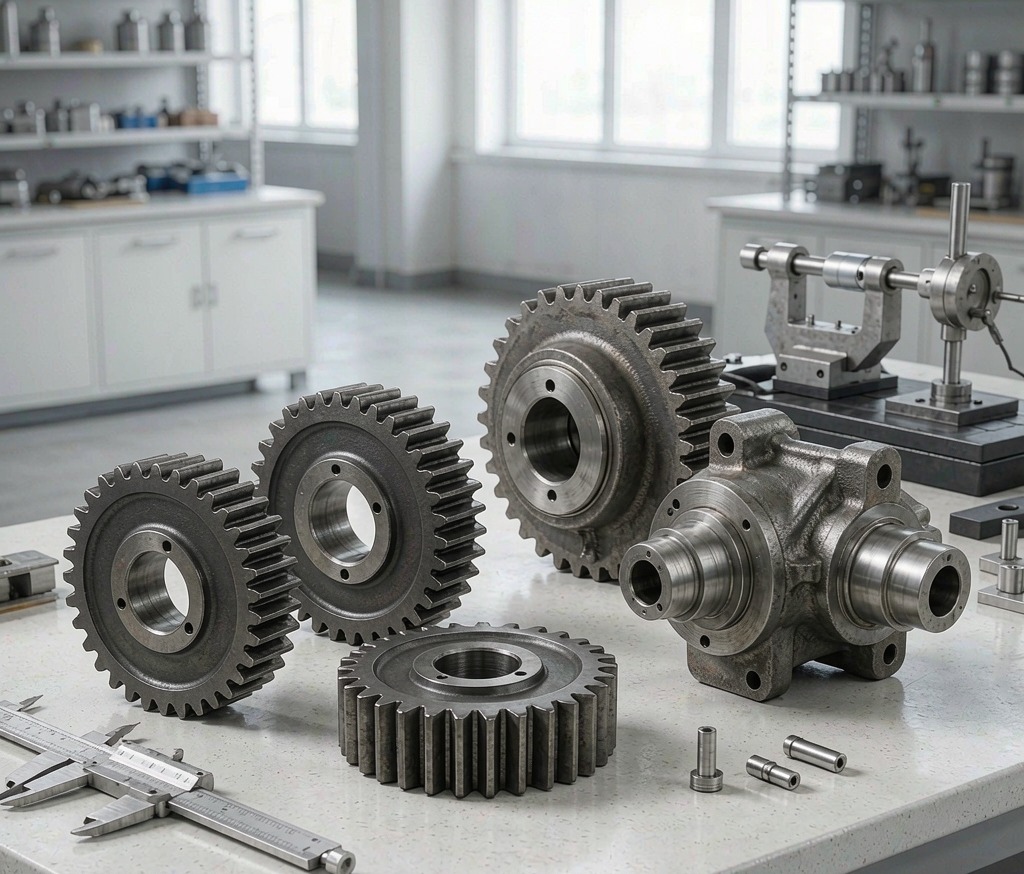
Two Net-Shape Routes to Metal Parts
PM presses and sinters powder into a precise shape with minimal scrap. Casting fills a mold with liquid metal. A powder metallurgy service is unbeatable for small, complex, high-volume parts like sintered gears and sintered bushings; casting owns larger, heavier parts that PM geometry cannot handle.
Density and Porosity
Sintered PM parts are 85 to 95 percent dense, with controlled porosity you can even use for self-lubrication. Casting is fully dense but can carry shrinkage porosity if gated poorly. For oil-impregnated bearings, PM’s porosity is a feature, not a flaw, and that single property is why whole bearing families are PM-made.
Tolerances As-Processed
PM holds tight tolerances straight from the die, often plus or minus 0.1 percent of dimension, with little machining. Casting holds looser as-cast and usually needs more finish work. Die casting is the tightest casting route; investment casting handles finer detail on bigger parts. Where a cast face must be flat, a surface grinding pass finishes it after the fact.
Material and Geometry Limits
PM favors small, flat, or axi-symmetric parts and ferrous alloys, though non-ferrous grades exist. Casting handles larger, heavier, and more varied geometries, including thin-wall aluminium. Choose PM for volume runs of small parts; choose casting for big or low-volume pieces where PM’s press and sinter simply do not fit.
High-Volume Economics
PM presses parts in seconds with almost no scrap, so unit cost falls hard at volume. Casting needs more finishing and more material removal, raising per-part cost. A powder coating finish after sinter or cast completes either part for corrosion and brand color, so the finish is not what separates them.
When to Choose PM or Casting
Pick PM for small, complex, high-volume ferrous parts where scrap and tolerance dominate. Pick casting for larger or lower-volume parts where PM geometry limits bite. Our sand casting vs die casting guide helps if casting is your route, and self-lubricating bearings show the PM application casting cannot match.
Common Powder Metallurgy vs Casting Mistakes
The frequent mistake is casting a small, high-volume ferrous part that powder metallurgy would press near-net with almost no scrap. PM shines on tiny, complex parts where casting leaves gates, risers, and machining to remove, so the per-part cost climbs past what PM would charge once volume is steady.
The reverse error is sending a large or low-volume part to PM, where the press size and sinter shrink make it uneconomic and hard to hold. Casting handles the big, heavy geometry that PM simply cannot reach, so size and volume should lead the choice rather than habit.
A third trap is forgetting PM’s porosity. For oil-impregnated bearings that property is the point, but for a sealed pressure part you want full-density casting instead, so match the process to the service condition.
Powder Metallurgy vs Casting Selection Checklist
These questions point to the cheaper route at your volume. They track the density, scrap, and tolerance split that matters most in production.
- If the part is small, ferrous, and high-volume, compacting and sintering wastes almost no material and quotes low per piece.
- If the part needs oil-impregnated function, sintered gears and bushings are the natural PM fit that casting cannot match.
- If the part is large or low-volume, die casting handles the size and the per-part cost better.
- Finish a cast sealing face with surface grinding where PM would have held it as-sintered.
When does PM beat die casting on cost?
When the part is small and runs in high volume, because PM presses near-net shapes in seconds with almost no scrap. Die casting wins back the edge only on larger parts where its fast cycle and bigger tool pay off.
Frequently Asked Questions
Is powder metallurgy as strong as casting?
PM parts reach 85 to 95 percent density, so they are strong for their size but below fully dense castings in absolute strength. For small, high-volume parts they are more than adequate and far cheaper to make.
Which process wastes less material?
PM wastes almost none; it is near net-shape with minimal scrap. Casting loses more to gates, risers, and machining, so PM wins on buy-to-fly ratio and on material cost for pricey alloys.
Can PM parts be oil-impregnated?
Yes. Controlled porosity lets sintered bushings and bearings hold oil, which is why self-lubricating bearings are a classic PM application that casting cannot match, since cast metal is dense and cannot store oil.
When is casting clearly better?
When the part is large, heavy, or low-volume, or when you need full density and complex internal cavities. PM’s press size and sinter shrink make big parts uneconomic, and that is casting’s home ground.
Is powder metallurgy limited to ferrous alloys?
No. While steel and stainless dominate PM, non-ferrous powders such as copper, brass, and aluminium are also compacted and sintered, and tungsten and molybdenum grades serve heavy or refractory parts. Ferrous simply wins on volume economics, which is why most PM parts you see in production are steel or stainless rather than exotic metal.
Ready to Start Your Project?
Get a build-ready quote on your custom metal parts within 24 hours. Share your drawing and our engineers will respond with process, lead time, and pricing.

