
Engineers face the CNC machining vs casting decision on almost every new metal component. Machining starts from solid stock and removes material to a tolerance; casting pours molten metal into a mold and adds finish machining only where needed. Each path has a clear sweet spot in accuracy, cost, and volume, and the wrong choice can inflate unit cost by 30–50% at scale. Here is how to pick the route that fits your part.
Process Overview
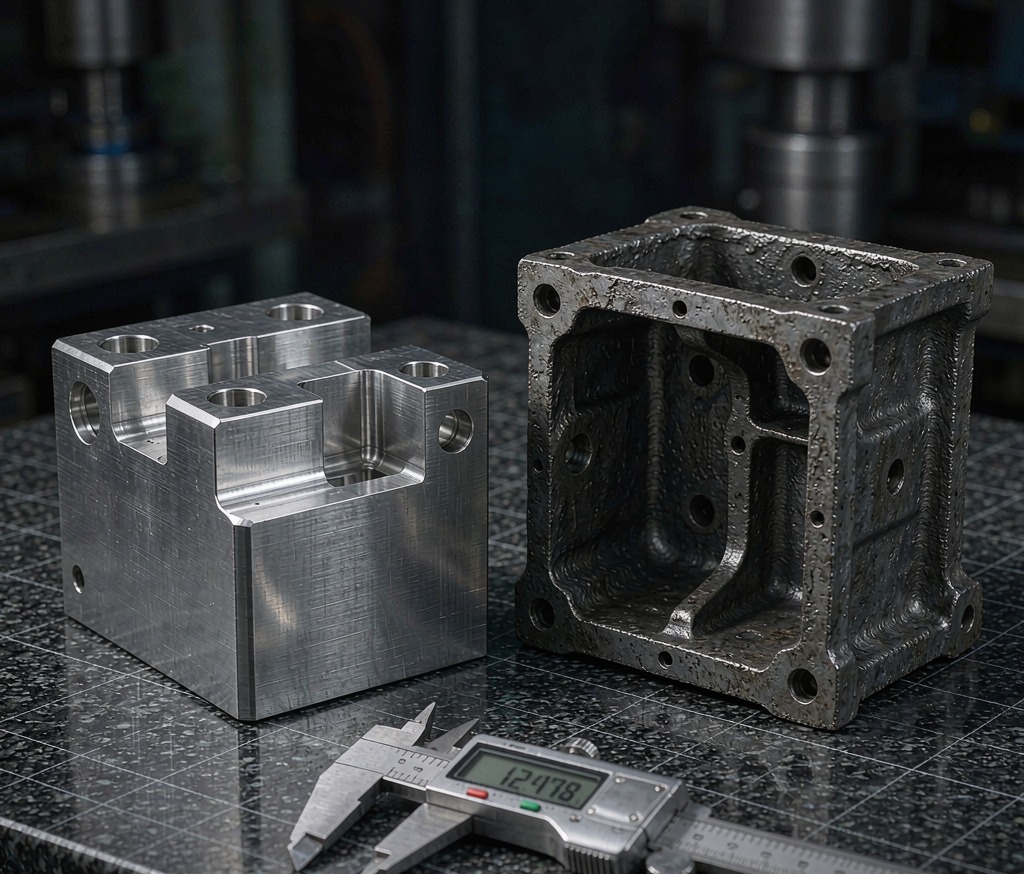
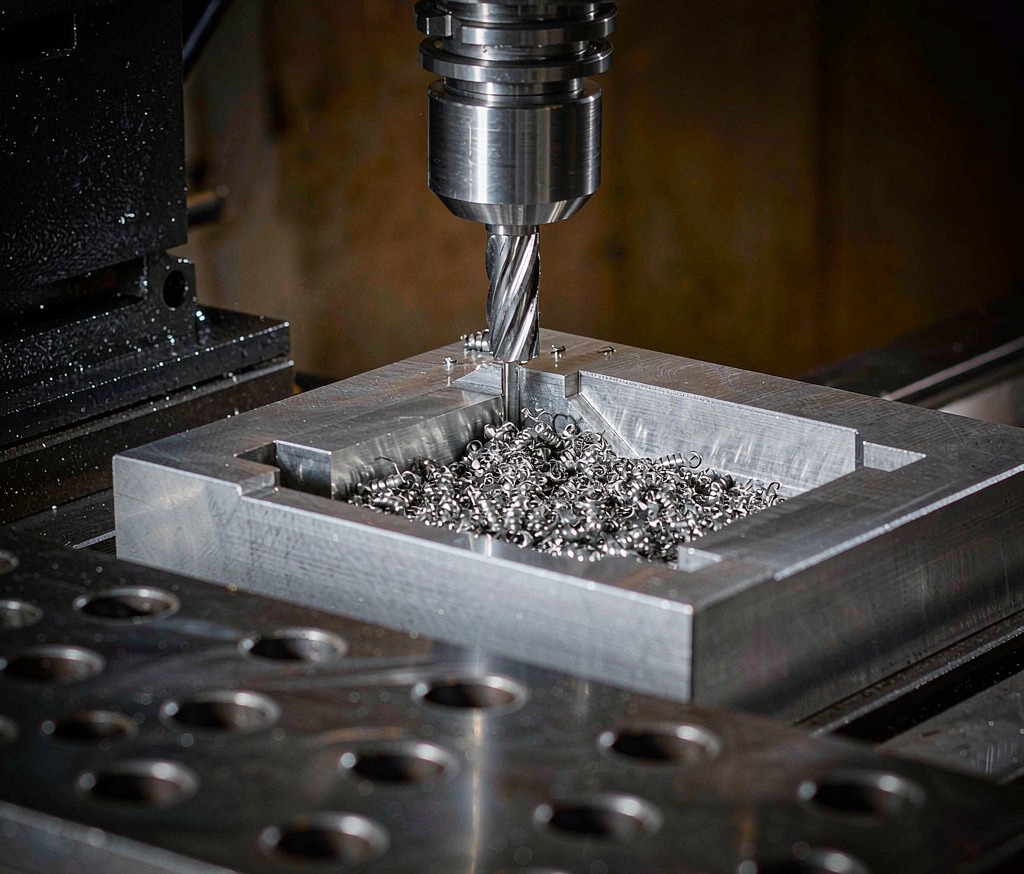
CNC milling and CNC turning are subtractive: a spindle or lathe cuts a billet to the final shape, so every feature is cut from solid material. Casting is generative: investment casting, sand casting, and die casting form the near-net shape in one pour, then finish only critical features such as seals and bearing bores.
The mental model is simple: machining pays for material you throw away, while casting pays for tooling you amortize. When volume is low, thrown-away material is cheap and tooling is the killer. When volume is high, amortized tooling wins and machining becomes the expensive step.
Dimensional Accuracy
Machining holds the tightest tolerances — routinely ±0.01 mm and sometimes finer with 5-axis CNC machining. Casting lands at ±0.1–2 mm depending on the method, then needs machined datums for sealing or bearing surfaces. If your part is a structural bracket, casting plus local machining is ideal; if it is a hydraulic valve body with tight bores, full machining may be simpler and cheaper than casting-plus-finish.
Cost at Production Volume
For prototypes and low volumes, machining wins because there is no tooling. Casting only becomes economical once the mold or die is amortized across hundreds or thousands of parts. A steel casting that costs more per piece at ten units can cost half as much at ten thousand, because the fixed pattern or die cost is spread across the run.
Lead Time
Machining can start the same day you release a CAD file, which is why it dominates prototyping and urgent spares. Casting waits on pattern, die, or shell tooling, adding days to weeks up front — but then runs fast at volume. If speed-to-first-article matters most, machining is the safe default; if unit price at volume matters most, casting is the goal.
Material Options
Machining works on virtually any stock: aluminum, steel, stainless, titanium, and exotic alloys. Casting is limited to alloys that flow and solidify well, though most engineering metals qualify. For hard-to-cast superalloys, machining or our investment casting vs CNC machining analysis will point you the right way when a near-net shape is attractive but risky.
Design Freedom
Casting excels at complex internal passages, ribs, and consolidating many machined pieces into one. Machining excels at prismatic features, threads, and flat seals. Many production programs blend both — cast the body, machine the interfaces — which captures the cost benefit of casting without sacrificing the accuracy machining provides on functional surfaces.
When to Choose Each
Choose machining for low volume, extreme tolerance, or fast prototypes. Choose casting for high volume, complex geometry, and lower per-part cost. Our forging vs casting and CNC machining vs 3D printing guides cover the adjacent decisions so you can compare all three routes before committing.
Prototype to Production in One Flow
A practical approach many buyers use is to machine the first articles for fit and function verification, then commit to casting tooling only after the design is frozen. This de-risks the program: you prove the geometry on a milled or CNC turned prototype in days, then move to die casting or investment casting for the production run. The machined pilot also supplies the inspection baseline the foundry must match.
That baseline tightens the casting’s first-article approval and shortens the overall qualification cycle. It is especially valuable when the part carries a safety function, because you validate tolerances on the most accurate process before trusting a near-net shape to hold them at volume.
Material Yield and Sustainability
Machining throws away a large fraction of the billet as chips, which matters when the alloy is expensive or strategically sourced. Casting near-net-shapes that waste, so for titanium or nickel parts the material saving alone can justify the tooling even at modest volume. Buyers with sustainability targets increasingly score this in their supplier surveys.
The chips from machining are recyclable, and many shops return them for credit, but the energy to melt and re-roll them is real. Casting’s lower buy-to-fly ratio is a genuine advantage for aerospace and defense programs where both cost and carbon are reported.
Inspection and First-Article Proof
Whatever route you choose, the first-article inspection sets the tone for the whole run. Machined parts are easy to verify because every feature is cut and measurable; cast parts need X-ray or section checks for porosity that machining does not. Budget the inspection method into the quote so a “cheap” casting does not surprise you with a costly NDT requirement later.
FAQ
Which is cheaper for 50 parts?
Almost always CNC machining — casting tooling cost dominates at that quantity and is not yet amortized.
Can a cast part still be machined?
Yes. Most castings are finish-machined on datums, threads, and seals; see our casting vs machining notes for how the hybrid works.
Which handles the tightest tolerance?
CNC machining, routinely to ±0.01 mm, versus ±0.1 mm or coarser for as-cast surfaces before finishing.
Ready to Start Your Project?
Get a build-ready quote on your custom metal parts within 24 hours. Share your drawing and our engineers will respond with process, lead time, and pricing.

