
Latches are the quiet workhorses of industrial hardware: they hold doors, panels, and enclosures closed through vibration, weather, and years of cycling. When a catalogue part will not fit the geometry, load, or finish you need, custom metal latches close the gap. This guide walks through latch types, materials, and the stamping and finishing routes that turn a drawing into a dependable component.
What Are Custom Metal Latches?
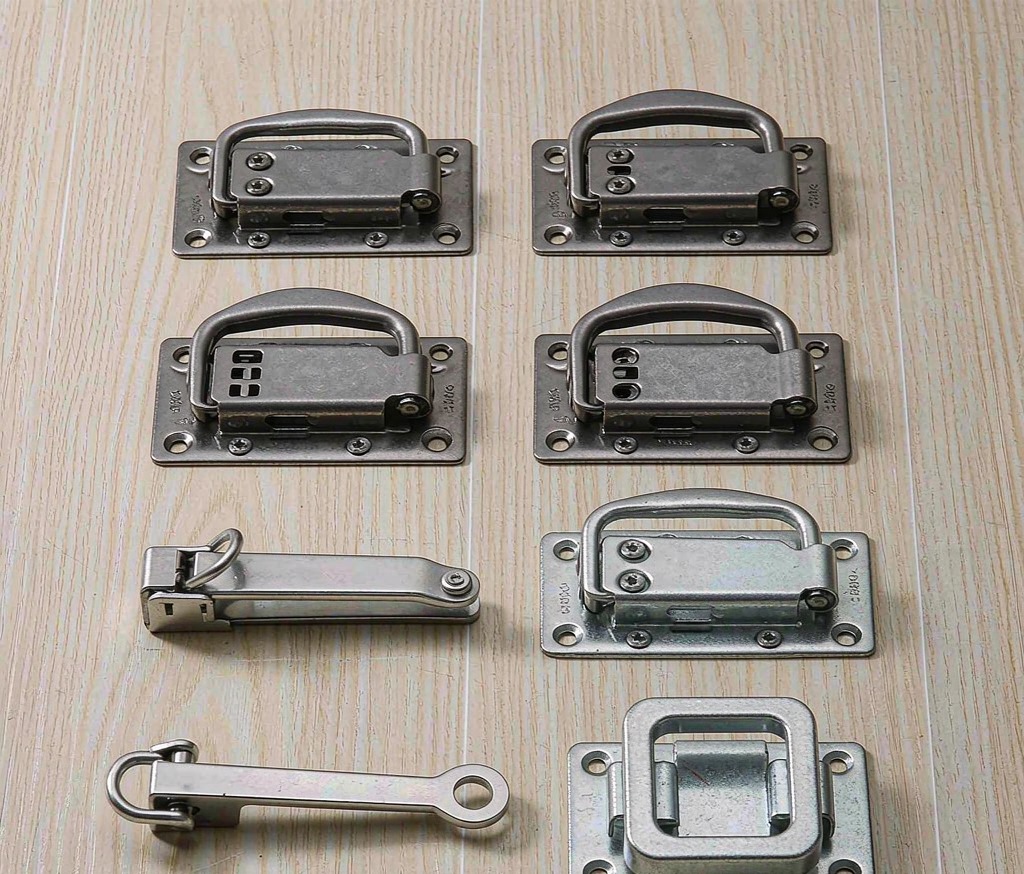
A custom latch is a draw, toggle, compression, or cam mechanism produced to your dimensions, material, and finish rather than pulled from a catalogue. They secure everything from truck bodies and marine hatches to electrical cabinets and industrial machinery. Our custom metal fabrication team routinely turns sketches and samples into production-ready hardware.
Popular Latch Types
Draw latches use a pivoting hook and catch for medium tension; toggle latches add a spring for positive lock; compression latches pull the gasket tight for weather sealing; cam latches rotate a quarter turn for tool-free access. The geometry drives the manufacturing method, and many of these start as CNC bent blanks before secondary forming.
Material Choices: Stainless vs Carbon Steel
304 and 316 stainless resist corrosion for outdoor and marine use but cost more and work-harden when formed. Carbon steel is cheaper and forms easily, then relies on plating or coating for protection. For food, medical, or coastal equipment, stainless is usually worth it. Our material selection guide overview helps weigh the trade-offs before you commit.
Manufacturing: Stamping, Bending, and Forming
High-volume latches are stamped from coil stock on progressive dies, then bent and drilled to shape. Lower volumes use CNC bending and CNC punching for accurate angles and holes without tooling cost. Hinges, springs, and catches are often integrated in one stamped assembly to cut part count. As our stamping vs CNC machining notes, stamping wins on unit cost while CNC suits complex low-volume work.
Surface Finishes That Extend Service Life
Zinc plating and zinc plating protect carbon steel from rust; powder coating adds color and abrasion resistance for visible hardware; polishing removes burrs that would snag. For coastal or wash-down duty, specify 316 stainless with a passivated or powder-coated finish. Our polishing line supports the full finishing menu.
Specifying Latches for Your Application
Define the load, the open angle, the mounting surface, and the environment. Compression latches need a measured draw to seat the gasket; toggle latches need a catch rated for the pull force. Share a sample or 2D drawing and our CNC machining services returns DFM feedback with the right process and finish.
Finding a Reliable Latch Supplier
Choose a shop with in-house tooling, ISO 9001 control, and the secondary operations (plating, coating, assembly) your latch needs. Fast sampling and documented inspection keep a hardware program on schedule. Start with our custom metal fabrication to scope a stamped or machined latch.
Frequently Asked Questions
When should I choose stainless over carbon steel latches?
For outdoor, marine, food, or medical use, stainless (304/316) avoids corrosion without heavy plating. Carbon steel with zinc or powder coating is fine for dry indoor duty and costs less.
Can latches be made without hard tooling?
Yes. CNC bending and punching produce low-volume latches from blanks without die cost; stamping dies pay off above roughly 3,000 pieces.
What finish resists weather best?
316 stainless with passivation, or carbon steel with zinc plating plus powder coating, both perform well outdoors. Avoid bare steel in wash-down or coastal settings.
Do you integrate springs and hinges?
Often, yes. Springs, catches, and hinge leaves can be stamped into one assembly to reduce part count and alignment error.
Build Latches That Actually Hold
The right material, form, and finish decide whether a latch survives its environment. Send us your drawing or sample and we will return a quote with the best process and coating for the job.
Ready to Start Your Project?
Get a build-ready quote on your custom metal parts within 24 hours. Share your drawing and our engineers will respond with process, lead time, and pricing.

