
High-pressure die casting is fast, but its turbulent fill can trap gas and porosity that blocks heat treatment and welding. Low-pressure die casting (LPDC) takes a different path: it pushes molten aluminum upward into the die under a gentle, controlled pressure, filling calmly from the bottom. The result is a denser, more uniform part that can be heat treated and welded. For automotive wheels, structural housings, and chassis components, LPDC is often the sweet spot between cost, strength, and integrity.
The physics is the whole story. A calm, bottom-up fill means less trapped air, which means the part can later be heated without the gas expanding into blisters. That single property, weldability and heat-treatability, is what opens LPDC to structural applications that high-pressure die casting simply cannot serve.
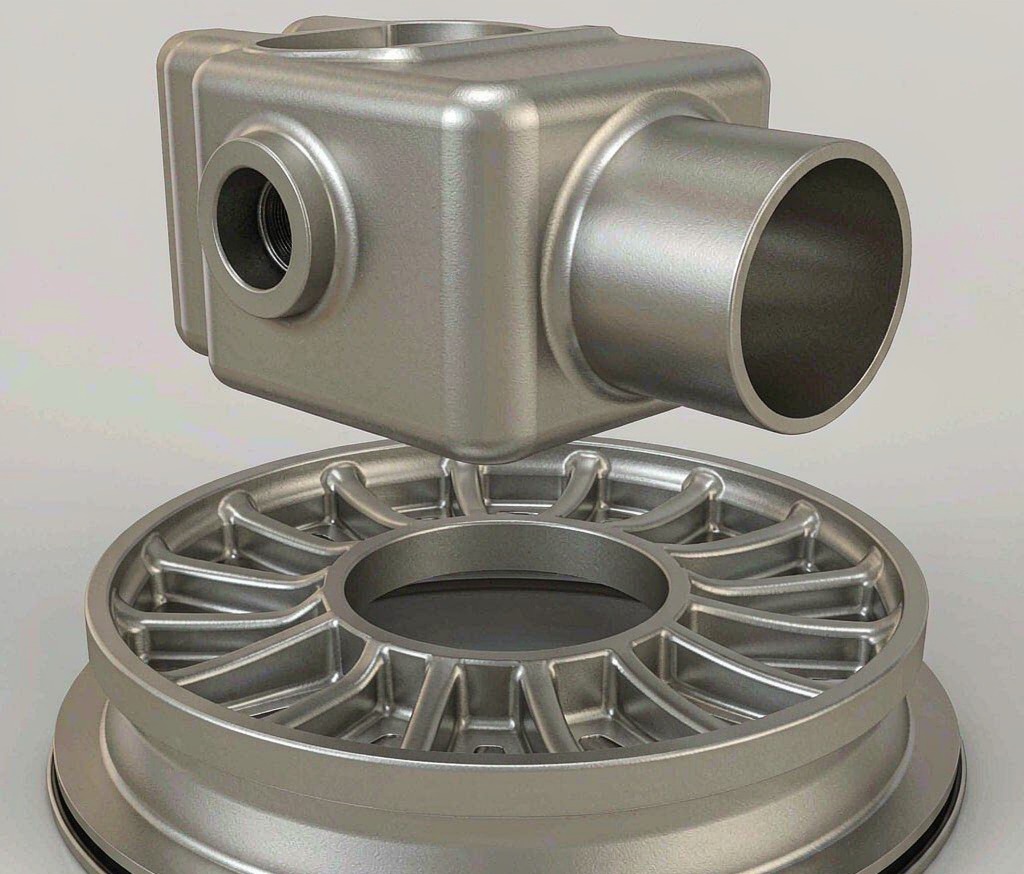
How Low-Pressure Die Casting Works
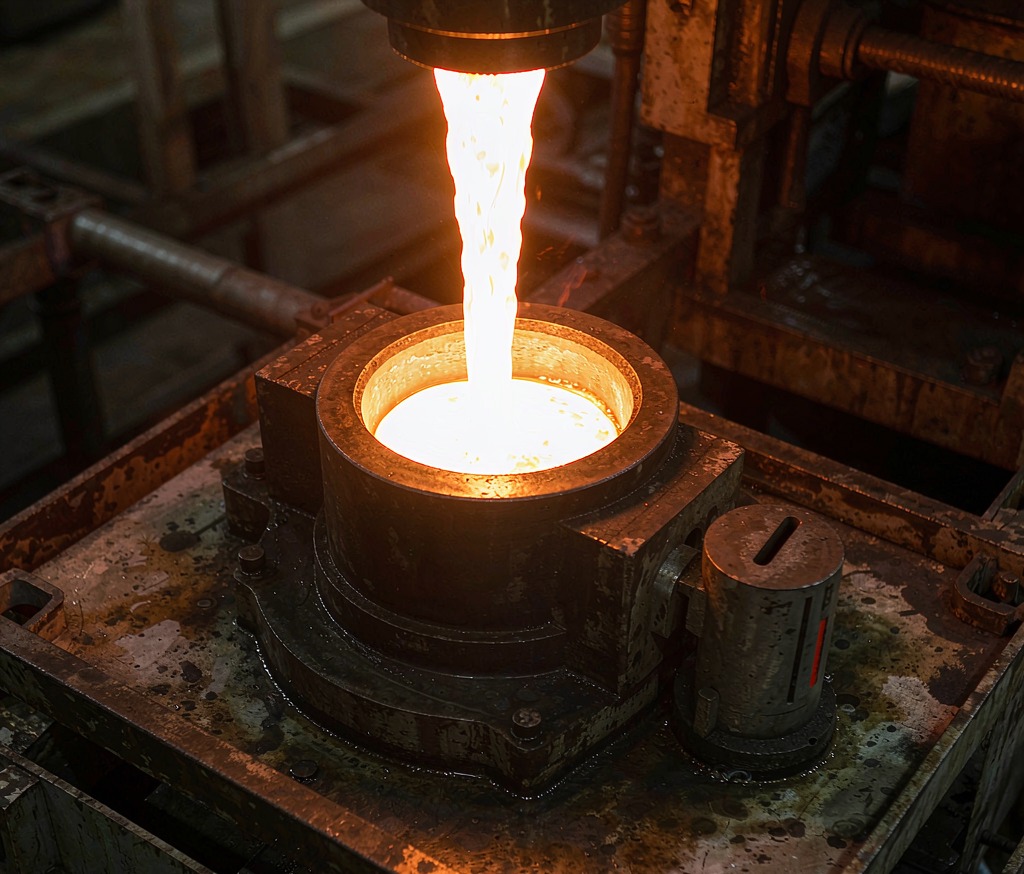
In LPDC, the die sits above a heated holding furnace. A pressurized plunger or gas blanket forces metal up a stalk and into the cavity from the bottom, so the fill is laminar and gas entrainment stays low. As the part solidifies, feeding continues under pressure, which is why shrinkage porosity is minimal. The process complements our standard die casting and broader metal casting options, giving buyers a route when porosity matters more than raw cycle speed.
LPDC vs High-Pressure Die Casting
High-pressure die casting fills fast and cheaply but seals gas inside; those parts cannot be reliably T6 heat treated or welded without blistering. LPDC parts are dense enough to heat treat and weld, at a slower cycle and higher tool cost. A gravity casting route is even simpler and cheaper for low volumes but gives less control and consistency. The choice tracks with volume, structural demand, and whether the part must be welded or heat treated after casting.
Quality and Porosity Advantages
Because LPDC feeds under pressure as the part freezes, the critical sections stay sound. That density is what lets the part take a heat treatment for strength without surface defects, and what lets a weld attach without porosity blowholes. After casting, a finish such as anodizing performs better on a clean, dense surface, and any repair or secondary sand casting comparison shows the same porosity logic at work.
Design and Application Guidance
LPDC favors thin, uniform walls and generous feeders at thick sections. Design ribs and bosses to keep section thickness even, and place datums where they will machine cleanly. Wheels, suspension knuckles, battery housings, and pump bodies are classic LPDC parts. Tolerances are good as-cast, with finish machining reserved for sealing and mounting faces.
When LPDC Beats the Alternatives
If the part is a structural aluminum component that must be welded to another piece or heat treated for strength, LPDC usually wins over high-pressure die casting despite the slower cycle. If it is a cosmetic, non-structural enclosure made by the million, high-pressure die casting still owns the cost. The decision is about the service condition, not the headline price.
Cycle Time and Throughput Reality
LPDC is slower than high-pressure die casting because the calm fill and pressure-fed solidification take longer, and the die is heavier to handle. For a program that needs tens of thousands of sound, weldable parts, that slower beat is acceptable and often necessary. For a program chasing the absolute lowest piece cost at extreme volume, the speed gap can matter. The honest question to ask is whether the structural requirement justifies the slower cycle, and for most welded or heat-treated aluminum structures the answer is yes.
Traceability is another quiet advantage: because LPDC runs from a single heated furnace with a known metal source, a heat or lot can be tied back to the part, which auditors and automotive programs value. That lineage is harder to maintain on a cold-chamber high-pressure machine running mixed melts.
Fitting LPDC Into Your Sourcing
Buyers comparing routes should start with our aluminum die casting services for high-volume speed, our die casting services overview for the full process picture, and our die casting design guide for geometry rules. For a deeper read on when casting beats the alternative, our investment casting vs die casting comparison lays out the tradeoffs.
Frequently Asked Questions
Can LPDC parts be heat treated?
Yes. Their low gas porosity makes T5 or T6 heat treatment practical, which is the main reason structural aluminum parts use LPDC instead of high-pressure die casting.
Is LPDC more expensive than high-pressure die casting?
Usually yes per part, because the cycle is slower and tooling is heavier. The premium buys density, weldability, and heat-treatability that HPDC cannot reliably offer.
What wall thickness works best?
Thin, uniform walls around 2 to 4 mm are ideal. Very thick sections need feeders and can slow the process, so design for even sections where possible.
Pick LPDC for Structural Integrity
If your aluminum part must be strong, weldable, or heat treated, low-pressure die casting removes the porosity excuse. Choose it when integrity outweighs the lowest possible cycle cost, and the part will thank you at assembly and in service.
Plan the feeders and the heat-treat step together, because a section that freezes last is also the section most likely to need a support, and that same area sets the limits on how thin the wall can go. Coordinating the two early avoids a part that is sound in the mold but weak in service.
Ready to Start Your Project?
Get a build-ready quote on your custom metal parts within 24 hours. Share your drawing and our engineers will respond with process, lead time, and pricing.

