
Precision sheet metal fabrication turns flat coils and plates into functional enclosures, brackets, and structural parts used across electronics, medical, automotive, and energy equipment. For buyers, the difference between a good and a bad fabrication partner shows up long before production — in how they control tolerances, springback, weld distortion, and finishing. This guide covers the core processes, the specs that actually affect fit, and how to request a quote that protects your lead time and total landed cost.
Core Processes: Cutting, Bending, Welding
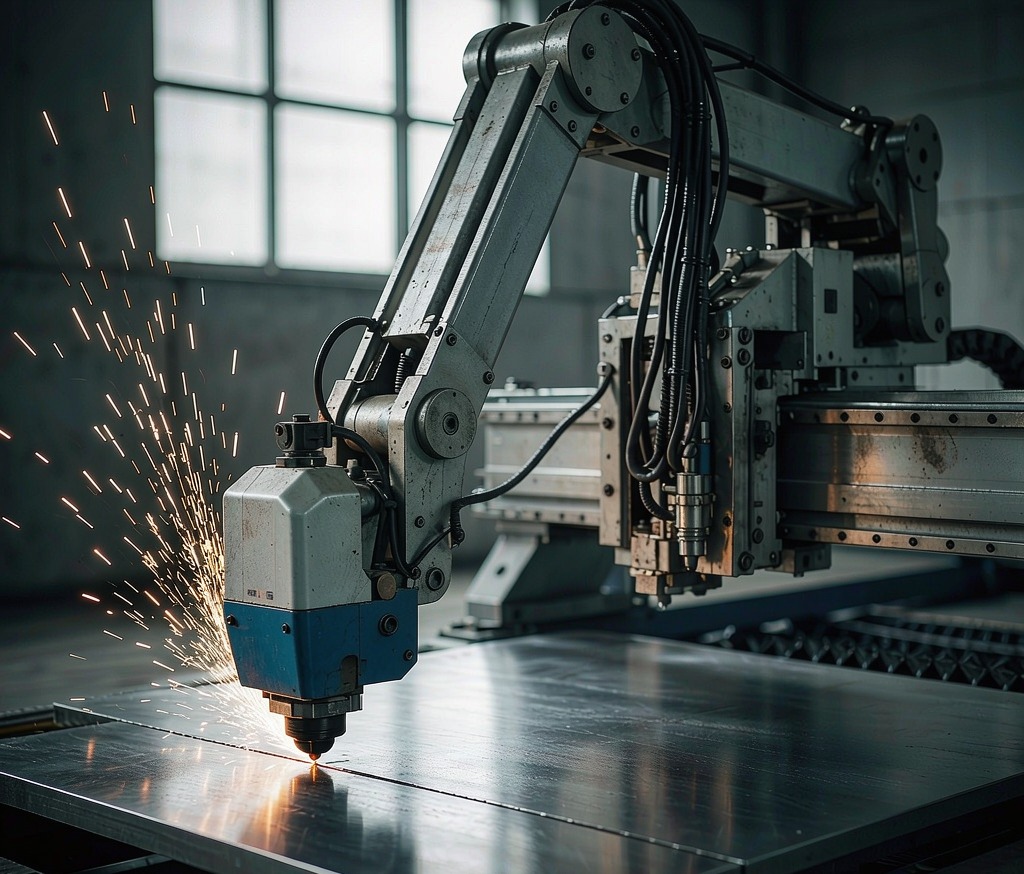
Most precision sheet metal fabrication starts with cutting. A fiber laser cutting service produces narrow kerf widths and clean edges on aluminum, stainless, and carbon steel, which is ideal for complex profiles and tight nesting. After cutting, CNC bending forms flat blanks into rigid shapes; a press brake with angle measurement keeps bend angles repeatable, and capable shops compensate for springback and grain direction. For multi-part assemblies, MIG welding and TIG welding join sheets into one structural unit — distortion control is the skill that separates a clean weld from a warped part. If your project needs corrosion protection, powder coating adds a uniform finish in the same workflow.
Tolerances That Actually Affect Fit
Buyers often ask for “precise” without a measurable number. Standards such as ISO 2768-1 define general tolerances for linear and angular dimensions, and ISO 2768-2 covers geometrical tolerances. In practice, the specs that break assembly are hole position, bend angle, flatness, and edge condition. A 0.2 mm cut error compounds after bending because formed features are affected by springback and tool wear. Before you request a quote, specify hole-to-hole position, bend angle tolerance, and flatness — and ask whether the shop measures first-piece, in-process, and final parts. Our CNC bending services post explains how angle measurement and compensation keep batches consistent.
Material and Finish Selection
Material choice should match the use case: steel for strength, stainless for corrosion resistance, aluminum for lightweight assemblies, copper for conductivity. Surface treatment is functional, not cosmetic. Powder coating gives uniform color and corrosion protection for cabinets and outdoor hardware; passivation and electropolishing matter for medical and food-grade parts. Pairing cutting, forming, welding, and finishing on one purchase order keeps dimensional continuity far better than outsourcing half the operations — the same principle we apply across our custom metal fabrication programs.
From Prototype to Production Volume
Sheet metal fabrication scales well from prototype to production. A low-volume bracket run can ship in days with laser cutting and bending alone, while high-volume panels may justify progressive tooling. The right partner offers DFM feedback before production so you avoid over-specification that drives cost. For integrated structures, welded assemblies keep dimensional continuity better than splitting work across vendors, and metal stamping becomes the economical route once annual volume clears the tooling break-even point.
Frequently Asked Questions
What tolerance can precision sheet metal hold?
General profiles follow ISO 2768-1 (fine class roughly ±0.1–0.5 mm depending on dimension). Critical holes and bend angles are held tighter by agreement, often ±0.1 mm on position and ±0.5° on bend angle, verified by CMM.
Which finish is best for outdoor parts?
Powder coating or hot-dip galvanizing. Powder coating gives consistent color for cabinets and consumer hardware; galvanizing wins in wet or high-corrosion environments.
Do I need a 3D model to quote?
A STEP or IGES file plus a 2D PDF with tolerances and material grade is ideal. We return DFM notes and a quote, typically within 24 hours.
Can you handle low volume?
Yes. Low-volume manufacturing and rapid prototyping are supported alongside production runs, so you can validate fit before committing to tooling.
What to Put in Your RFQ
A complete request-for-quote package protects your lead time and total cost. Include a STEP or IGES model plus a 2D PDF with tolerances, material grade and thickness, surface finish, annual volume, and any compliance needs such as RoHS, REACH, ISO 13485, or AS9100. Specify finishing up front — powder coating color, plating thickness, or passivation standard — so it is not a surprise later. Shops that offer CNC bending, welding, and powder coating under one roof return tighter lead times because nothing waits in an outsourced queue. Ask for first-article inspection and CMM reports on critical parts; for medical or outdoor use, request salt-spray or sterilization evidence. A supplier that asks clarifying questions during quoting is signalling the process discipline you want repeated in production, and it is the cheapest signal you will get before money changes hands.
Get a Build-Ready Quote
Send your drawing and material spec. We will map the part to the right process route — laser cutting, bending, welding, and finishing — and return a transparent quote with lead time and DFM feedback before any production starts.
Ready to Start Your Project?
Get a build-ready quote on your custom metal parts within 24 hours. Share your drawing and our engineers will respond with process, lead time, and pricing.

