
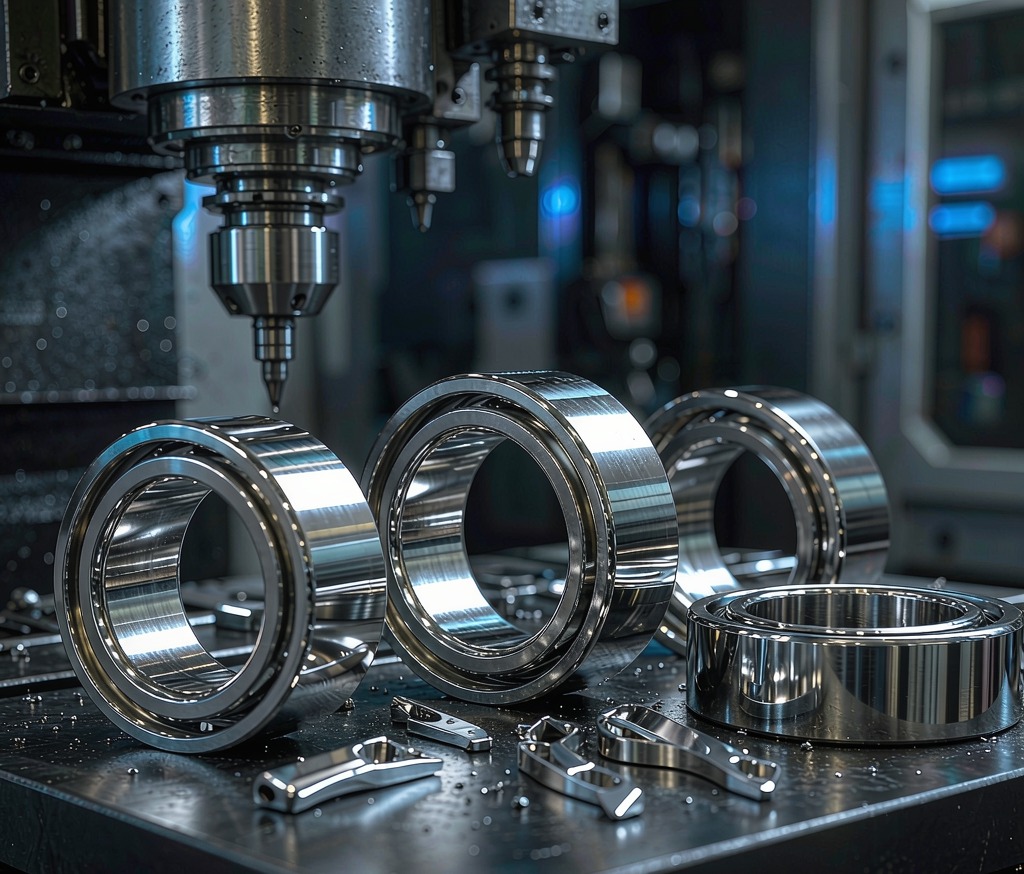
440C is the go-to martensitic stainless when a part must be both hard and corrosion-resistant: bearings, cutters, valve seats, and surgical tools all lean on it. But that hardness is exactly what makes 440C stainless steel machining unforgiving. Get the tooling and sequence wrong and you will fight work hardening, poor surface finish, and rapid insert wear. Done right, 440C delivers a component that holds an edge and survives a wet environment.
Why 440C Is Different
440C is high-carbon (about 1.0% C) chromium stainless. In the annealed state it machines like a tough alloy; after heat treatment it reaches 58-60 HRC, which is where the performance comes from but also where machining gets difficult. It work-hardens under rubbing, so light, hesitant cuts merely smear the surface and dull tools. Our broader stainless steel machining experience carries directly into handling this grade.
Another subtlety is carbide content. The high carbon forms chromium carbides that give wear resistance but also abrade cutting tools faster than a leaner grade. Tool choice and coolant delivery matter more on 440C than on 304 or 316, and the heat treat response means you should plan the whole manufacturing route, not just the cutting.
Machining Strategy and Tooling
For annealed stock we use sharp, positive-rake carbide or CBN inserts, rigid setups, and consistent depths of cut so the tool stays in the cut instead of skimming. Flood coolant controls the heat that drives work hardening. Tight-tolerance features are often roughed in the soft state and finished after hardening on a 5-axis CNC machine or via CNC turning and CNC milling with coated tools. Small, high-precision parts run well on Swiss turning before the final heat treat.
Heat Treatment Integration
Because 440C is usually hardened after machining, we plan the sequence around distortion. We rough with extra stock, harden, then finish-grind or skim to size. Our heat treatment cell controls austenitize, quench, and cryogenic stabilize so dimensions stay predictable. This staged approach is why hardness specs are met without scrapping finished features.
Achievable Tolerances
In the annealed condition 440C holds conventional CNC tolerances easily; after hardening, finish operations (grinding, low-depth skimming) hold tight bands on critical diameters. For bearing-grade work we treat the raceways as the controlling feature and verify with roundness and surface-finish gauges. The result rivals dedicated precision machined parts programs while keeping the stainless advantage.
Passivation and Corrosion Care
After machining and any grinding, 440C should be cleaned and passivated to restore its chromium-rich passive film, especially in the hardened state where free iron from grinding can invite rust. We apply passivation and can contrast it against 17-4PH stainless machining when you need a precipitation-hardened alternative with easier machining and similar corrosion resistance.
Typical 440C Components
Bearings and races, ball valves and seats, cutlery and surgical blades, pump components, and wear plates are common. If your design is borderline between 440C and a softer grade, compare it with 304 or 316 machining for cost, or 17-4PH for strength-with-machinability. Send the drawing and we will recommend the grade and sequence that meets life and budget. Our engineers will also flag any feature that should be left for post-hardening finishing so you avoid scrapping an otherwise good part.
From Prototype to Production of 440C
For production we typically machine the annealed blank to leave grind stock, harden, then finish to size, holding the sequence so distortion stays predictable. A first-article part is measured and, if needed, the process is tuned before the full order runs. This staged approach is what makes 440C economical despite its hardness, because scrap from a bad heat treat is avoided rather than discovered after finishing.
If your part also needs corrosion protection or a specific look, we coordinate passivation and any light finishing in the same flow so the component ships complete. We can also advise when a near-equivalent grade would machine faster or cost less while still meeting the wear and environment your application demands.
Lead time reflects the heat-treat step more than the machining. Annealed blanks machine quickly, but scheduling the furnace and the finish-grind adds days. For production we plan those steps up front so the whole order flows instead of queueing at the oven. If you need a hard yet corrosion-resistant alternative faster, ask about 17-4PH, which often machines and treats on a shorter cycle.
Frequently Asked Questions
Can 440C be machined in the hardened state?
Light finishing cuts are possible with CBN or ceramic tooling, but most features are roughed soft and finished after heat treat to control distortion and tool wear.
Is 440C more corrosion resistant than 304?
In the hardened condition 440C resists wear better, but 304 generally resists corrosion better in many environments because it has more free chromium. 440C needs good passivation and a clean surface.
Why does 440C work-harden?
Its martensitic, high-carbon structure strain-hardens under rubbing, so light, intermittent cuts smear rather than cut. Steady, firm depths of cut avoid the problem.
When should I pick 17-4PH instead?
Choose 17-4PH when you need high strength plus easier machining and good corrosion resistance without the extreme hardness of 440C, especially for complex machined shapes.
Ready to Start Your Project?
Get a build-ready quote on your custom metal parts within 24 hours. Share your drawing and our engineers will respond with process, lead time, and pricing.

